
I really had a hard time starting this review. Originally, I had been looking forward to get new Magic stories published as novels instead of reading them online as articles on the official Wizards website. The first War of the Spark novel had left me with mixed feelings and I hoped that the sequel would improve or even address some of the issues from the first book. Oh, how foolish I was. Well, there is no point in prolonging this … War of the Spark: Forsaken is not great. The story feels shallow and superficial, characters don't act like the same people they were in previous stories, the writing is lazy—not to mention pointless in some cases—and overall the whole experience left me angry and disappointed.
So how do I write a review for a book that I just summarized in one sentence? How about I compare it to the prequel chapters leading up to War of the Spark: Ravnica? Yes, there is a prequel and for some confusing reason this was not published as a book but instead was sent as individual chapters through email. War of the Spark: The Gathering Storm by Django Wexler is the superior story here.
To Love or Not to Love? The LGBT Controversy
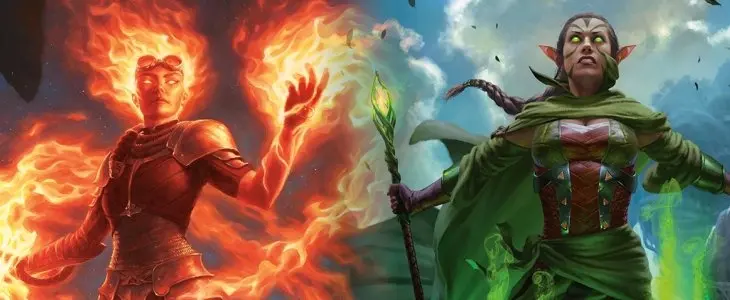
Let us discuss the big controversial issue first. By now you all must have heard about the way Greg Weisman handled Chandra and Nissa's relationship. This was probably the laziest and most insensitive way to break up two characters who had been building up toward something special for years. I do not belive that it was some anti-LGBT move by Wizards of the Coast or Weisman himself. From what we read so far, I am more prone to believe that Weisman did not understand these characters to begin with, and he failed to live up to the expectations from fans that were led to believe Wizards' teasing.
Why do I say this? Because Wizards has no problem with LGBT relationships. Prime example, Ral Zarek and Tomik. In fact, in the prequel chapters, The Gathering Storm, the highlight of the story in my opinion is the relationship between Ral and Tomik. In the story they show affection, they discuss their relationship, and how they want to take it in a more serious direction. They act as a wonderful team together and frankly, it was a relationship I could relate to, even though I am not gay. They are from competing guilds, but they manage to keep their work lives separate and act very professionally around each other. Django Wexler clearly understands the characters he is writing and has done a superb job in bringing them to life in a realistic manner without any of the stereotypical trappings that are so prevalent in today's pop culture when dealing with LGBT couples.There are moments in the story when I forgot about the approaching menace of Nicol Bolas and just wanted to know more about Ral's history and Tomik's relationship.
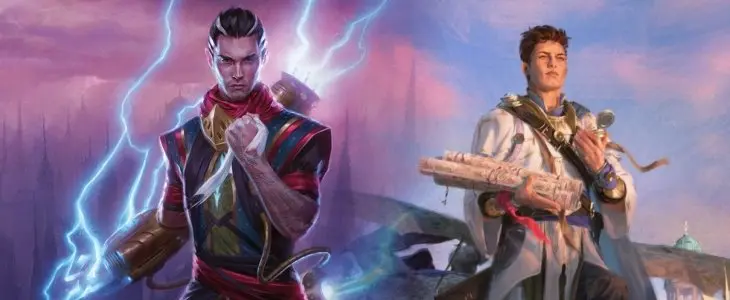
I cannot see how Wizards would have a problem with Chandra and Nissa having feelings for each other in one story but then allow Ral and Tomik to share so many emotional moments together in another. This just shows how one writer did a better job than the other, in writing characters and making them feel realistic.
The Dialogue Issue
Greg Weisman writes each character as if they are the same person or as if all of them share the same thoughts. The dialogue is so bland and generic that without chapters highlighting different perspectives, one could easily confuse or mix up different identities. This is a big problem when you're writing powerful individuals from Magic. Some of these entities have had years to develop a distinct personality and voice, so it is jarring to see certain individuals lacking in mannerisms or distinct personality.
Another issue with this is the fact that some people seem to act out of character for no apparent reason. In contrast, Django Wexler makes sure to write each person in a very distinct manner. Whether it is Ral's internal monologues or concerns about Tomik, or Vraska coming up with justifications for her actions, each character feels distinct and different.
A Rushed Story
I have a feeling that Greg Weisman is not solely to blame for the poorly written story in Forsaken. I assume that he did his best with what he was given. Wizards of the Coast want more and more people to get familiar with Magic and this means trying to appeal to a general audience. They want people to get invested in characters, so that they might be interested in playing the game—but they also want to do this fast.
This creates a big problem for the story. The writer may be forced to rush or include things just in order to meet certain conditions. Even the style of writing is affected. In Forsaken, everything is written in a very basic way, with sometimes confusing prose. There clearly were constraints or set goals which the writer had to mark off as part of his contract. This even creates inconsistencies within the lore of Magic itself. Such carelessness creates a disjointed pace for the story to move forward. In The Gathering Storm, there is a sense of urgency throughout the chapters. However, they do not feel rushed. We get to experience the motivations of characters and even learn about Bolas's manipulations behind the scenes. Everything is explained and nothing is left unanswered. The pacing of the prequel chapters is much better than in both of Weisman's books. In Forsaken, some chapters are a few sentences long, whereas each chapter of The Gathering Storm features multiple points of views and has a cohesive structure, which makes for a far more enjoyable read.
The Gathering Storm lets events unfold during the story instead of leaving important things to happen in the background with just a mention in passing. An example of this would be Kaya's power. The ability to planeswalk with other individuals is something big and important for Magic lore. However, in Forsaken, it is only mentioned in a sentence and that is it. No real thought about this game-changing, important ability is given and characters simply go with it.
Some Good (Beware of Spoilers)
I have to admit that I did enjoy some story elements of Forsaken—if not how they were written/delivered. I liked how Liliana's story will still go on as Ana Iora, an assumed name that's a nice nod to Gideon's sacrifice. I am curious to see what adventures she and Kaya will have on Kaya's home plane, which is finally given a name by the end of the book. Another fun part of the story was that Rat, the girl who is invisible to most people, was revealed to be a secret agent for Lazav in the same style of The Winter Soldier from the Marvel movies/comics. Lazav can activate Rat to become a Dimir assassin named Tar. (Rat spelled backwards, clever writing or lazy? You decide.) Something to consider while reading Forsaken is how nobody really gets a happy ending by the end. This is not a story where everything gets resolved in a clean manner by the end and everyone gets what they want. On the contrary. Characters have suffered losses and some have been pushed to the limits. The Gatewatch still has work to do and unlike most superhero franchises out there, these individuals still have more stories to tell. The fact that the book shows Tezzeret and the Dimir guild working together is a sign that Ravnica will still have a place in future Magic stories. Forsaken in particular seems to have more weight when it comes to future character arcs.
The Gathering Storm, by contrast, is only the prequel to the War of the Spark story. As a result it is rather low impact in the grand scheme of things. There are some interesting elements such as when we get some insight into Ral's history as a planeswalker and his interactions with Bolas, or when Vraska finally confronts her torturer, and when we learn about the inner workings of the Orzhov guild. But other than that, most of the events in The Gathering Storm serve as a lead-in to the chaos of War of the Spark. It's good that the prequel addresses some plot holes from Weisman's first novel, but if the prequel had been published like the other books, these wouldn't have been plot holes to begin with.
Conclusion
If you look at Forsaken only from a story perspective, it does a good job of moving the overall plot forward. Whether this is done in a good way is a different question altogether. The writing is bad and does not do justice to the style of storytelling in previous Magic works. In my opinion, Greg Weisman has failed twice now, and considering Django Wexler did a better job with the prequel chapters, I feel confident to say that one writer is better than the other, on some level at least. I am a huge fan of Magic lore and it's a shame when stories are written in a rushed way with the main aim to just move the story forward.
Anyone who read both books by Weisman should give The Gathering Storm a shot. It explains most of the missing plot points from War of the Spark: Ravnica and can serve as an example of better writing. Similarly, if War of the Spark: Forsaken left you disappointed, I can recommend Brandon Sanderson's Children of the Nameless. It's set on Innistrad and introduced the character of
- War of the Spark: The Gathering Storm by Django Wexler
- Children of the Nameless by Brandon Sanderson
Opinions expressed in this article are those of the author and not necessarily Cardmarket.