The Mechanics
As we return to Innistrad for the first time since 2016, we are looking at a set featuring both new and returning mechanics to consider. Let's start here and dive right in!
Coven


Daybound and Nightbound
A mechanic that is half new and half returning, Werewolves and double-sided cards that transform are back. However, this time around they bear a keyworded ability. When the game starts, it is neither day nor night. (How this is possible is a question for the great philosophers.) It will almost always become day first, and this happens most commonly when a permanent with daybound enters the battlefield.
Similarly to the Werewolf transformation in the original Innistrad block, when a player casts no spell during their own turn, if it is day, the game will turn to night on the next turn. When a player casts two or more spells during their own turn, it will turn back to day on the next turn. Note that this effect only takes place once the day/night routine has been established, usually through a permanent with daybound/nightbound.

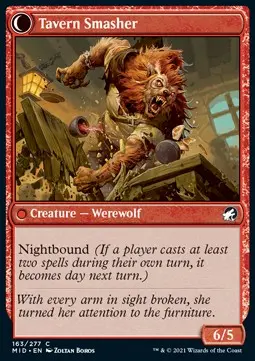
In contrast to the original Werewolves, the nonactive player exercises absolutely no control here. You cannot stop a switch to night with an instant, and you cannot cause a switch to day by double spelling at instant speed on your opponent's turn. An even bigger difference to previous transforming Werewolves is that they can enter the battlefield already transformed. For example, if it is night,
Some cards, such as
Disturb

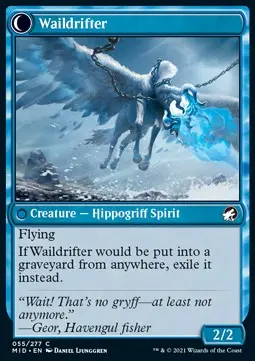
Disturb is the third new mechanic introduced in this set. It is based in white, blue, and black. Akin to the aftermath mechanic from Amonkhet block, cards with disturb let you cast them from the graveyard for an alternate cost. If you play them this way, you cast them transformed. All of them naturally exile themselves upon their second death, lest you could cast them over and over.
Decayed
Decayed is a new keyword attached to most Zombie tokens in this set. A creature with decayed can't block, and if it attacks, it is sacrificed at end of combat. As such, they should rarely be considered "real" creatures, as they are quite useless in terms of combat. However, they are excellent sacrifice fodder or utility bodies for cards like


Flashback
Flashback is a returning mechanic also iconic for the setting. If a card with flashback is in your graveyard, you may cast it for its flashback cost. You then exile the flashbacked card. The mechanic appears in all colors and each color pair has a signpost uncommon as well as a rare with flashback.
The Archetypes
W/U Graveyard Matters

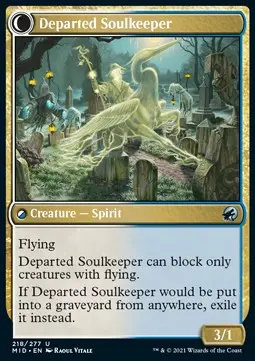

White-blue is all about the graveyard, and especially the disturb mechanic. It has access to the most cards with disturb and features a ton of payoffs both for playing and milling or discarding your disturb cards.
A neat interaction to keep an eye out for is bouncing your disturbed creatures. For example, if you bounce your transformed
Key Commons:
U/B Zombie Tribal


Key Commons:
B/R Bloodthirsty Vampires


Black-red is, as it usually is, an aggressive archetype. If you drafted Guildpact or Magic 2012, you'll notice some similarities between a lot of the black and red cards and the bloodthirst mechanic that appeared in those sets. The archetype is centered around your opponent losing life in some way or form. Of course, this is easiest to achieve through combat damage. You want as many evasive or hard to block creatures as possible to keep your "bloodthirst" active. As the pair sports a ton of aggressive cards, and getting paid off for dealing damage in an already aggressive archetype is incredibly strong, I'm expecting black-red to be a force to be reckoned with.
Key Commons:
R/G Werewolf Tribal

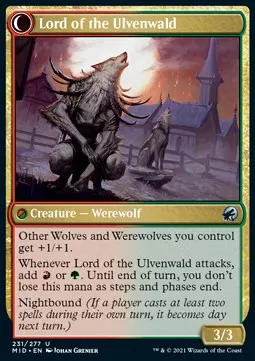

Another aggressive color pair, red-green is classically focused on big beaters, this time with a subtheme of Werewolf tribal. The Werewolf cards are mostly reasonably statted on their front side, and incredibly aggressively statted on their back side. For this reason, you will want it to be night as often as possible, so that your Werewolves already enter on their nightbound side. Using your turn for activated abilities rather than casting spells helps with that.
Key Commons:
G/W Coven


Green-white is based around the new coven mechanic. As such it is a heavily creature-focused archetype. You want to maximize your creature count in these decks, but make sure you're drafting a variety of powers to enable coven as often as possible. Throwing +1/+1 counters around will also be important to the deck to enable this, so you can "customize" your creatures.
Key Commons:
W/B Aristocrats


White-black is another color pair revisiting a classic archetype, aristocrats. You want to be sacrificing creatures for benefits, accruing value with disposable creatures. The archetype does this by using decaying Zombies in black and disturb creatures in white. There are also plenty of ways to make use of your graveyard in this combination.
Key Commons:
U/R Spellslingers


One of my favorite archetypes is back! Blue-red is all about instants and sorceries, and with flashback as a returning mechanic, it is as well supported as ever.
Key Commons:
B/G "Morbid"


Black-green, much like in Forgotten Realms, cares about creatures dying and to a lesser extent about using your graveyard. Much like in white-black, you want to use expendable creatures to accrue value and incremental advantages. As such, the black decayed cards will be valuable to this archetype, albeit to a lesser extent than in blue-black.
Key Commons:
R/W Sunrise Aggro


Red-white is as per usual very aggressive and in this set very interested in keeping the day/night cycle rolling. The color pair sports plenty of cards that care about flipping from day to night and night to day, which can mess with opposing Werewolves as well as granting you different bonuses for your cards.
Key Commons:
G/U Self-Mill Value


Green-blue is all about self-mill and taking advantage of both flashback and disturb. It's a typical "durdle" archetype, and going long is going to be your highest priority. The signpost uncommon
Key Commons:
The Big Picture
As it stands, I can't completely put my finger on what the format might look like as a whole. However, as at least five archetypes are leaning heavy on aggression, I'm going to assume a focused aggro deck such as Vampires or Werewolves is going to be very strong. Then again, if racing is going to be the biggest priority, defensive creatures available in decks like green-blue and the incidental life gain available in green-white and white-black are going to be very valuable as well.
For these two reasons, I think the set looks much more balanced than Adventures in the Forgotten Realms and like there will be much more to explore as the format ages, hopefully providing for some longevity. We will have to see how relevant the day-and-night cycle will prove, and how to best utilize it, as well as how strong the decayed tokens will actually be in terms of utility. All of these things will be essential and formative for how the gameplay will, well, play out, and I for one welcome our new Gothic horror overlords!
As for my early takes for the top uncommons in the set, I have these cards as standouts on face value.
My favorites among the uncommons are all in the Mardu colors, but I think they will go in slightly different archetypes. I am very excited for both Dreadhound and Vampire Socialite in particular. The former looks a lot like the mythic uncommon
As for the rares, the following have stood out for me during previews.
Even though decayed tokens are worth less than a normal creature, I do think they will prove good value in decks that can utilize them. As such I am tentatively excited about token makers such as Jadar and Tainted Adversary. The Meathook Massacre I think is going to be a massive bomb in the format, as playing to the board and going wide will be essential to most strategies. Sticking around as a
All in all, I am incredibly ready for a new and fresh Limited experience, and I hope you are too. Happy drafting!
Opinions expressed in this article are those of the author and not necessarily Cardmarket.