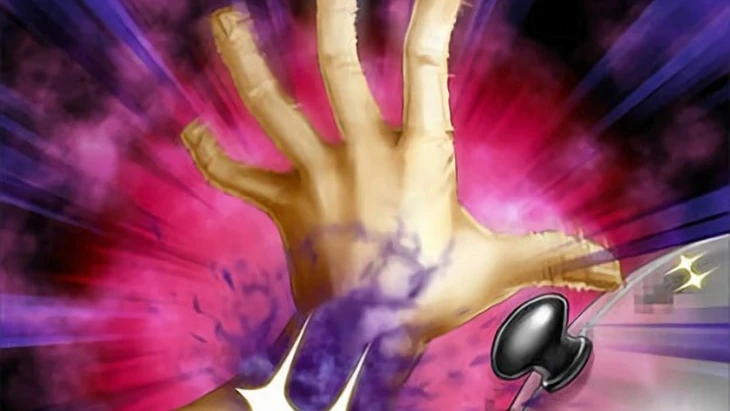
In this article, we will take a closer look at Contact "C"—a card that has found its way into several side decks in the past few weeks. Side deck cards, basically by definition, are meant to be good only against specific decks. Let's analyze against which decks it works best and which decks don't really care one itty bitty bit about the earthen insect.
The current metagame is mostly dominated by , (including the variants), , and different variants. Such a large number of top decks make for a versatile metagame, with many different strategies for which players must prepare. When you enter a tournament with a specific deck, you will naturally have some good match-ups and some terrible match-ups. Side decks are often stacked to shore up a deck's weaknesses, giving players a better shot in later games in bad matchups.
Contact AB"C"s
Today, we are going to look at —which has seen a rise in popularity in the past few weeks. Contact "C" is a level 6 earth insect monster with the following effect:
- When your opponent Normal or Special Summons a monster(s) (except during the Damage Step): You can Special Summon this card from your hand to the opponent's field in Defense Position. This card's controller cannot Fusion, Synchro, Xyz, or Link Summon unless they use this card as material.}
|
This effect effectively makes Contact "C" a hand trap that shows up on our opponent's side of the field when they summon a monster. If they wish to perform a fusion, synchro, xyz, or link summon afterward, however, they must use Contact "C" as a material for the summon. On the surface, this doesn't seem great. We lose a card in hand, and they get free material to extra deck summon. But for a lot of decks, they may have a very hard time—or even an impossible time---using Contact "C". And, until they do, they can't do much else.
The strength of Contact "C" lies in its type and attribute. Contact "C" being an earth insect monster makes it really hard to use as a material for some decks that do not have generic link monsters. Also, there are currently no rank 6 decks in the metagame, which makes it almost impossible for most decks to use Contact "C" as an xyz material. Moreover, it has no once-per-turn restriction. This means that if we open multiple copies, we could summon an additional Contact "C" to our opponent's field when they managed to get rid of the first copy or give them two copies right away. Okay, so we have established why the card works. Now, let's look at the meta to see how they cope with the six-star insect.
Against Prank-Kids
With the release of , Prank-Kids has become a deck with many one-card-combos. However, all their in-archetype extra deck monsters like or only accept Prank-Kids monsters as materials. If we were to summon Contact "C" when they normal summon their Prank-Kids monster, we would in fact prevent them from going into Meow-Meow-Mu to start their combo.
Most Prank-Kids decks include and in their extra decks. Both require monsters with different names as link materials and, thus, make them good options to get rid of Contact "C". However, their turn might just end right then and thereafter they have linked off their normal summoned monster with Contact "C" to go into Knightmare Phoenix because the deck often struggles if the initial combo is interrupted.
Even if they managed to open an additional Prank-Kids monster and the fusion spell , Contact "C" can be problematic for Prank-Kids. Although they could chain the Pandemonium to the activation of Contact "C" to fuse away their monsters and get two additional bodies onto the field before Contact "C" is summoned, they would be locked into Prank-Kids monsters for the remainder of the turn, taking away the possibility to go into any of the Knightmares.
Against Shaddoll Invoked
Both Shaddolls and Invoked are fusion-based archetypes. If we dropped Contact "C" onto their field after they have normal summoned their , it would require them to use it as a fusion material. In fact, both archetypes feature earth fusion monsters, namely and that could easily use Contact "C" as a material. However, both these options are not found in a typical Shaddoll Invoked extra deck. Contact "C" would definitely require them to deviate from their typical lines of play and force them to get rid of the Contact "C" before they could start their actual fusion plays.
With Predaplant Verte Anaconda they actually have a link monster that they can use to get rid of the Contact "C". They can use their normal summoned Aleister and the Contact "C" to go into the Anaconda. Even though they are free to fusion summon now, they will most probably be missing the light target for their now. Moreover, they already have gone into the Anaconda which they usually do not want to do on turn one. Contact "C" is not as limiting here as it was against the Prank-kids, but it still interrupts their gameplan and slows down their plays.
Against Eldlich
Eldlich typically does not rely very much on the extra deck. Hence, Contact "C" will not be useful against Eldlich in most cases and it should not be a go-to sideboard target. However, Eldlich variants are actually slowed down by the bug, as it will prevent them from summoning their . Unfortunately, many Eldlich decks run c= in their extra deck, which can be used to clear the Contact "C" off the board. Even though we might prevent them from getting an early Zoodiac Drident, we also give them an extra material that could help them get a 3000 ATK monster with targeting protection that can't be destroyed by card effects. As such, it doesn't really seem worth the risk of siding it in.
Against Dragon Link
Many extra deck monsters in Dragon Link explicitly require dragon monsters as materials. Thus, an insect-like Contact "C" cannot be used for the link summon of most of the Dragon Link extra deck monsters. Still, they do have extra deck monsters at their disposal that can use Contact "C" as material, namely , and . While the latter two would require additional materials, Halqifibrax only requires a tuner to summon it with Contact "C" as material.
Since they do run several copies of and also run , it's not too big a challenge to deal with "C". Moreover, for whatever reason, Konami has decided that it is a good thing to have a card like allowed at 3 copies per deck, which makes access to Tracer and Rokket Synchron even easier. It would require a very specific situation to make Contact "C" really problematic for Dragon Link.
Against Tri-Brigade
Even though it currently is not one of the top contenders, is seeing a huge increase in popularity. It is a link summon archetype which can use cards in the graveyard as link material. The cost of this is that the player can only use beast, beast-warrior, and winged beast monsters as link material for the rest of the turn. At first glance, it might seem that an insect-like could be a huge problem for this deck. Unfortunately, it is not.
Tri-Brigade monsters like and do not perform link summons with their effects. They merely special summon the monsters from the extra deck. Thus, Contact "C"'s restriction does not apply for the Tri-Brigade effects and they can just keep summoning their monsters. I just wanted to point this fact out to you because apparently many players do not know this distinction and make some side decking errors when playing against the deck.
Contact "C" is a back-breaking card against some decks, and pretty useless against others—basically the perfect side deck card. It's never going to be a main deck staple, as it's too easy to counter if you know it's coming. This brings me to my larger point—I think one of the reasons Contact "C" has been so effective lately is that people aren't thinking about it when building their decks. It is at its deadliest when the opponent doesn't know what it is and is suddenly forced to deal with it. If the card sees a further increase in popularity, naturally decks that struggle against Contact "C" will adapt their strategies to deal with it. What about all of you? Have you had any contact with Contact "C"? Have you used it against other players or are you going to try it out? I would love to hear your opinions in the comments!
Opinions expressed in this article are those of the author and not necessarily Cardmarket.