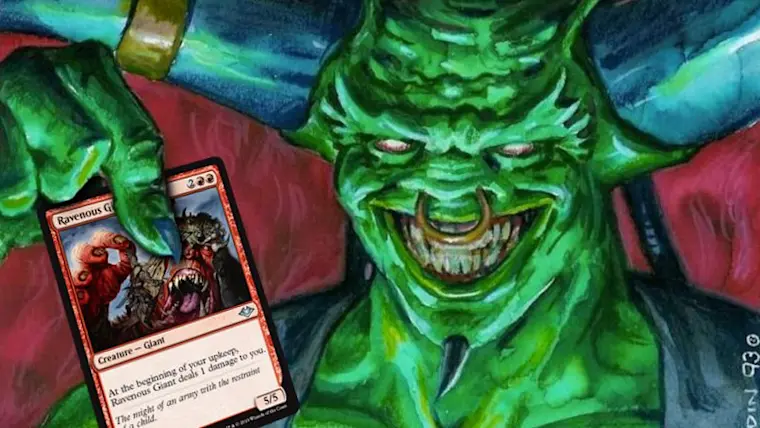
The people at Wizards love to print cards like
The Current Situation
Mark Rosewater's latest comments on the Reserved List once again squashed all hope that these cards will ever see print again. I do not want to discuss whether these are bad news or good news. Instead I want to give a perspective on the associated possibilities and risks. However, first of all, here is what Rosewater had to say on the idea of amending or abolishing the Reserved List.
|
The Functional Reprint
Clear words. Younger individuals might ask: Why don't they print these cards with different names? Printing a card that's equal in every way but the name isn't allowed. This is what Wizards promised: "Reserved cards will never be printed again in a functionally identical form. A card is considered functionally identical to another card if it has the same card type, subtypes, abilities, mana cost, power, and toughness."
This means we won't see a card named Purple Lotus doing and being exactly the same as
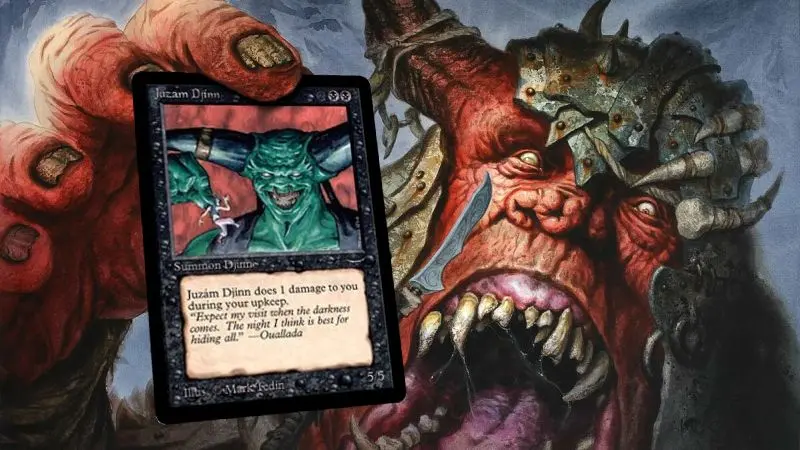
Personally, I view Ravenous Giant as a neat gimmick since nobody seriously cares about either Giant or Djinn as a playable creature these days. The case is noteworthy mainly because it reveals a lot about a possible future. I don't want to go full-blown conspiracy theorist here, but we may be able to read something between the lines …
The Possibilities Are Endless
In this section I want to discuss some ways we could get those infamous reserved cards without violating the policy. Wizards are dancing around the fire that is called the Reserved List. They pay homage, they print fixed versions of overpowered cards, and they make money doing this. It has been going on since forever. While doing so they get closer and closer to the power ceiling enshrined in the Reserved List.

Since the dawn of Magic we have seen different cards in different colors doing exactly or close to the same.
Furthermore
Moonveil Controversy? What Moonveil Controversy?
Lately there was a lot of chatter about a related topic. Some people identified


Let's use this thought as proposition. If Wizards actually started doing better versions of reserved cards, where would you start?
A Better Dual?
Let's look at the ten original dual lands as the subject matter for another thought experiment. These highly desirable nonbasic lands produce two types of mana, have two basic land types, and enter the battlefield untapped.


So how could we get duals that are just as good as the original ten without running afoul of the Reserved List? Following the Moonveil precedent, the answer is simple: just print better dual lands! Maybe they make you gain 1 life? Maybe lands with three basic land types, which we'd then have to call trials?
Obviously the hype would be unreal. The flow of money would be unlike anything we have ever seen. The classic Eternal formats, Legacy in particular, would enjoy a massive resurgence. However, there are more risks than one might think. Magic, with all its formats, the gameplay, the collectibility, and the passion involved, is an incredibly complex system. One can compare it to a complicated ecosystem.
For example Modern might crumble, if it found itself wedged between a suddenly more accessible Legacy and a still more accessible Pioneer. Making those cards could completely wreck players' perception of the game. What can top a set with either real or improved dual lands? Will any player want another set with pain, check, or shock lands anymore?
Then too we face a more cultural issue. To many players and especially collectors a move like that would feel like an actual
Conclusion
Magic as a whole is still doing great! Why mess around with this nasty Reserved List topic and risk possible lawsuits? Even if there are no legal repercussions at all, I think there is way more money to be made following the charted course, and we all know that's the mission statement at the end of the day. There may come a day when it's no longer possible to create exciting designs without crossing the boundaries of the Reserved List. In the case of certain four-mana creatures that day has already passed. But overall, we can look forward to many more sets before things like dueling duals become an issue, if ever.
Wizards recently confirmed their plans to expand in serialized cards. This would mean they create a kind of pseudo-Reserved List, which underlines the statements from Mark Rosewater. At least one thing is for sure:
Opinions expressed in this article are those of the author and not necessarily Cardmarket's.