
While writing this, I am 52 Drafts deep, resulting in fifteen trophies on Magic Online with a 101-47 record for a 69% win rate. I did have a rough start to the format, but after getting to experiment a bit in my first ten-ish Drafts I felt I got a better grip on it. I have found Zendikar Rising to be quite unforgiving your first few times, and I know several other very good Magic players had the same experience. So don't despair if you are a couple Drafts (or ten) into the format and still struggling. It's a tough format to master!

So, how did I start winning in this format? Well, I started drafting blue. Blue is the best color in the set in my mind. It sports a deep roster of strong commons and uncommons. Blue actually doesn't have a single "unplayable" card (save for Negate, but that can be an effective sideboard card) and is one of few colors in this set that can support multiple drafters. It also works well in tandem with any other color (apart from white in my experience, but I'll discuss white further down) and acts as a linchpin color in several top archetypes. It's also a color featured in two of my three favorite archetypes.
Conversely, white ends up at the bottom of my color rankings. Most white cards are pretty clunky, such as
My color ranking for this set is as follows:
- Blue
- Red
- Black
- Green
- White
I won't spend too much time discussing the colors individually, as I think the ten color pairs are more important in the context of the format, but this ranking can give you a good idea of where to pick cards of similar power level in different colors. For example, I am much more likely to want to be in blue than in white, so if I have the pack-one-pick-one choice between

As for the color pairs, I rank them as follows:
- Green-Blue Kicker
- Tribal color pairs (in order of White-Black Clerics > Blue-Black Rogues > Blue-Red Wizards > Red-White Warriors)
- Party decks (black-red > white-blue)
- Black-Green +1/+1 Counters
- Landfall decks (red-green > green-white)
I think green-blue is the strongest combination in the format. It can generate huge value with kicker spells that are good early and better late and is able to splash even double pips without too much trouble.
The tribal color pairs are in the next tier down, but the delta is really not that big between the top two categories. In their optimal forms, I think White-Black Clerics beats out the other tribes on the back of the strength of
A creature like
Similarly, Blue-Black Rogues, which has a mill subtheme, beats up on slower decks due to the alternate win condition of simply having your opponent run out of cards. Slower decks are defined by relying on card advantage and incremental value, and often don't close out the game until perhaps turn twelve. If you can mill around fifteen cards from a controlling opponent's library by turn ten, which is far from impossible with Rogues, this means that the opponent's library will be almost empty even if they haven't drawn a single extra card during the course of the game. Even if you can't finish off your opponent via damage, the deck damage can be a
The remaining two tribes are more traditional aggro decks, and let's take a closer look at my pet deck for just about any set, Blue-Red "Spells Matter."
Blue-Red Wizards
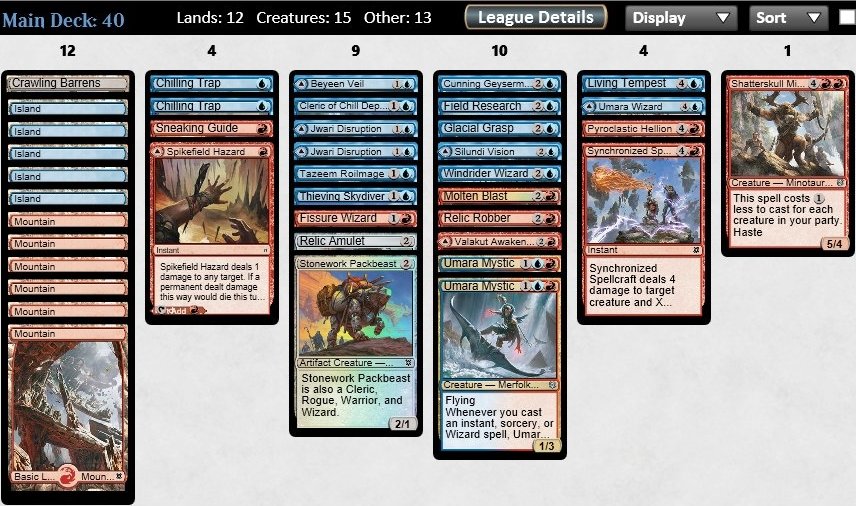
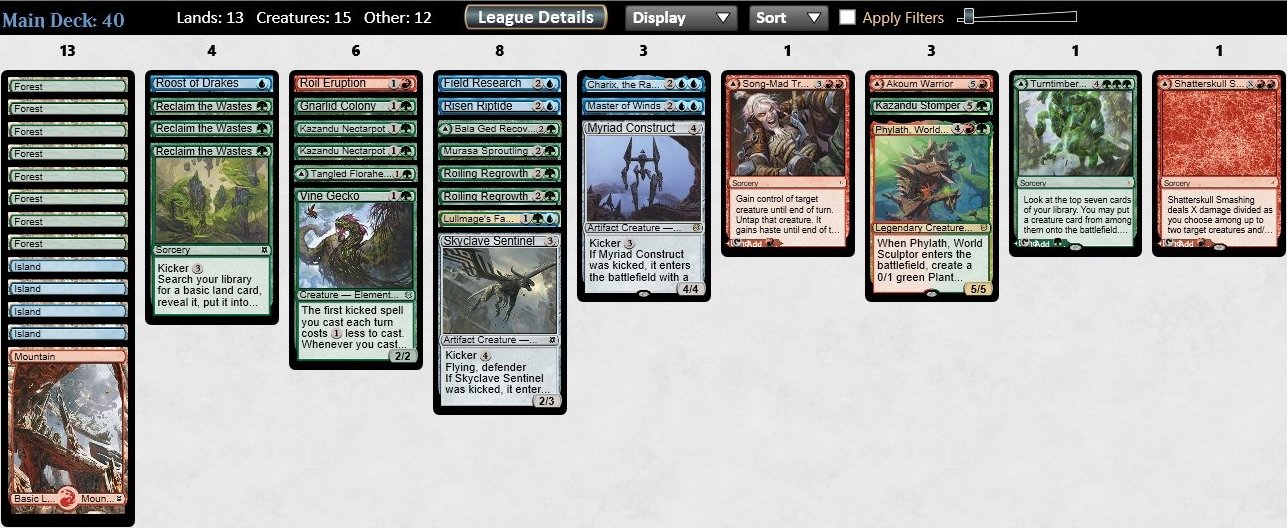
The classic spellcaster archetype got a small addition to their normal "whenever you cast a noncreature/instant/sorcery" trigger, now also triggering off of Wizard spells. This means that in a dedicated Wizards deck, almost all your spells will trigger your payoffs. This makes deck building a lot easier, as you don't have to walk the fine line between balancing instants and sorceries and creatures. It's a welcome addition to the ability, and something that really augments the archetype.
Blue-red doesn't have to be all Wizards, however. It can also make good use of the party mechanic, as you can see in my two example decks. It can also make use of kicker, as blue has the greatest access to this mechanic of any one color, letting you have a lot of outs to a good deck even if Wizards as a deck isn't completely open.
The deck is often aggressively slanted and often looking to beat down in the air while removing or otherwise invalidating the opponents threats. You're looking for tempo-positive plays, such as cheap removal, bounce, and cheap efficient threats. The curve of
Key Uncommons
Key Commons
Green-Blue Kicker/Ramp
Next, let's take a look at what I have as the best archetype in the set. Green-blue is headlined as "the kicker deck" but in reality, it is so much more than that. While you without a doubt want to make use of the kicker mechanic in these colors, there are a lot of different strategies and synergies you can lean into when drafting this combination in Zendikar Rising.
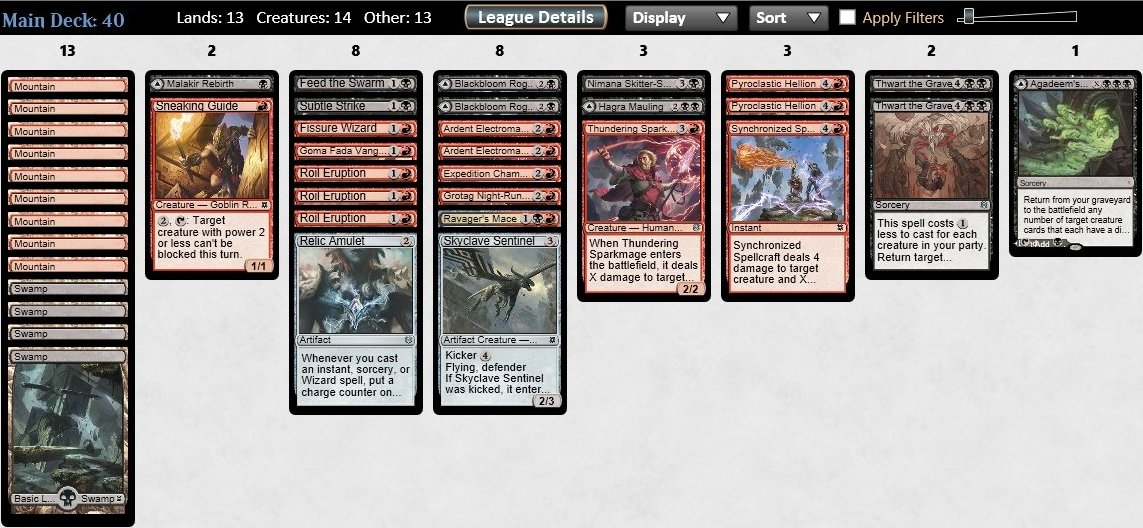
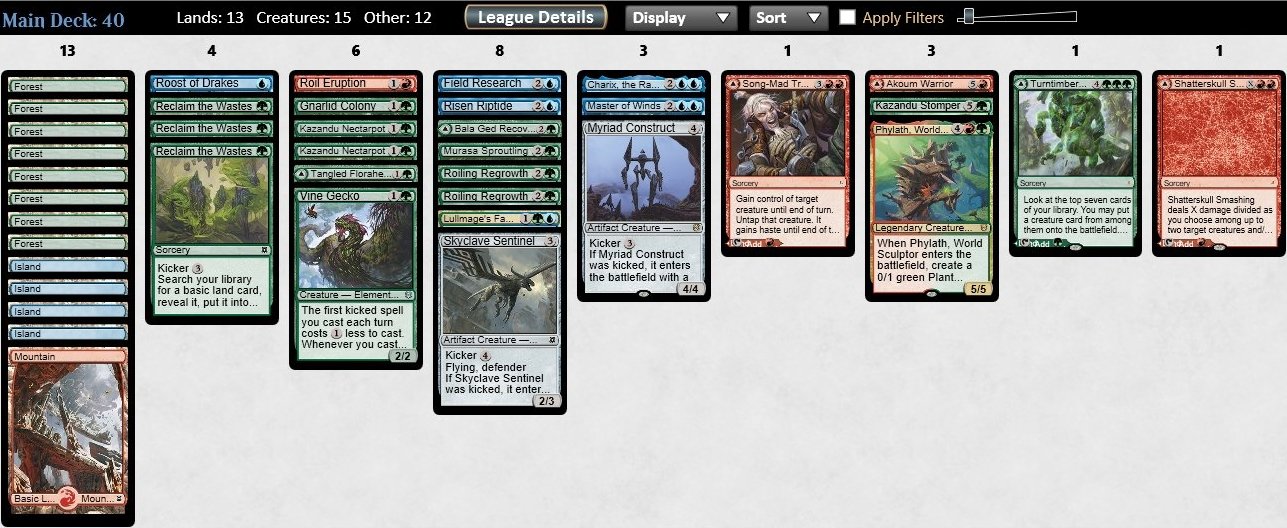
As you can see from these decks, neither are 100% focused on kicker, but it is a subtheme in both of them. A second shared feature of the decks is a third color. The first deck splashes for a single card, but the second is essentially "Three-Color Green," with six blue cards and five red in the pile.
The color pair lends itself excellently to splashing, with
Your pick orders vary a bit depending on the direction into which you're taking your green-blue deck, but in general I'd list the key commons and uncommons as follows.
Key Uncommons
Key Commons
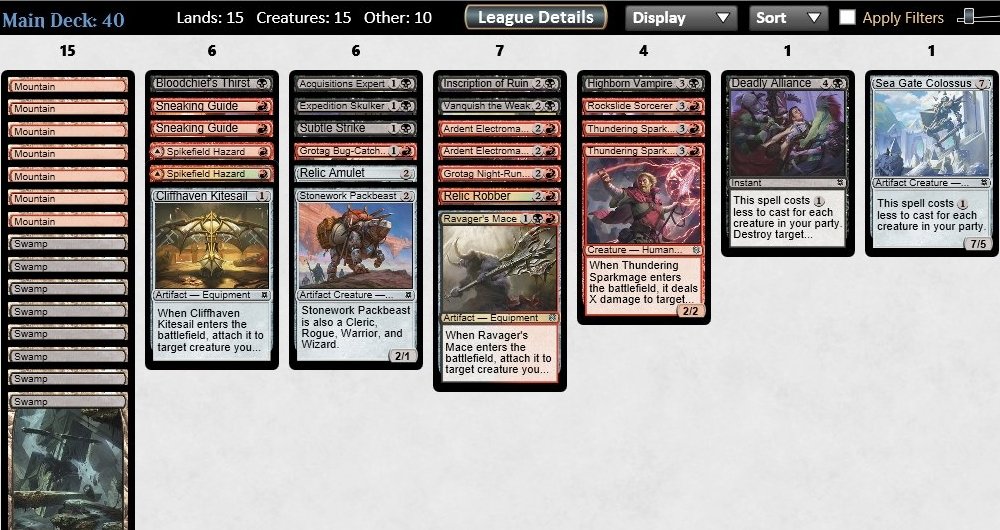
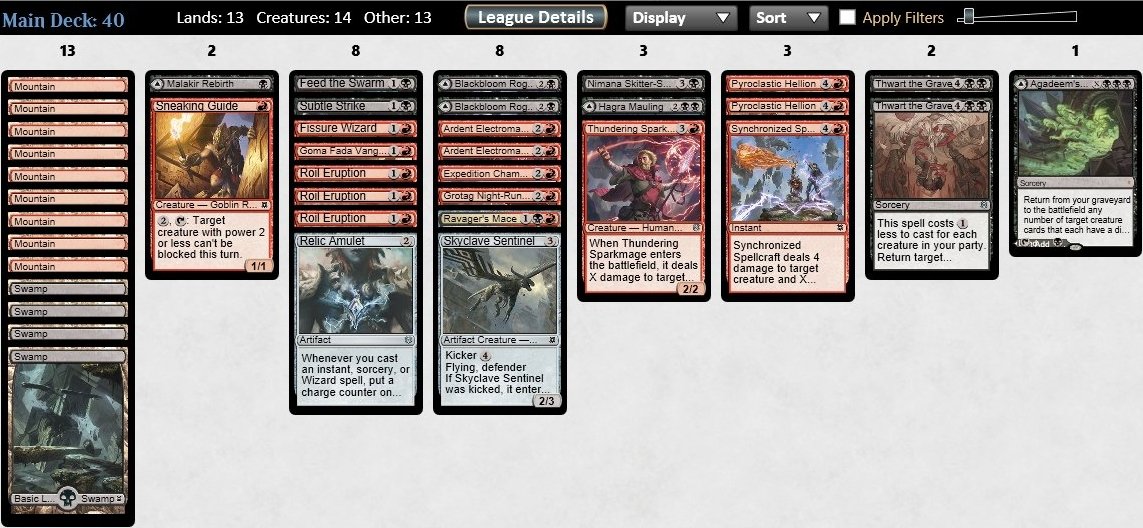
Black-Red Party
Of course, there are nonblue archetypes as well, and my favorite among these is Black-Red Party. Red and black have access to the most efficient removal in the format, along with some very good creatures. The archetype is aggressively slanted, and your best decks will want to push damage early and close out with
Contrary to some aggro strategies of past formats, however, you don't really want to trade off creatures. You want to keep your party count high, and for this reason, evasion and removal become even more premium for the deck. Use your removal liberally to clear away blockers. There is no shortage of removal you are more than happy to include in your deck. Cards like
My hobby: having spent seven mana by turn three. pic.twitter.com/jJZbLGNMs5
— Tobi (@TobiHenke) October 4, 2020
Speaking of double spelling,
You will also see that "keyword: type" is an important factor among creatures in your deck. There is a high bar to clear for creatures that aren't Clerics, Rogues, Warriors, or Wizards to get included in these decks. Basically the only one I'd really want is
Key Uncommons
Key Commons
Underperforming Archetypes
For me personally, the landfall decks along with WhiteBlue Party have underperformed compared to the other archetypes. I am avoiding green-white unless it is abundantly clear that both colors are open, and while I have had some decent white-blue decks, I am yet to 3-0 with one. There may be some secret to the color combination that I am yet to discover, as I've seen other people have good success with it. I have been unimpressed with the party payoffs in blue and white, save for
And while white-blue has legs, I truly believe that you never actually want to be drafting the landfall decks unless you get spotted several of the sign-post uncommons along with good on-color rares. Only nine commons sport the keyword, two of which are not even in green, white, or red. This compared to kicker, which is represented on fifteen cards at common, and party, which is featured on thirteen (along with the majority of creatures having party-relevant types), makes landfall the least supported of the main mechanics by far.
The "glue cards" and the best payoffs are all situated at uncommon. While the uncommon-filled landfall decks are often very good, having those cards get opened and for the deck to be open is much, much less likely than getting into a good blue-red or black-red deck. With only
What decks have you been having success with? Have you unlocked the secrets of White-Blue Party? Let me know in the comments!
Happy drafting!
Opinions expressed in this article are those of the author and not necessarily Cardmarket.