
Just like the low-to-the-ground and in-your-face approach of a monored deck, SirFunchalot, whose real name is Dan, does not pull any punches when it comes to spreading the gospel of aggro in Cube. Blunt and perhaps even controversial, SirFunchalot's Unpowered Fair Stuff list remains a highly influential reference point for cube curators around the world.
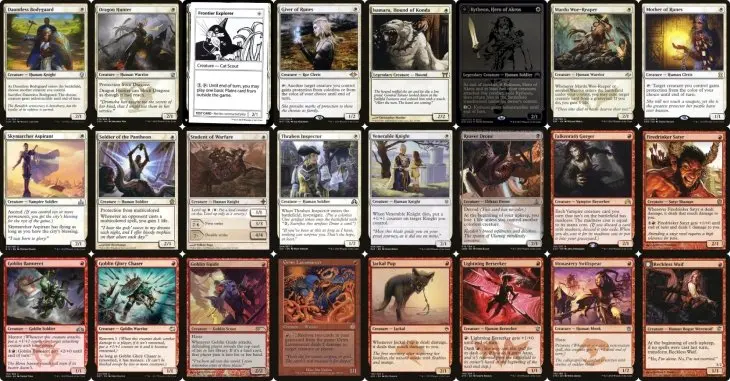
Having looked for an opportunity to present Insight's readers with some more meaty Cube content for a while, I had no doubt that it would most likely be inspired by the ideas of SirFunchalot. In the end I decided that it would make more sense to go straight to the horse's mouth rather than paraphrasing his already eloquently formulated Cube philosophy. Luckily he agreed to share his insights with us in the following interview.
Sancho: What led you to the wonderful world of cube building?
SirFunchalot: I started playing Magic: The Gathering around Seventh Edition, but it wasn't until the release of Mirrodin that I stopped playing tournaments for Yu-Gi-Oh! and started playing tournament Magic instead. Eventually my love for higher power level constructed Magic led to me to Cube, which does away with all of those icky bad cards that normally plague retail Limited, and from 2014 onward I've been curating and drafting Cube with a heavy emphasis on cultivating a balanced and skill-testing format.
What are the macro archetypes of Magic and why should a cube curator care about them?
The four macro archetypes of Magic are aggro, midrange, combo, and control. Under each of these umbrella archetypes you will find every single strategy in the game as every deck is trying to win on one of these axes. Aggro decks try and win the game on the axis of tempo by playing a lean curve capable of killing your opponent before they can cast their more expensive spells.


Control is a reactive strategy that tries to win on the axis of card economy, leveraging a resource advantage to grind their opponent out of meaningful plays and eventually killing them through the inevitability of their higher card count.
Midrange is an adaptive strategy that will often flex between the role of the aggressor or defender depending upon the matchup. Midrange decks typically try and win on the axis of card quality and pressing a mana-advantage by consistently curving out. They try to use of all of their mana every turn to eventually take down their opponent with a stream of consistent pressure and card flow.


Combo is the most different of the macro archetypes in that it can be both an early-game or late-game strategy depending upon the specific win condition being implemented. But the general game plan is to deploy a win condition that your opponent either cannot answer or must answer immediately unreasonably early in the game or else you win.
Cube curators should understand and care about the macro archetypes of Magic as it can inform them as to how diverse the play experience of their format truly; how to better cultivate balance by understanding what these archetypes are trying to do on a fundamental gameplay level; how to best attack them.
How does a cube focused on macro archetypes differ from one that has for example ten archetypes based on color pairs?
Cubes focused on guild archetypes are also often cubes focused on macro archetypes, but their curators simply aren't conscious of that fact. A cube choosing to showcase White-Blue Blink, Blue-Red Spells Matter, Black-Red Aristocrats, et cetera is often archetypically homogeneous in that every supported deck archetype is some flavor of midrange. They're all adaptive strategies that change their role depending on the matchup or game state and aren't explicitly trying to win through early aggression or late-game card economy, nor are they setting up some sort of combo kill.


These archetypes echo retail Limited, which is always archetypically homogeneous midrange stuff and simply uses these differently flavored synergies to spice up the draft experience. So newer or less experienced players aren't consciously aware that every deck they draft is really just playing a mix of inefficient creatures, removal spells, and some top-end bombs. Because sometimes they get to do something sweet with a sacrifice outlet plus
What purpose does the focus on macro archetypes serve in a cube environment?
By intentionally seeding a diverse mixture of macro archetypes you allow your players to engage with Magic in a way where they can play to a wider array of fundamentally different game plans. The way in which you have to draft, mulligan, sideboard, and build a monored aggro deck is radically different from the way in which you draft a white-blue control deck. Everything one deck is looking for is so fundamentally different from what the other deck wants.
Most Magic players tend to have a preferred macro archetype that they gravitate toward and enjoy the play patterns of more than others. So by ensuring that your format is diverse in this way you can better cater to the subjective individual sensibilities of more players. Some players just want to punch you in the face with tiny dudes and lightning bolts, others want to counter your best cards and wrath you out of the game, some are content to deploy a grindy midrange strategy with planeswalkers or some synergistic engine powering it through the late game, and some of course just want to reanimate some big monster and say, "Have an answer or lose."
What should cube curators look for if they want to support aggro?
If a curator wishes to support aggro they need to ensure that the strategy is consistently draftable and capable of implementing its game plan. What this means is that since aggro is a critical-mass strategy it needs a large density of cheap creatures such that it can reliably start the game deploying threats. Aggro cannot ever afford to miss its one-drop, especially going second, so great care should be taken to ensure that they aren't going to be forced to mulligan very frequently to have this necessary starting position.
I suggest using a hypergeometric calculator to figure out how many one-drops you need in your cube such that aggro is reliably able to get at least nine or so one-drops in their finished draft pool as that is the number necessary to see one reliably in your opening hand. (This disregards hands you still need to ship back because they have too many or too few lands.)
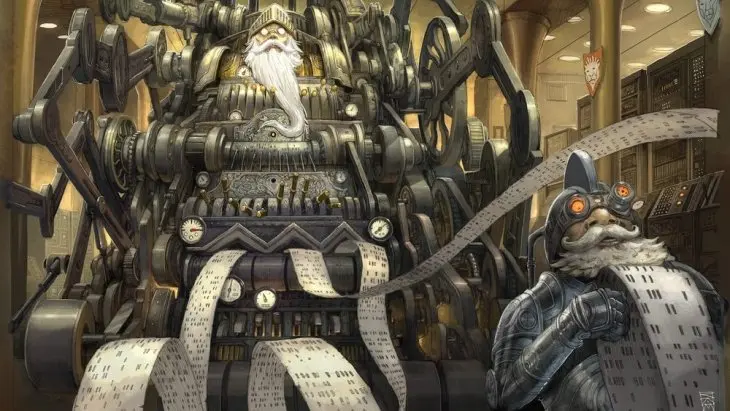
How do you evaluate if a new card should be included to support aggro?
When evaluating a new card for your aggro support package the most important things to look for are its mana cost, it's power/toughness, and whether or not it has an immediate effect or some resilience to removal as those are the most powerful classes of creatures. A card like
Beyond just threats, each color does need a backing of generic support cards. White wants its spot removal and
Which five cards do you consider the best aggro cards?
The five best aggro cards are probably all generically broken cards that every deck would play, stuff like
Could you name some recently printed cards that look promising for aggro?


For white aggro I think some cool recent additions are
What is the weakest aggro card that you still have in your Unpowered Fair Stuff cube?
The weakest aggro card I still play probably is
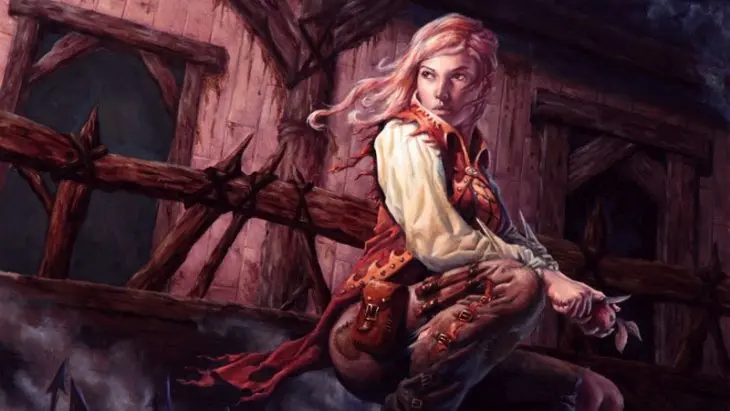
What are you looking for in upcoming releases to be able to replace that card?
In general, I'm always looking for higher power level one- and two-drops, so stuff with premium stat lines and if possible, a great enter-the-battlefield effect like
Are most aggro cards highly parasitic? Or is there a good selection of cards that have something to offer for aggro decks as well as other macro archetypes?
The backbone of nearly every archetype is parasitic cards. In order for decks to operate on unique axes and execute their unique game plans they simply need cards that are powerful and that other players can't use. Stuff like
The only way to get away from decks needing these sorts of parasitic enablers is to have an archetypically homogeneous format with no synergy archetypes and only a single color. While it might be a fun game for someone out there, this isn't exactly what I'm looking for from a Draft experience, so I've made my peace with these narrow cards.
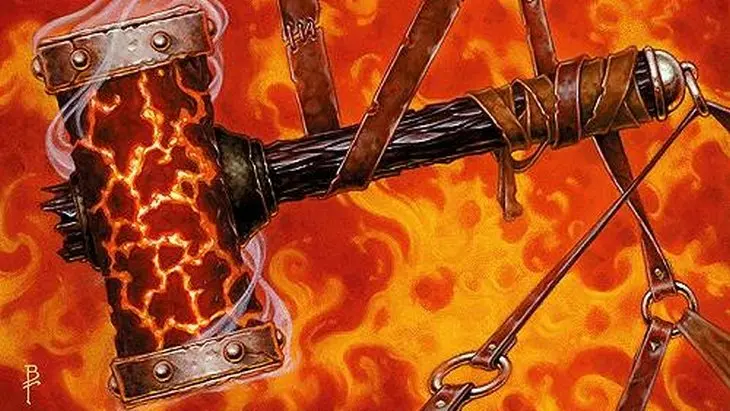
As far as archetypically flexible stuff goes, that's going to be your bread-and-butter good-stuff cards: things like spot removal, targeted hand disruption, counterspells, cantrips, burn, et cetera, the cards that basically any deck regardless of game plan will generally want some number of if they're in those colors. It doesn't matter if I'm playing Monored Aggro, Blue-Red Tempo, Jeskai Control, or Gruul Stompy — I'll always happily play
Do you think that a cube should support aggro in all colors?
I don't think supporting aggro in every color is necessary. I only support it in white, black, and red. But if your playgroup is all a bunch of aggro junkies, then you can certainly try to support it in all five colors. Although the lower power level of blue and green aggro relative to the other three would likely force you to power down the format to allow them to all compete on an even playing field.
What are the strengths and weaknesses of aggro in some of the five colors?
So, as I previously mentioned blue and green aggro are the two weakest colors at the aggressive game plan and that's because they lack efficient answers to opposing threats as well as ways to push damage. White, black, and red all have premium spot removal spells that they can use to neutralize blockers, of which red's can also go straight to the face. Blue and green don't really have these kinds of effects as bounce spells don't actually trade card for card. And that decrease in card economy can cost blue aggro players games. While it doesn't attempt to win on the axis of card economy, aggro does need all of its individual cards to help push it to the finishing line, and each extra resource your opponent gets on you is a very real hurdle you have to overcome.
Similarly, green doesn't really have any direct creature removal other than exactly
Can a cube have too much aggro? Are there cards that give aggro too much of an advantage?
Too much aggro is a subjective thing that each individual playgroup needs to decide on. For me, having three different monocolored aggro strategies is great, but for another group that prefers slower, more midrange games that could be too many. As far as cards that give aggro too much of an advantage, I'd say you should look at which cards specifically hose control decks. The aggressive game plan tends to line up naturally favorably versus most slower reactive decks that cards like
Obviously each format is going to have somewhat of a rock/paper/scissors to it where each macro archetype is going to line up favorably and unfavorably against others. But it's important to monitor just how extreme this polarity can get. It can feel a bit too deterministic if these win-percent differentials get too high. I'm okay with Monored beating White-Blue Control 60% of the time, but if it has a bunch of stuff like Strip Mine and Sulfuric Vortex that matchup can pretty easily become an 80:20 or worse, and then I personally think the gameplay stops being as fun and engaging.

What should players look for when drafting aggro in a cube that supports the archetype?
Players who are looking to draft aggro should be looking for cards that tell them that other drafters are ignoring the archetype. If I'm drafting my Unpowered Fair Stuff and I see one of black's recursive one-drops go pretty late, that's a signal to me that the archetype is open, and I should consider moving in. Generally you want to see the more unique and hard-to-replace premium versions of things, so stuff like
Does the current card pool allow for aggro in larger cubes and in powered cubes?
Aggro is absolutely viable in large cubes although the card quality does tend to wane a bit as far as one-drops are concerned once you go above 540. In powered cubes I think its viability depends on the format and the type of aggro deck. I think white and black aggro hold up very well if they're consistently supported in Vintage cubes as they can pack a lot of disruptive elements to slow down some of the faster combo decks like Storm and Fatty Cheat. But red aggro tends to suffer a bit here as its burn spells can't really interact with combo besides trying to race them. If combo is consistent and fast enough that can harm red's viability. Blue and green aggro also get much worse as the format powers up.
Is it necessary to break with the singleton principle to give aggro the proper support in some environments?
Needing to break singleton isn't necessary unless you have a very specific kind of aggressive strategy in mind or if your cube is particularly large. If you want to support monogreen aggro in a 540 cube, yeah you probably need to run extra copies of cards like


Is there something that has not been covered by these questions that you are burning to tell us all about aggro?
I think there's a common myth that aggro is a braindead deck that just turns things sideways. I think this has turned a lot of folks away from decks that, in my opinion, have some incredibly engaging and skill-testing play patterns. Aggro mirrors in particular are some of the most skill-intensive games of Magic out there. Playing against a control deck that's effectively sitting there doing nothing isn't super hard from the aggro side where you just punch them in the head. But in lower-to-the-ground and more interactive formats there can be real tension there as aggro players need to be concerned with whether or not they hold back resources to avoid overcommitting into a sweeper, or if they should press the board for a faster clock.
Aggro can also do a good job of keeping planeswalkers in check. The reliable early-game pressure can make playing greed piles with tons of value engines fairly weak as the walkers will trade massively down curve when attacked to death. This helps to keep midrange decks a bit more honest when the greed police are out in full force.
Find and test SirFunchalot's Unpowered Fair Stuff on CubeCobra and get more inspiration for your own cube projects by joining the MTG Cube Brainstorming Discord.
Opinions expressed in this article are those of the author and not necessarily Cardmarket.