
The Japanese word kaijū, literally "strange beast," was initially used to refer to any kind of fantastical or mythological monster, particularly those of large size. It became an enduring component of the pop culture of the twentieth century once the film industry got involved. Specifically, it appeared in the Japanese title of the 1953 Warner Brothers production of The Beast from 20,000 Fathoms, one of the first films to feature a giant creature, and the first "atomic monster" to ever grace a screen. The titular Beast, animated in stop-motion by Ray Harryhausen, is a formerly hibernated dinosaur that gets awakened by an atomic bomb test in the Arctic Circle.
Only one year later, Toho Studios's Gojira would make its debut in Japanese theaters. This marked the start of an ongoing franchise that generated 35 films — and counting — over the course of 66 years, not to mention an overwhelming number of ancillary products, from toys and TV shows to comic books and video games.
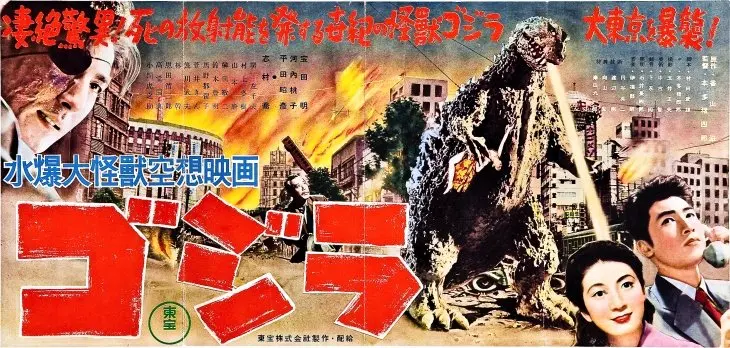
Following the success of that first outing, kaiju and its intensifier daikaiju — for the most giant of monsters — became terms indicating a subgenre of the Japanese tokusatsu movies, the science-fiction films heavily based on special effects. They popularized cinematic giant monsters all around the world, later even revitalizing the primordial one, King Kong.
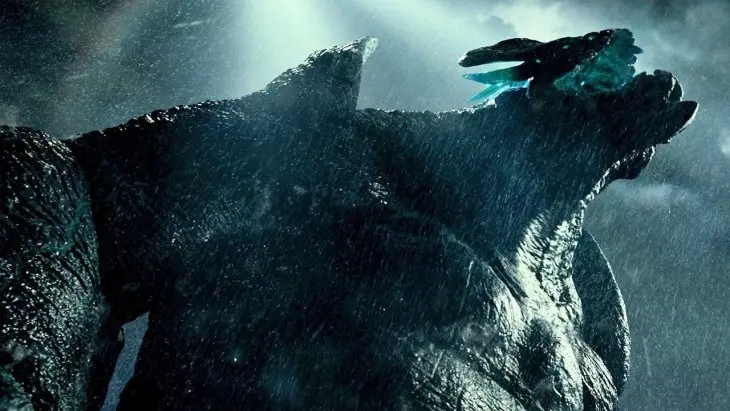
Over time, they inspired rival properties like the Gamera franchise as well as several Hollywood variations and homages such as Cloverfield (2008), Colossal (2016), and especially Pacific Rim (2013). The latter directly adopted "kaiju" as the generic name of its monstrous antagonists.
Now Godzilla is part of Magic: The Gathering, too. At some point during the development of Ikoria: Lair of Behemoths, a set already based on kaiju cinema, a partnership between Wizards of the Coast and the Toho Corporation came to be. This resulted in nineteen cards from the set receiving the Godzilla alternate-art treatment: one Buy-a-Box promo and eighteen box toppers, three of them only for the Japanese market.
The rules texts and the official in-game names of the Godzilla Series Monster cards are the same as for the regular versions found in the set. But their artwork and top-level name expressly portray some of the most famous monsters in the Godzilla series of films. Let's review them all, in chronological order of each kaiju's first appearance.
1) Godzilla, King of the Monsters

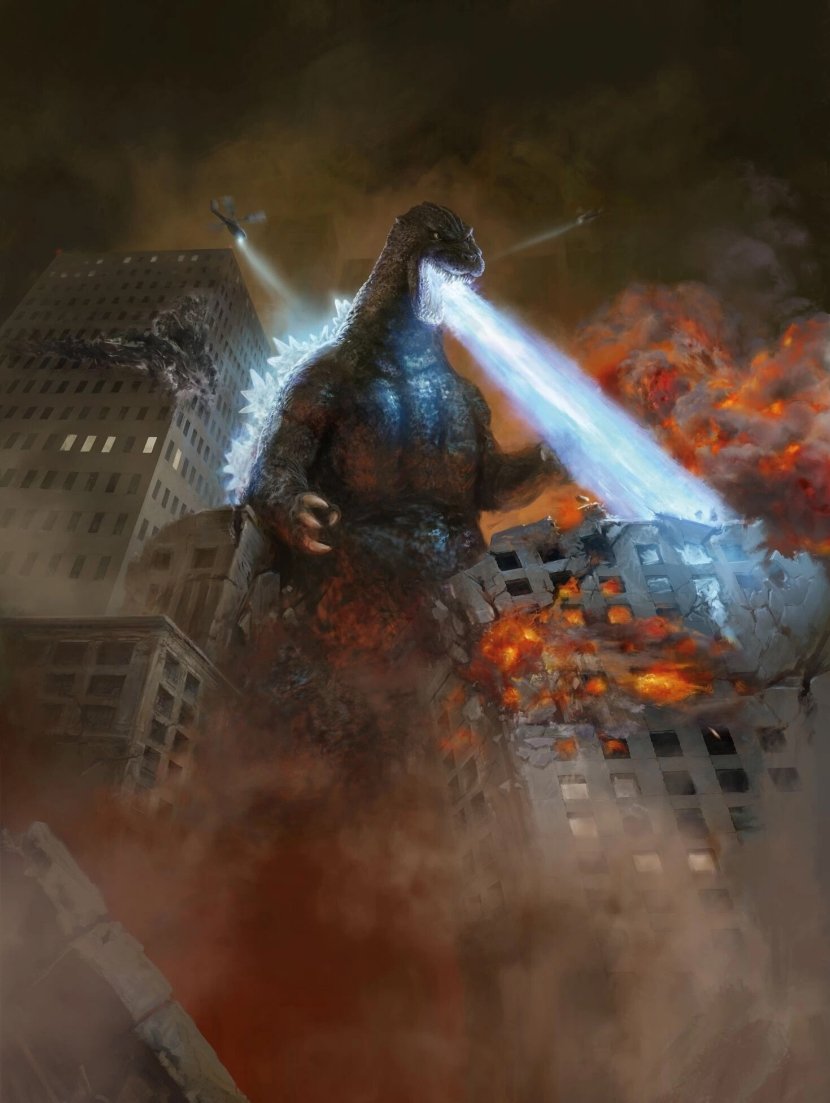
Of course we start with our scaly protagonist. Gojira, a portmanteau of gorira ("gorilla") and kujira ("whale"), would be anglicized as Godzilla, thus openly referring to its godlike might. It was directly inspired by Harryhausen's fictional dinosaur that wreaked havoc in The Beast from 20,000 Fathoms. Godzilla is a gigantic prehistoric reptile that comes from the ocean's depths but is also able to walk on land as a bipedal creature.
Its visual creator, Akira Watanabe, concocted it as a chimera made of disparate elements: part Tyrannosaurus, part Iguanodon, part Stegosaurus, part alligator. The most defining characteristic, though, is its relation with nuclear energy, which Godzilla feeds on and emits as its signature "atomic breath," a beam of insanely destructive radioactive power. The monster itself was meant as a metaphor for the consequences of the use of atomic weapons, whose environmental impact triggers Earth's angry reaction in the form of its roaring avenger. The bombing of Hiroshima and Nagasaki, which had happened less than one decade earlier, was still a fresh wound in 1954. That same year also saw the Daigo Fukuryū Maru incident, in which a Japanese fishing boat was contaminated following an American nuclear test at Bikini Atoll.

Godzilla's extensive movie career can be divided into several periods, traditionally named after the relative Japanese eras. The Buy-a-Box promo Godzilla, King of the Monsters takes its name both from the reworked American cut of the original Gojira and from the 2019 entry in the Legendary Pictures' MonsterVerse reboot. It represents Shōwa-era Godzilla, the classic version that made theater seats tremble between 1954 and 1975.
The card itself emphasizes one slightly unfortunate aspect of the whole endeavor, the fact that these designs weren't created as top-down adaptations of the Godzilla characters. Sure, some of them were already taking their cues from various Japanese monsters, but in most cases, the designers of the Godzilla promos had to make do with what they already had at hand. If we look at Zilortha, we can immediately note how this Godzilla wannabe lacks any connection with water, despite being in large measure a sea monster, "an intermediate organism between a marine reptile and terrestrial animal," to quote the 1954 film. Zilortha tramples, which is definitely in Godzilla's bag of tricks; its "strength incarnate" attribute sounds like a possible allusion to the Toho star; and its other ability is unique, but overall doesn't really render the sheer power and near indestructibility of the atomic lizard.
2) Anguirus, Armored Killer

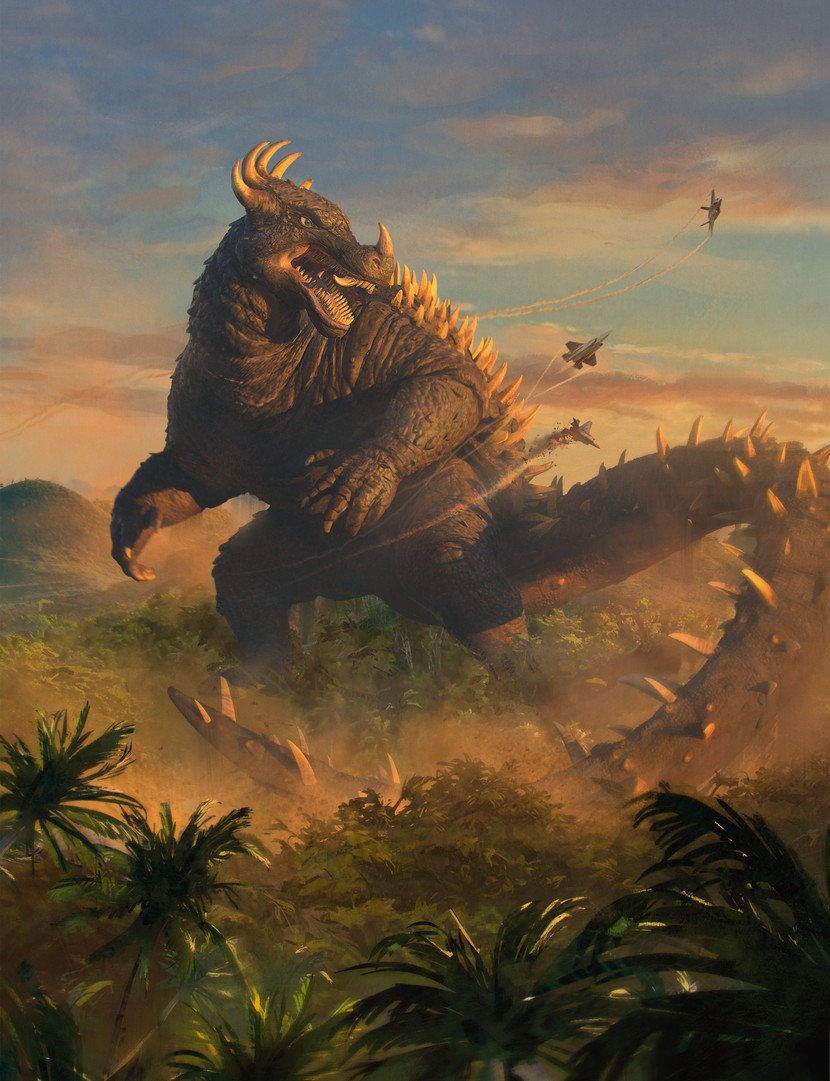

Meet Godzilla's first antagonist, later turned into best friend. Anguirus, also known as "Angilas," is a quadrupedal, armored dinosaur — mostly resembling an Ankylosaurus, but again with various other elements attached — from a race that maintained an ancestral enmity with Godzilla's species. The two first battle in Godzilla Raids Again (1955), the second film in the franchise. Despite not being the most popular among Godzilla's supporting characters, Anguirus would reappear several times during the Shōwa era, mostly redefined as Godzilla's main ally, and then one last time in Godzilla: Final Wars (2004), the film that closed the Millennium era (1999-2004), leaving the series dormant until 2016.
3) Rodan, Titan of Winged Fury

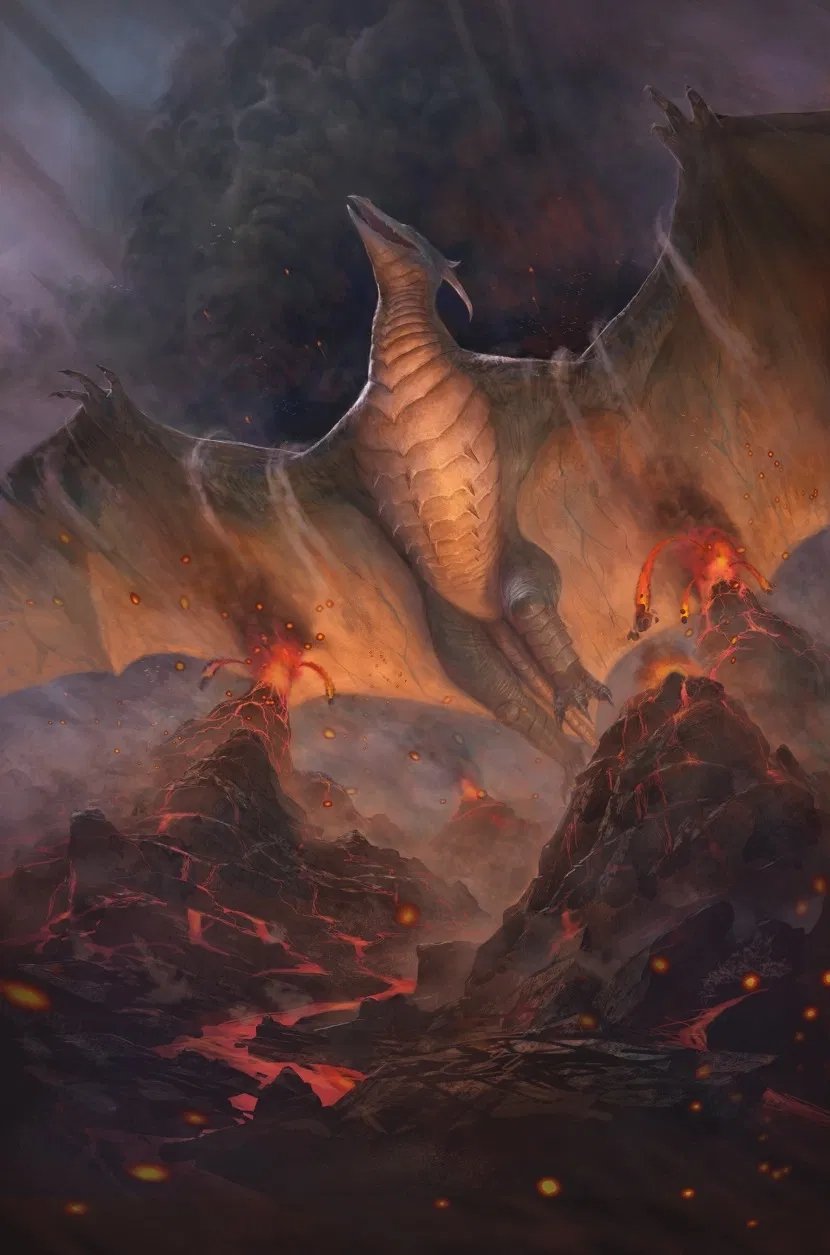

This massive Pteranodon with a passion for volcanoes debuted in its own motion picture, 1956's Rodan, the first kaiju film shot in color, directed by Gojira creator Ishirō Honda. It joined the Godzilla universe in Ghidorah, the Three-Headed Monster (1964), where it sort of acted as comic relief. Rodan is a well-received monster that showed up in a number of Toho productions and was most recently seen in the American MonsterVerse, first in a post-credits scene of Kong: Skull Island (2017), then with a full-fledged role in Godzilla: King of the Monsters (2019).
4) Mothra, Supersonic Queen

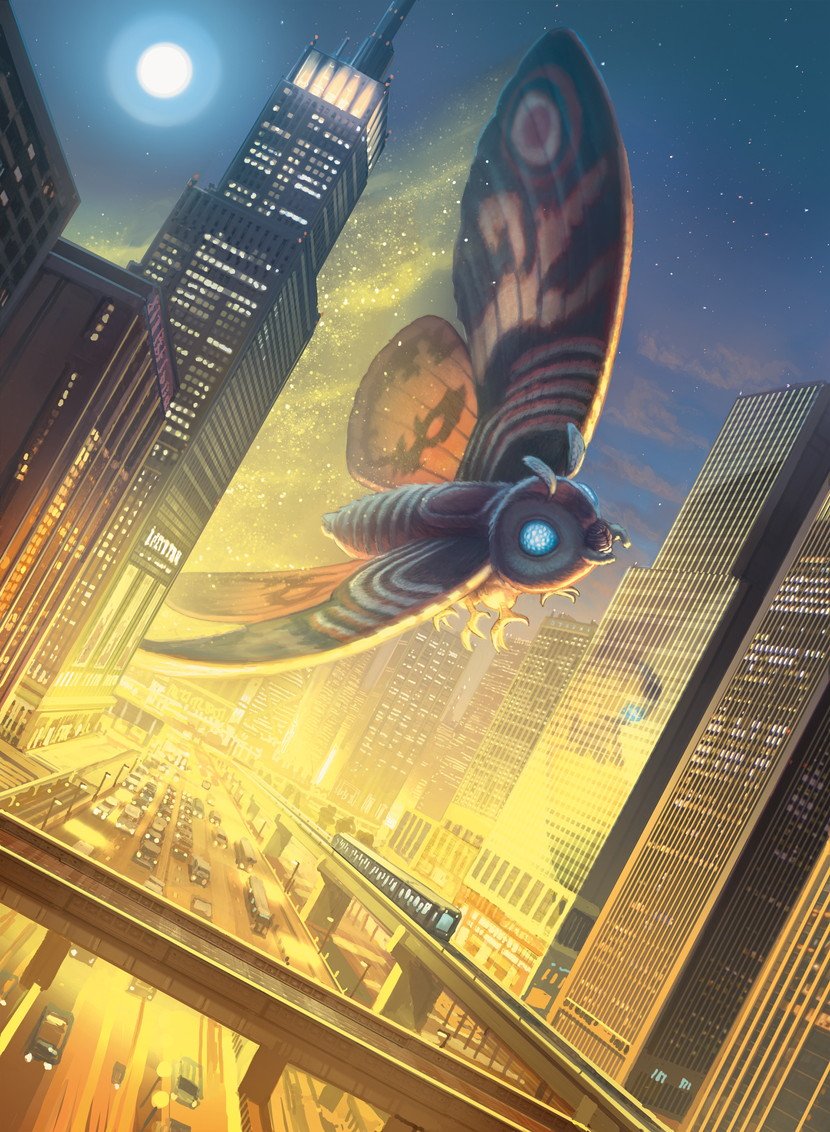

Similarly to Rodan, Mothra was first introduced with a solo movie, released in 1961, then entangled with the main series in Mothra vs. Godzilla (1964). She's a colossal moth with a few traits of a butterfly, and unlike most of the kaijus on this list, she's more of a protective force than a destructive one. She's essentially a Polynesian insect-shaped goddess from the fictional Infant Island, whose advent is routinely heralded by a pair of twin priestesses. She would prove so beloved as to spawn her own series of movies in the nineties, the Rebirth of Mothra trilogy (1996-1998).
5) Mothra's Great Cocoon

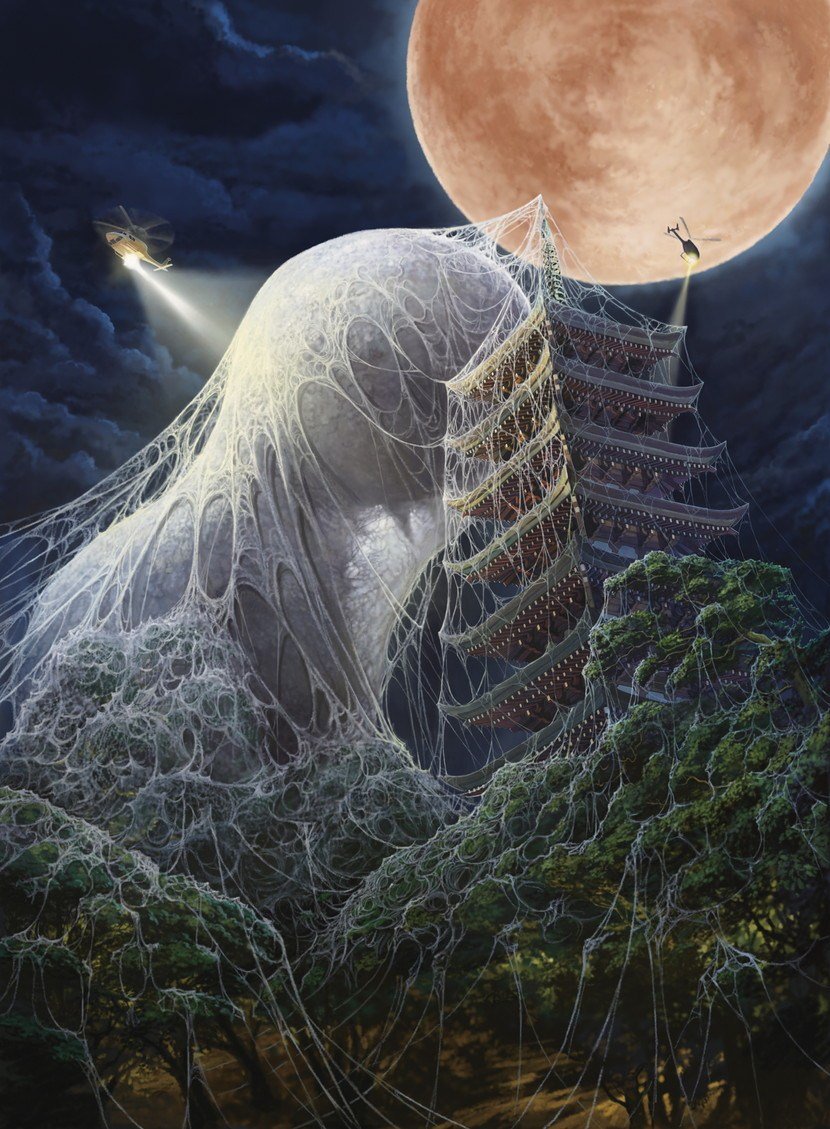

In Mothra's stories, we typically meet her in a larval state before the adult form emerges. It was last seen happen in last year's Godzilla: King of the Monsters.
This is one of three box toppers that will be released exclusively for the Japanese market. English and French versions were meant to be included in Collector Boosters, but due to an "internal error" they won't be. Wizards of the Coast announced they will be printing and sending copies of the missing cards to stores "in the near future." In any case,
6) Ghidorah, King of the Cosmos

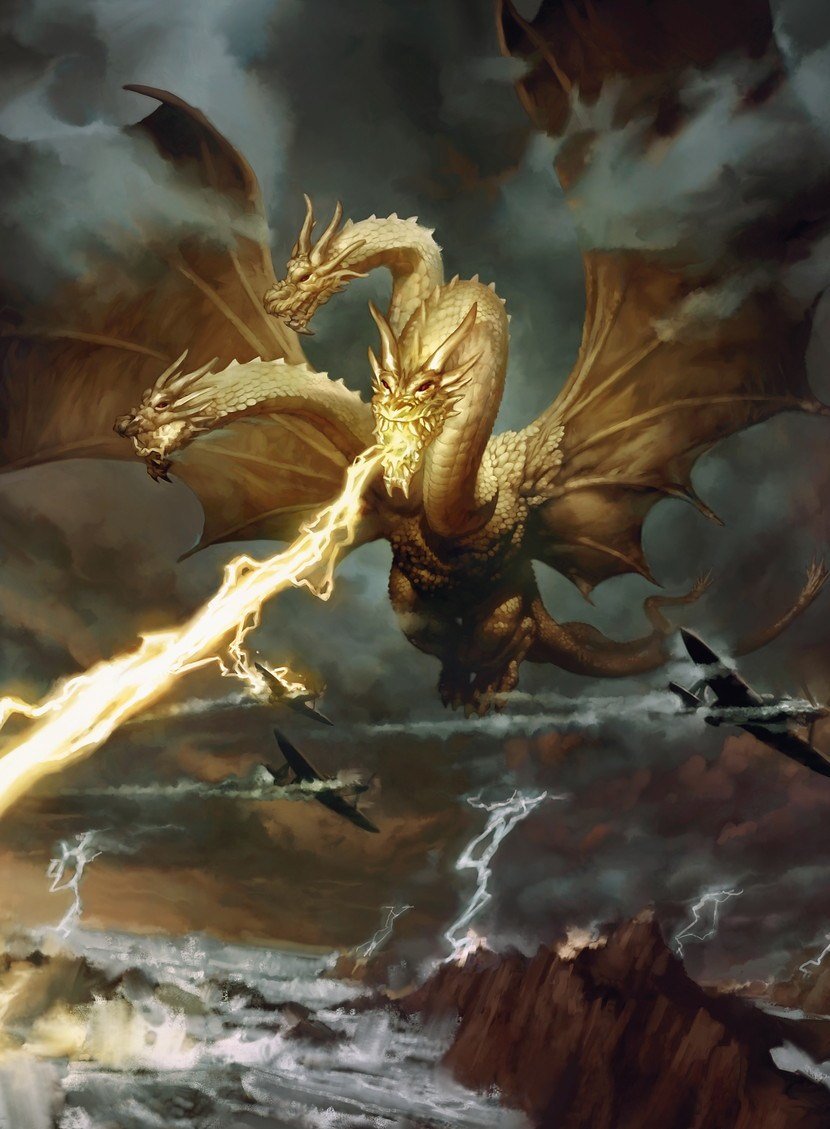

The three-headed dragon King Ghidorah is Godzilla's nemesis, so it was naturally chosen as the main antagonist in Godzilla: King of the Monsters. But for their first battle, the bat-winged monstrosity took the entire title, eclipsing its archenemy entirely. Ghidorah, the Three-Headed Monster (1964) would be followed by eight more films, released between 1965 and 2019, in all of which Ghidorah plays a major role. Along with Mothra, Rodan, and Godzilla itself, it's by far the most famous of the kaijus created by Toho.
Unfortunately,
7) Gigan, Cyberclaw Terror

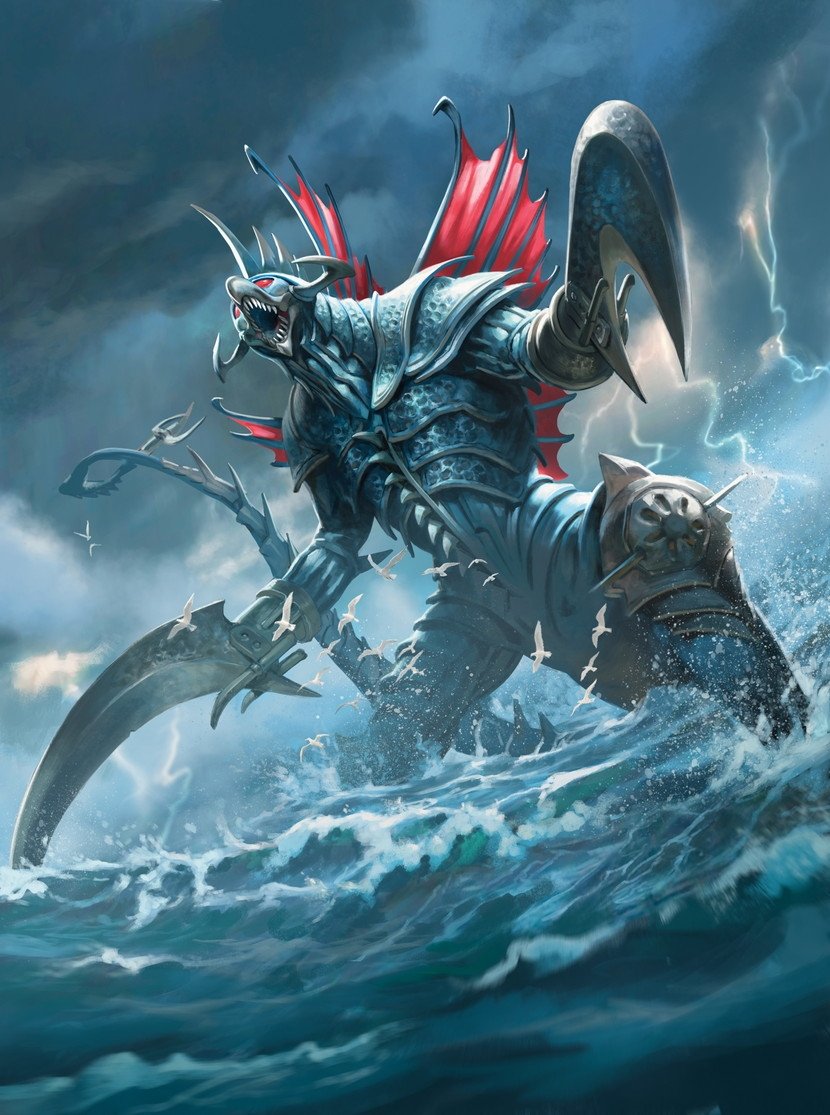

Gigan is a robotic dinosaur with a huge buzzsaw embedded in its chest — one of Godzilla's most violent and gruesome enemies, the first capable of making the King of the Monsters bleed. It came to Earth alongside King Ghidorah in Godzilla vs. Gigan (1972), then was back for more mayhem one year later in Godzilla vs. Megalon. Both are pretty terrible movies, by the way. After three decades of absence, it showed up again in Godzilla: Final Wars (2004), where it mostly fought against Mothra. The design seen on Gigan, Cyberclaw Terror references this latter appearance.
Alas,
8) Mechagodzilla, the Weapon

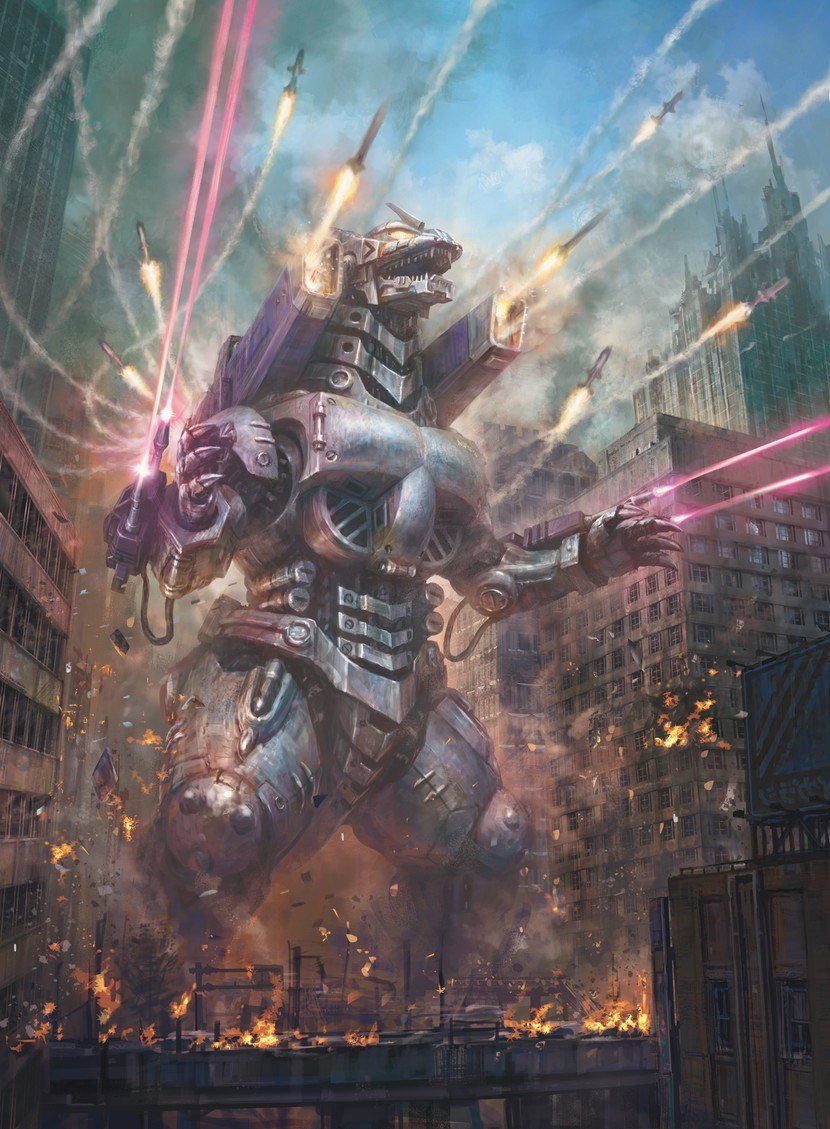

The seventies were all about the technological terror. In Godzilla vs. Mechagodzilla (1974) we witness our favorite prehistoric beast going face to face with its own robotic counterpart, in a cross-pollination between the kaiju genre and the equally popular mecha/giant robot genre. Somehow Mechagodzilla became iconic enough to keep resurfacing throughout all the Godzilla eras, with different origins and purposes — at one time it was a weapon built by the United Nations against Godzilla. It even participates in the acclaimed animated Godzilla: Monster Planet trilogy (2017-2018). The art for the Japanese-exclusive box topper closely resembles the late live-action design seen in Godzilla Against Mechagodzilla (2002).
9) King Caesar, Ancient Guardian

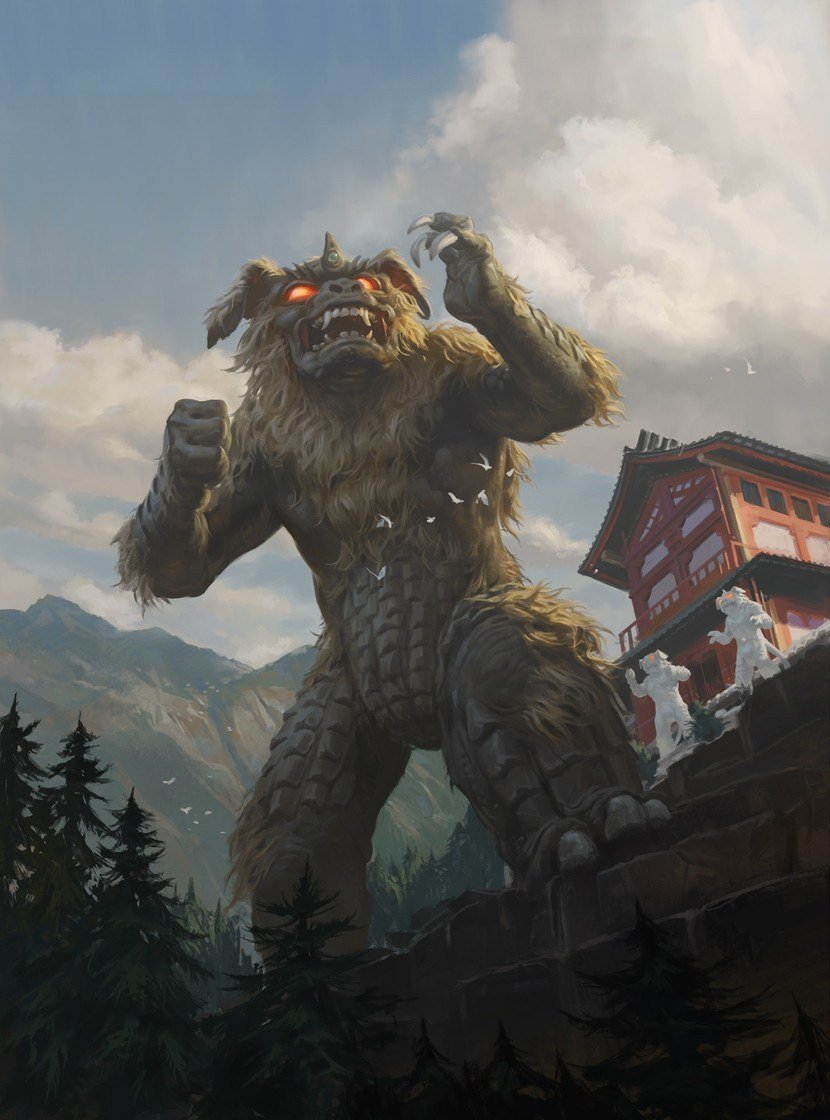

In Godzilla vs. Mechagodzilla (1974), the non-mecha version of our oversized hero is granted an unexpected ally: an Okinawan guardian deity. The English name of King Caesar is the product of the translators mishearing the word Shisa, indicating the sacred lion statues found all around Okinawa, which, according to local folklore, ward against evil forces. King Caesar is an unusual kaiju, a giant anthropomorphic cat that moves in a nimbler way than most of his colleagues. Despite only featuring in the 1974 movie and in Godzilla: Final Wars, which included pretty much all the kaijus that were Toho properties at the time, he's fondly remembered.
10) King Caesar, Awoken Titan

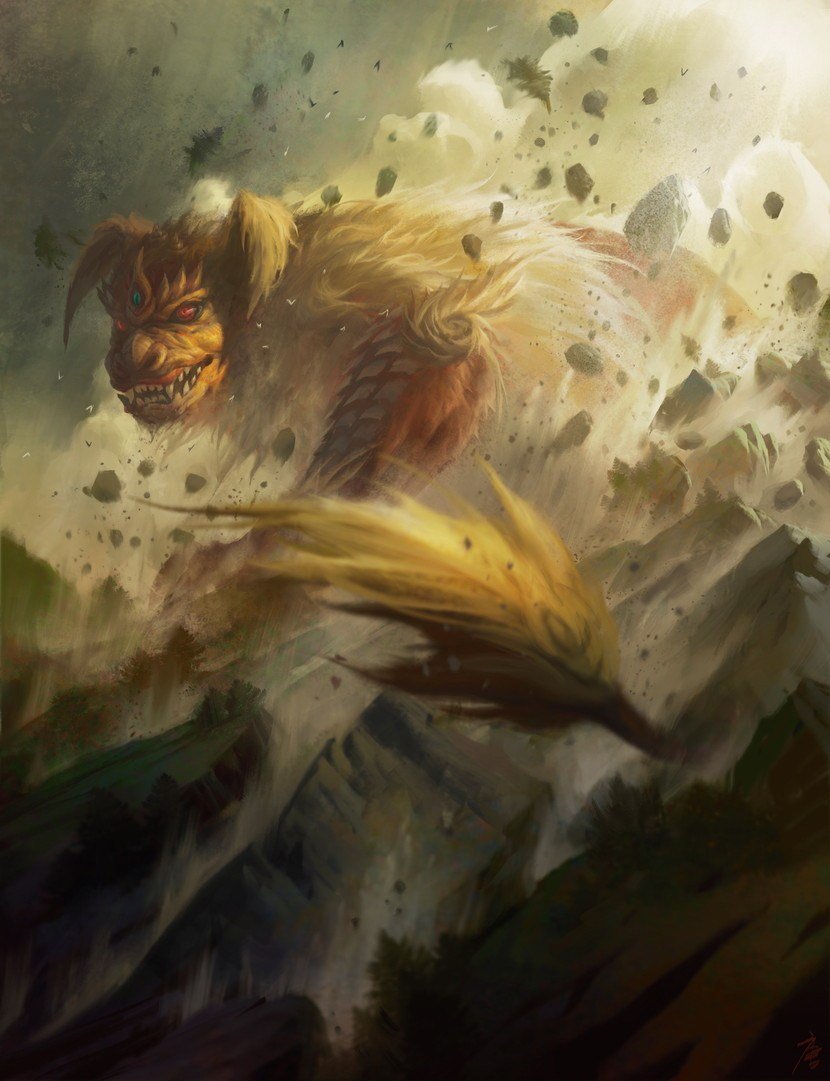

I can't tell why King Caesar is the only character, apart from Godzilla and its clones, that gets multiple cards. Okay, Mothra also gets an egg. Maybe it's because he had two good fits, as
11) Godzilla, Primeval Champion

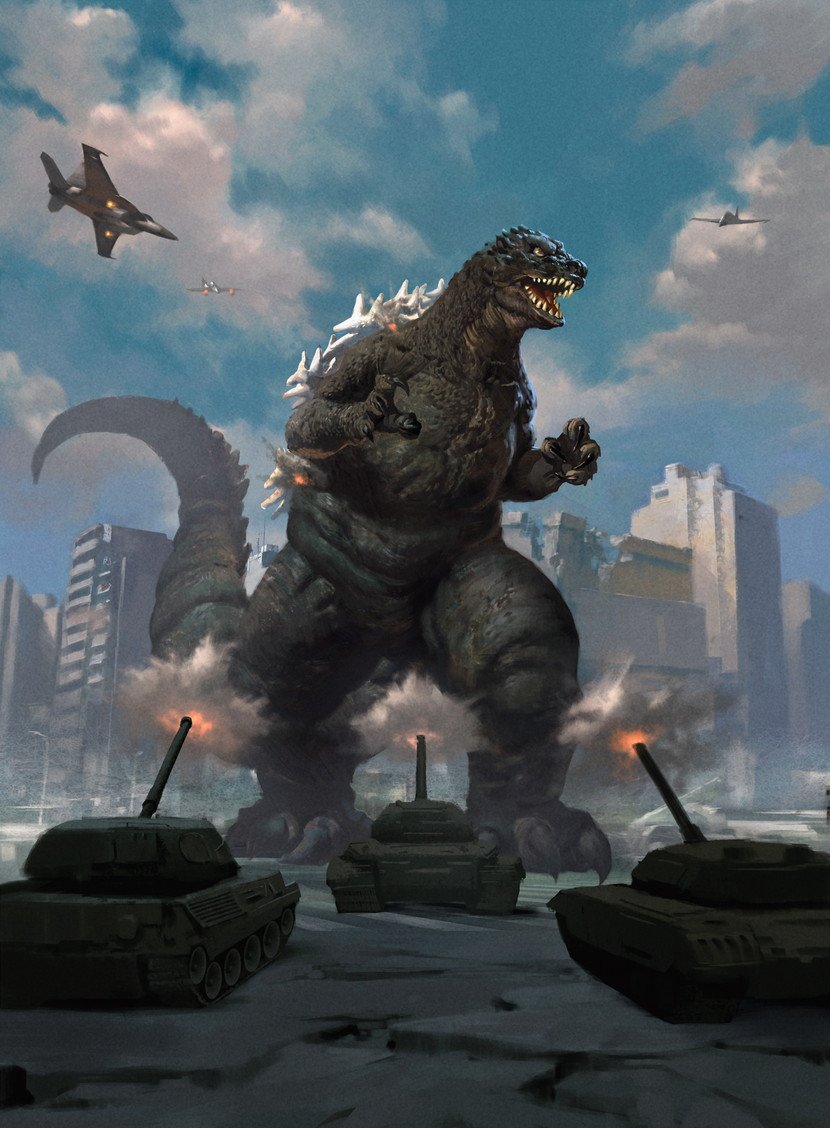

This is another iconic depiction of Godzilla, recalling its look during the Heisei era, that is, from The Return of Godzilla (1984) to Godzilla vs. Destoroyah (1995).
12) Biollante, Plant Beast Form

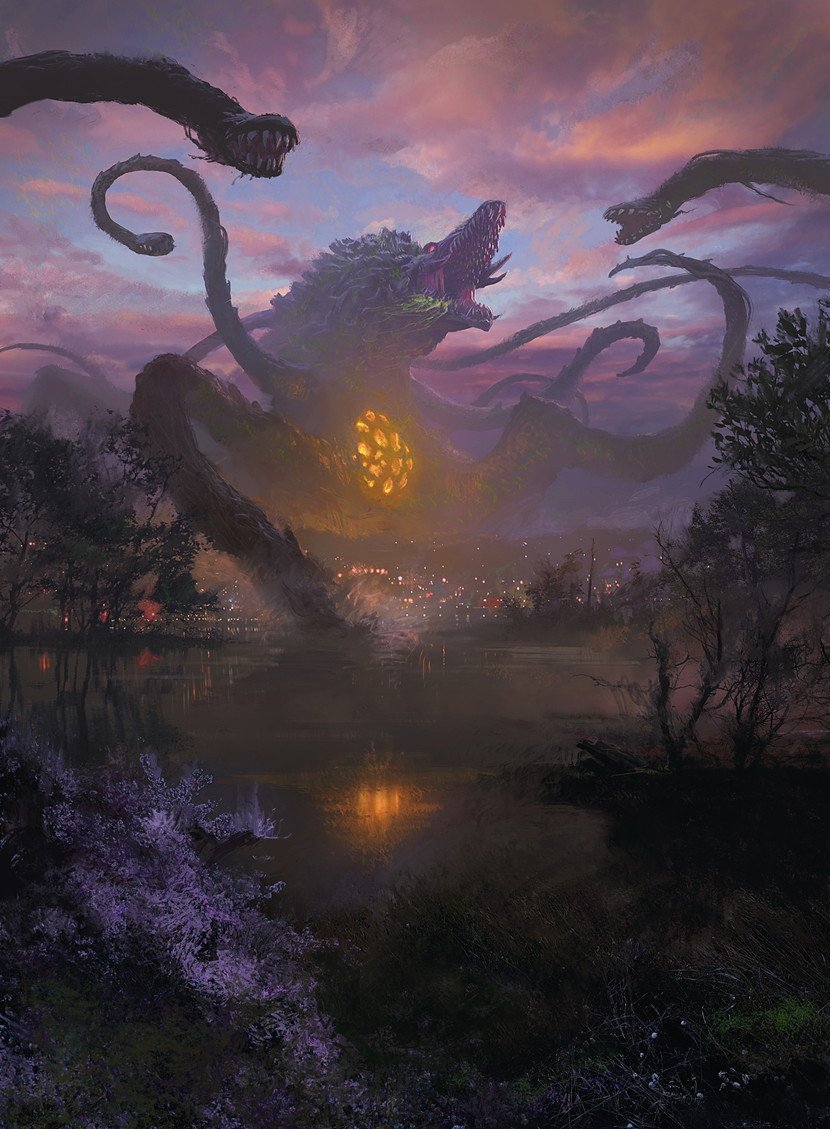

Biollante essentially appeared in no other movie than the aptly titled Godzilla vs. Biollante (1989), but it's still well-respected for injecting fresh, audacious ideas into a franchise that was at the time stagnant. Encouraged by the success obtained by the film version of Little Shop of Horrors three years prior, Biollante's creators made it a botanical horror genetically engineered from a combination of genes belonging to, in order, Godzilla, a rose, and the mad scientist's deceased daughter. Not your average back story.
I'm not proud to say
13) Dorat, the Perfect Pet

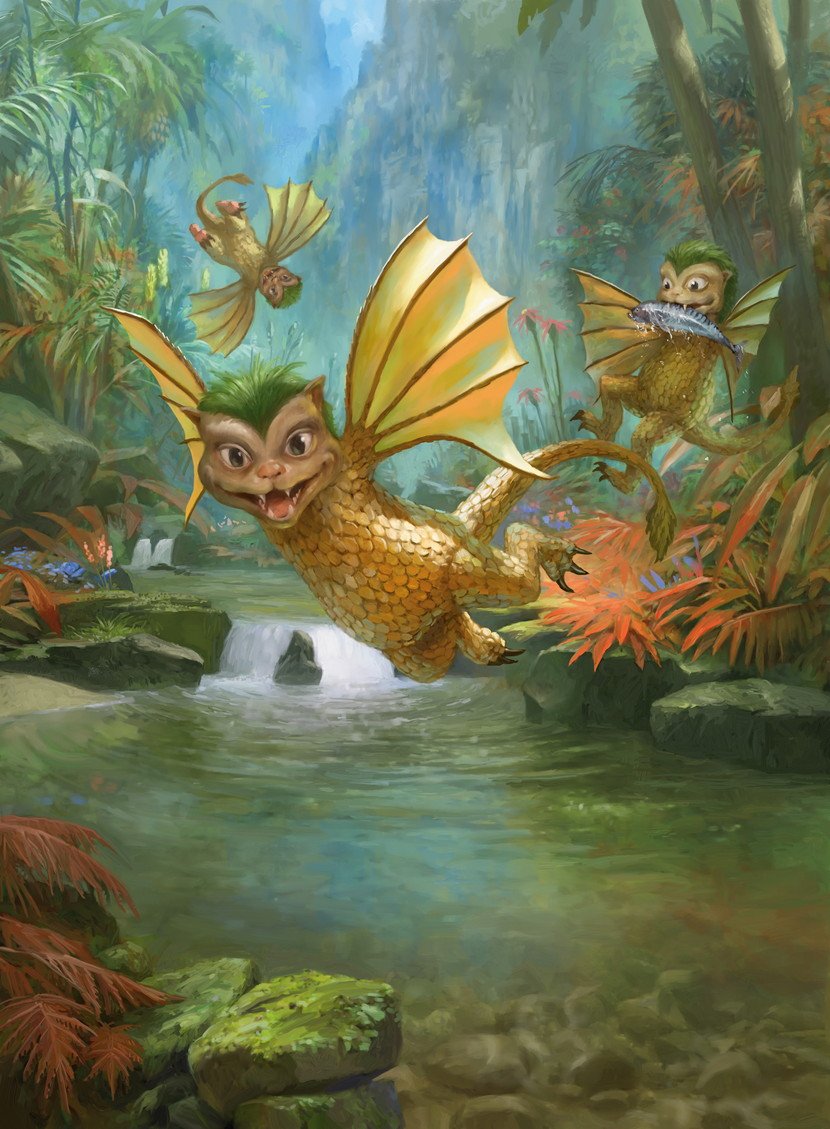

We're in deep cut territory now. In Godzilla vs. King Ghidorah (1991), the Dorats are a trio of, once again, genetically engineered creatures. They are taken back to the present from 300 years in the future as a basis to metamorphose into the titular tricephalous baddie. So, yay, they mutate! The film was the second Godzilla entry from director and screenwriter Kazuki Ōmori, the man responsible for Godzilla vs. Biollante, which had been a critical success but a box office failure. Ōmori felt that audiences didn't connect with his previous film because of the current trend of time travel movies launched by Back to the Future, while Toho executives wanted more kid-friendly fantasy elements. Enter the cute pets from the 23rd century.
14) Battra, Dark Destroyer

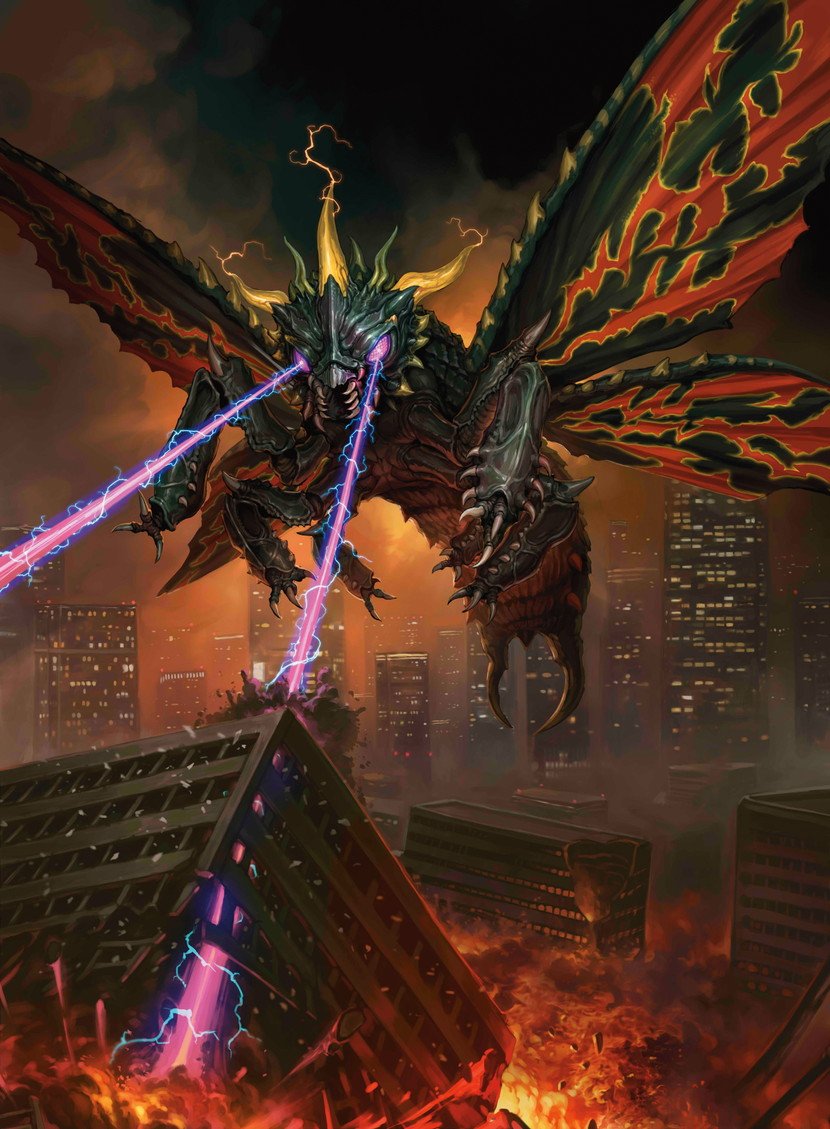

Battra is Mothra's dark counterpart, Earth's other safeguard system that at some point goes awry over humanity's shameless exploitation of its natural resources and threatens to destroy the very planet it was supposed to defend. It features in Godzilla vs. Mothra (1992) — not to be confused with Mothra vs. Godzilla (1964) — where eventually Godzilla has to fight both gigantic moths at once.
Now, Battra can pass for monoblack, and the ability to bring destruction upon mutation is on point. The two artworks even share a similar pose. If only
15) Babygodzilla, Ruin Reborn

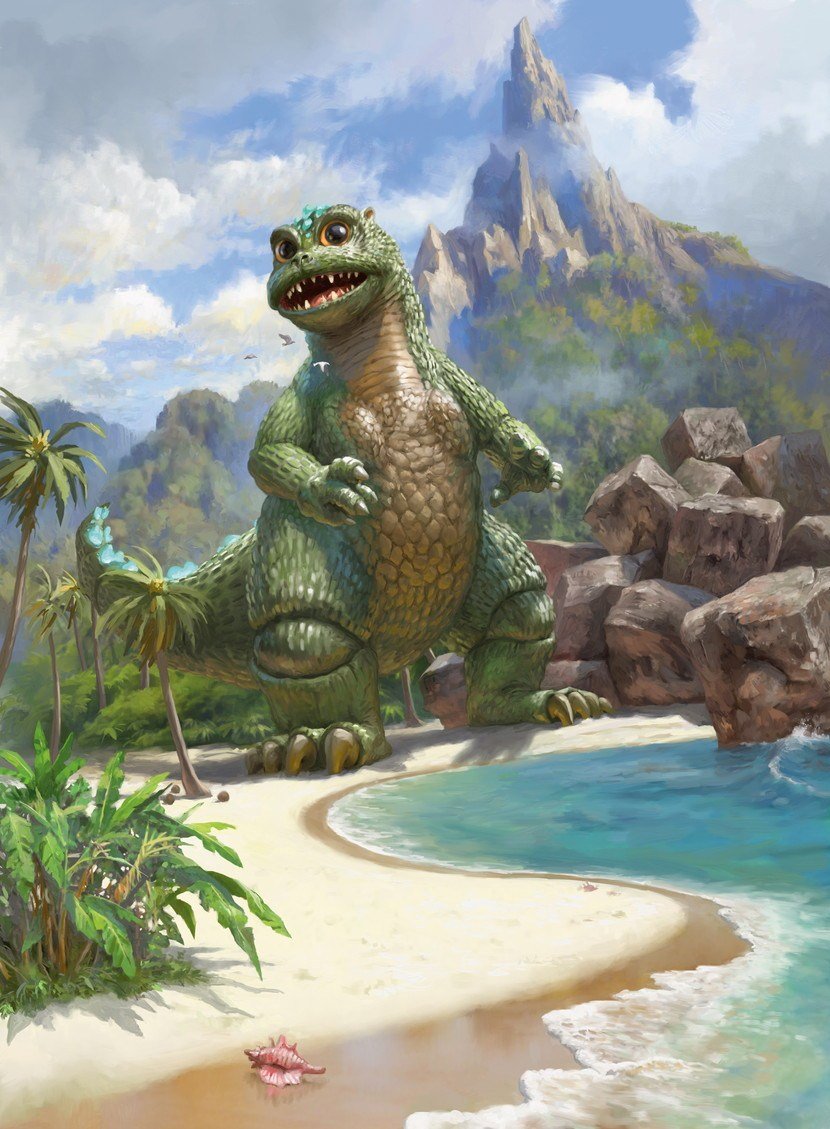

Our exploration of the Godzilla entries from the Heisei era now brings us to the unforgettable saga of Godzilla's own parthenogenesis son. First hatched from an egg — brooded by Rodan! — in Godzilla vs. Mechagodzilla II (1993), Baby Godzilla will grow up to become Little Godzilla in Godzilla vs. SpaceGodzilla (1994), then Godzilla Junior in Godzilla vs. Destoroyah (1995). Surprisingly, these films aren't terrible.
As for
16) Spacegodzilla, Death Corona
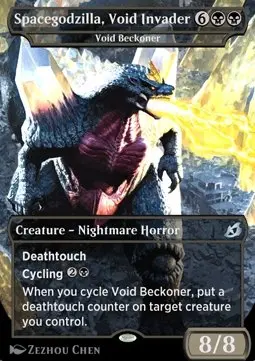
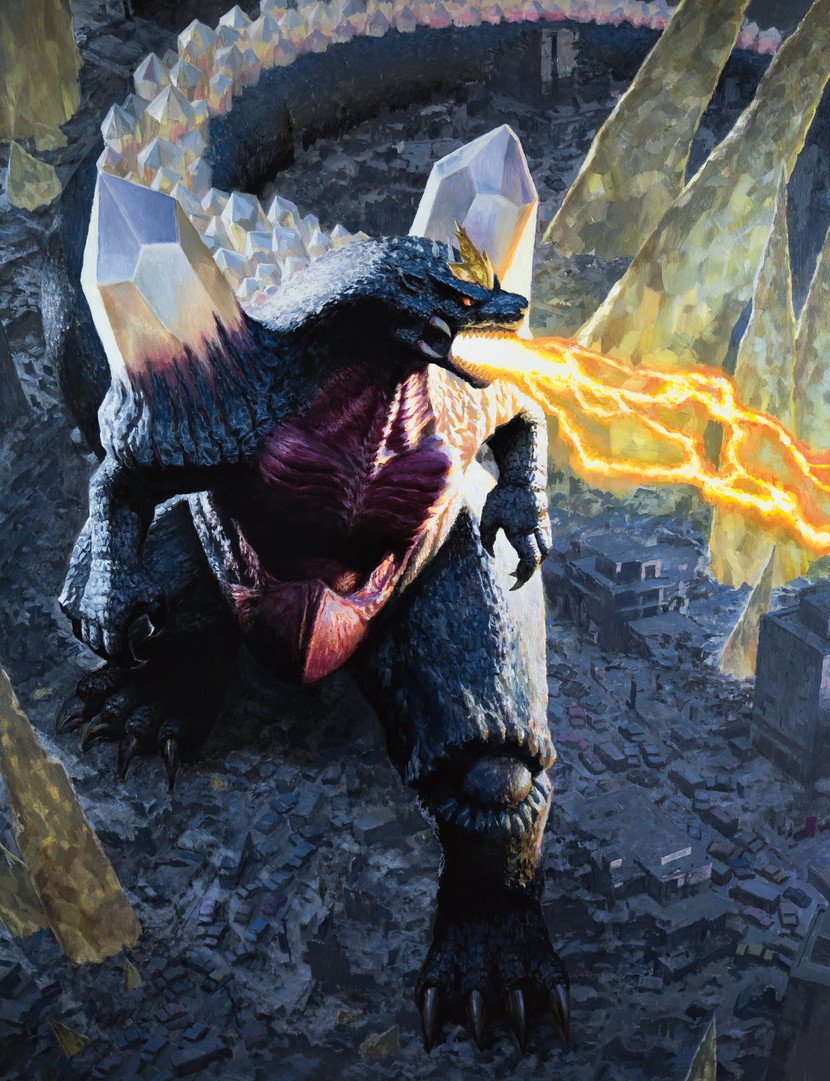

SpaceGodzilla is a Godzilla clone born in outer space after some of the original recipe's cells, transported into the vacuum via Biollante spores, are irradiated by a black hole. Such ludicrous turn of events we see in Godzilla vs. SpaceGodzilla (1994). This promo is most notorious for the very unfortunate timing of its original epithet. "Death Corona" refers to SpaceGodzilla's famous corona beam, but suddenly assumed a more sinister meaning due to the COVID-19 pandemic, which forced Wizards of the Coast to retire the card from distribution and rename it "Void Invader" on MTG Arena.
17) Bio-Quartz Spacegodzilla

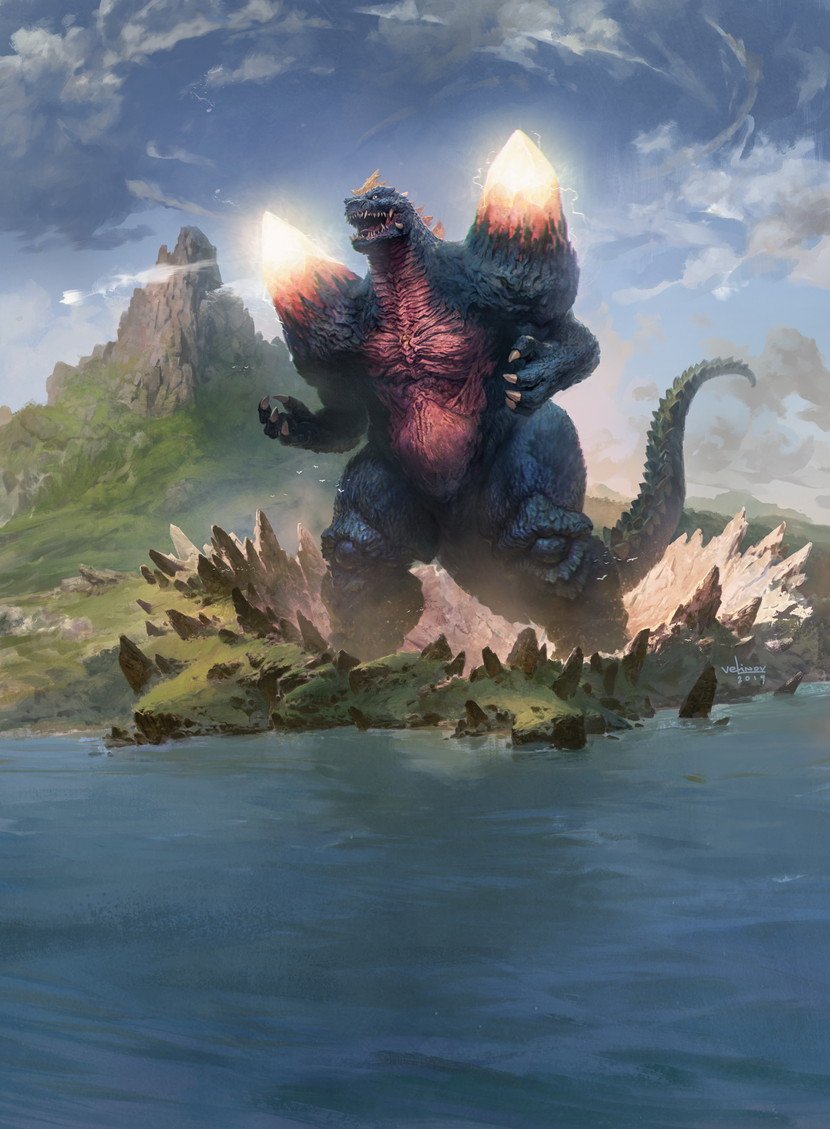

We have a second SpaceGodzilla, showcasing the crystalline formations submerged in its back, which it also produces externally to various purposes, like creating barriers and cages. It's possible Ikoria's crystals originate from this aspect.
18) Destoroyah, Perfect Lifeform

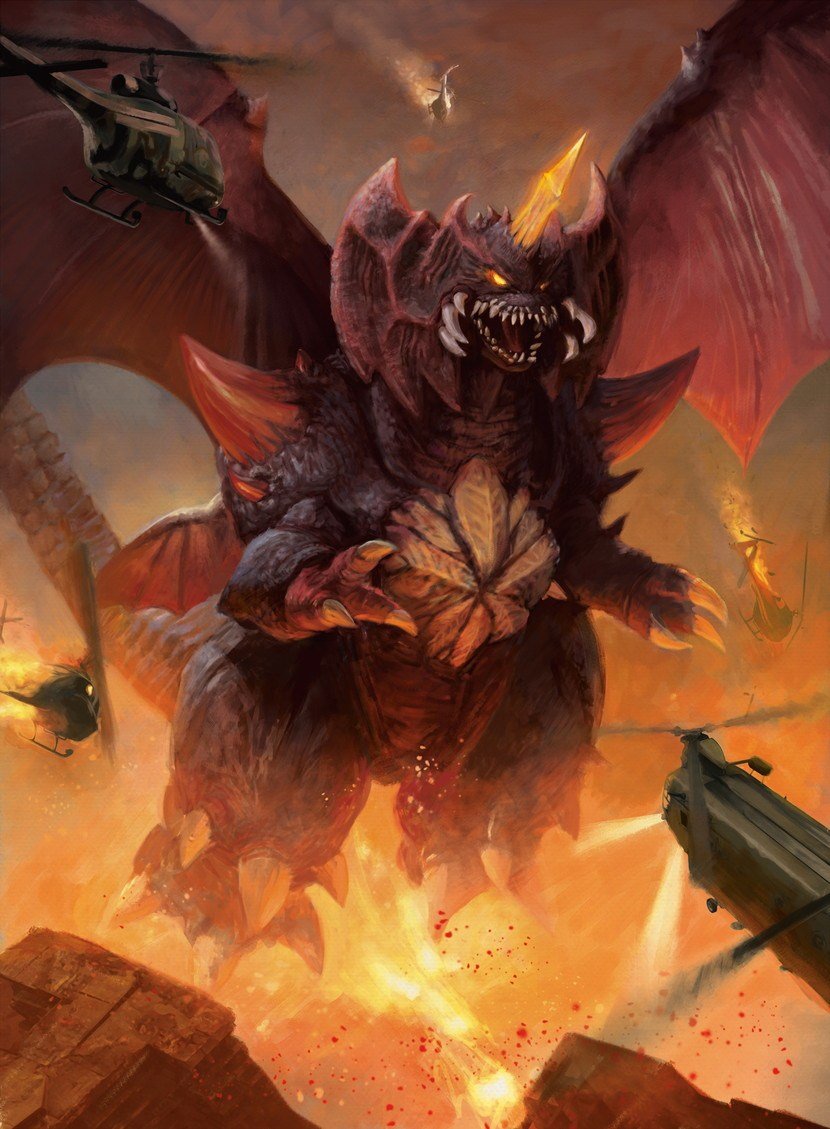

Godzilla vs. Destoroyah (1995) was the final film in the Heisei era. Kazuki Ōmori was back as a writer and created an adversary that brought Godzilla full circle by returning to the site of its first on-screen death — it's worth noting how these Godzillas aren't necessarily always the same creature. When the mega bomb Oxygen Destroyer was detonated in Tokyo Bay in 1954 in order to kill the first Godzilla, a colony of crustaceans was affected. Forty years later, those little fellows have completed their mutation into Destoroyah, a collective super-organism that'll go through further evolutionary steps, ultimately becoming responsible for the tragic death of Godzilla Junior.
Destoroyah flies and can reassemble itself, so
19) Godzilla, Doom Inevitable

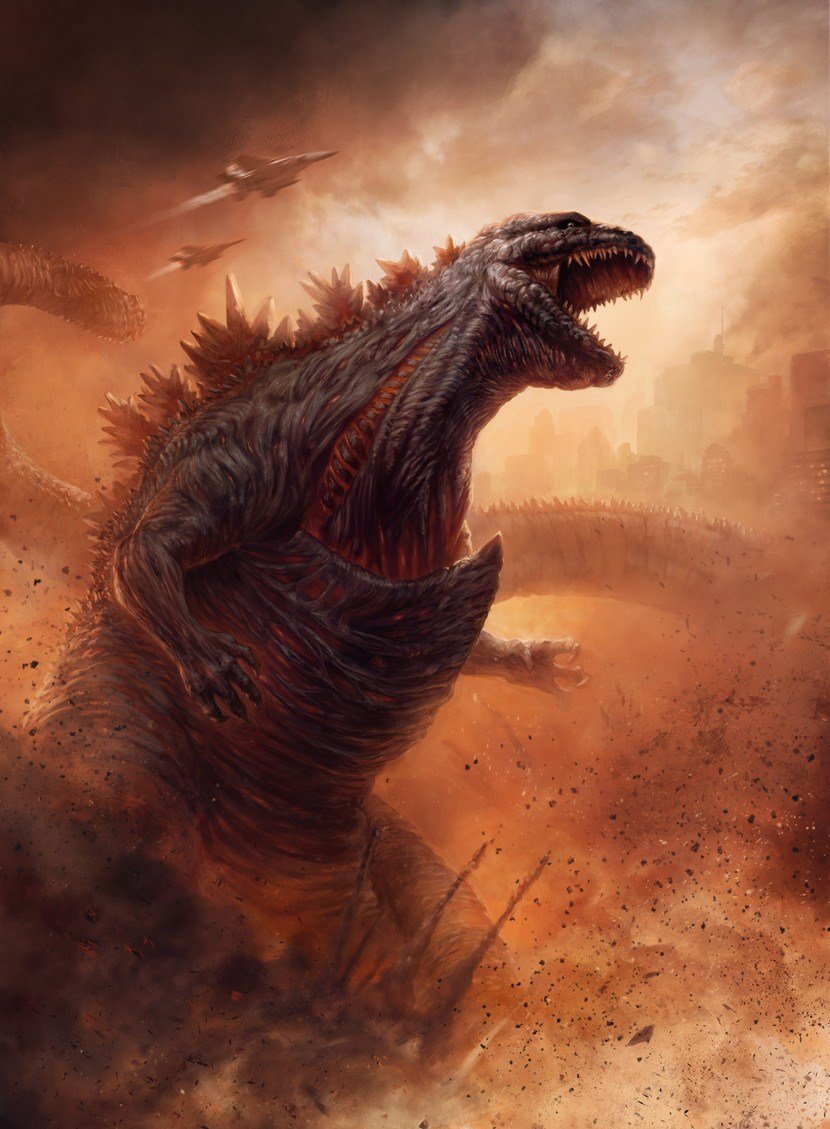

Twelve years after Godzilla: Final Wars, Toho produced Shin Godzilla (2016), directed by Hideaki Anno, the much-admired creator of Neon Genesis Evangelion, a series indebted to the kaiju aesthetic in more than one way. It's a great movie that manages to rejuvenate the old monster while satirizing Japan's bureaucracy and political system in the wake of the Fukushima Daiichi nuclear disaster of 2011. Moreover, this is a Godzilla that keeps mutating across the entire movie, something that might have exerted a direct influence on Ikoria's mutate mechanic. Godzilla, Doom Inevitable depicts the final, most developed stage.
Bonus: Kogla, the Titan Ape

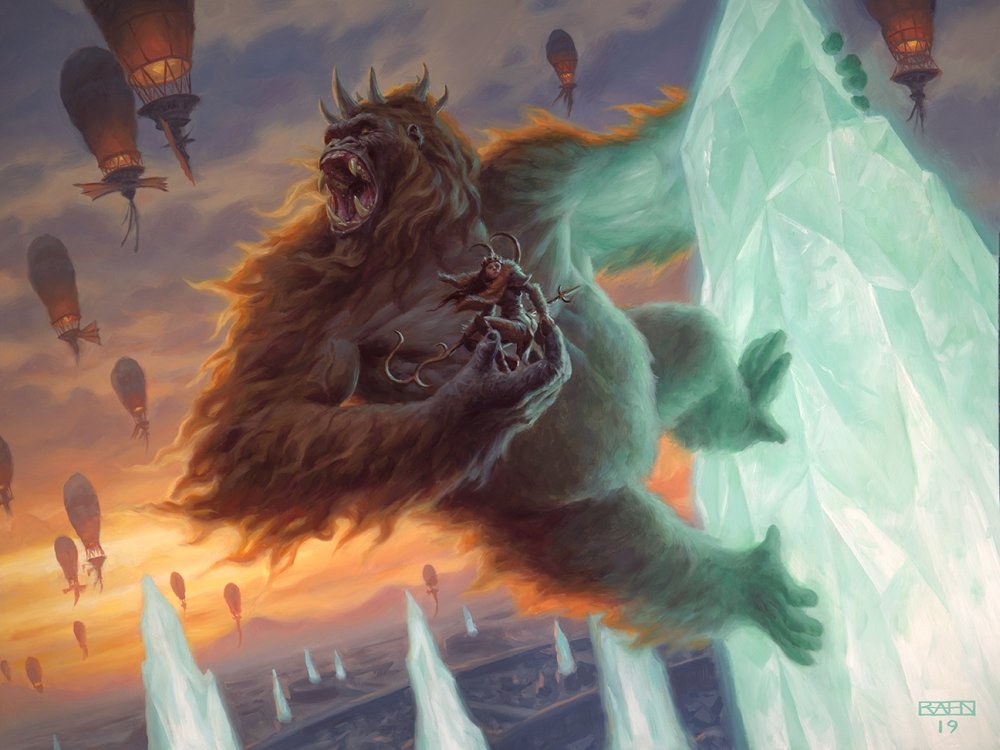
Though not a promo, this is one of the set's most successful top-down designs, a homage to cinema's very first giant monster, the gargantuan ape from 1933's classic King Kong. Over his 87 years of cinematic life, the Eighth Wonder of the World ended up engendering his own franchise, especially after crossing paths with Godzilla in 1962's King Kong vs. Godzilla, a glorious confrontation that's going to get a rematch in the upcoming MonsterVerse title, Godzilla vs. Kong.
Opinions expressed in this article are those of the author and not necessarily Cardmarket.