
Full disclosure about my early experience with Midnight Hunt: it hasn't been smooth sailing. I've been struggling in both best-of-one and best-of-three draft on Magic Arena, and my win percentages are down about 6% from my average new-set performance. This might not sound like a lot, but the difference between a 55% and a 61% win rate in best of one or between 69% and 75% in best of three is quite large, at least in terms of gem equity. But I've taken these results and turned them into lessons, and I'm doing my best to relay them to you in this article! Let's start with some rankings!
Color (Combination) Ranking
- Blue
- Black
- White
- Green
- Red
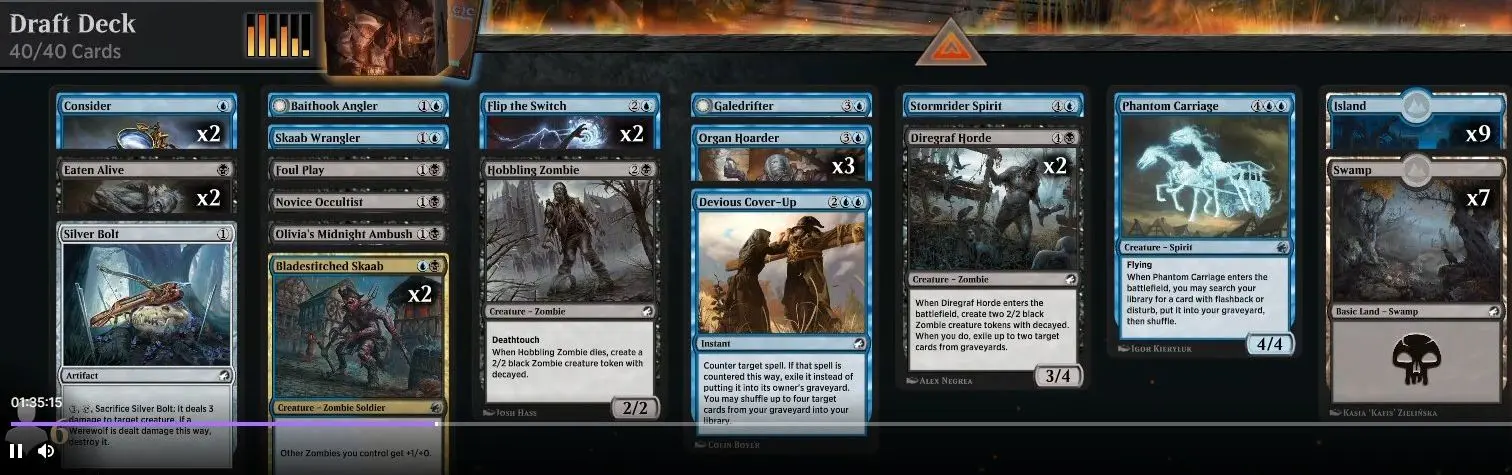
From zero to hero, blue has gone from the worst color in Adventures in the Forgotten Realms to the best in Midnight Hunt! Sporting some amazing commons like


That said, black is not far behind. It has some of the most efficient common removal we've seen in a while, along with some excellent creatures such as
Closely following black, we have white. White has some of the best small creatures at common, the top being

And that leaves us with green and red. A scourge in standard, Werewolves just haven't really gotten there in Limited. With green being better suited to pair with white and red just being the worst color in the set overall, the Werewolves deck looks a lot like the blue decks did in AFR. You need some top tier incentives to actually draft the archetype, such as
You can of course be winning with red, it is just not nearly as easy to get a good red deck as it is to get a good blue, black, or white deck. As a general rule, until blue and black becomes more contested and harder to get into, I would avoid red as much as I can.
Summarized, I would rank the ten color pairs as follows:
- Blue-black
- Green-white
- White-blue
- White-black
- Blue-red
- Green-blue
- Black-red
- Red-white
- Black-green
- Red-green
So what does a deck in the top archetypes look like? Well, let me show you! Let's start with blue-black.
Blue-Black Zombies
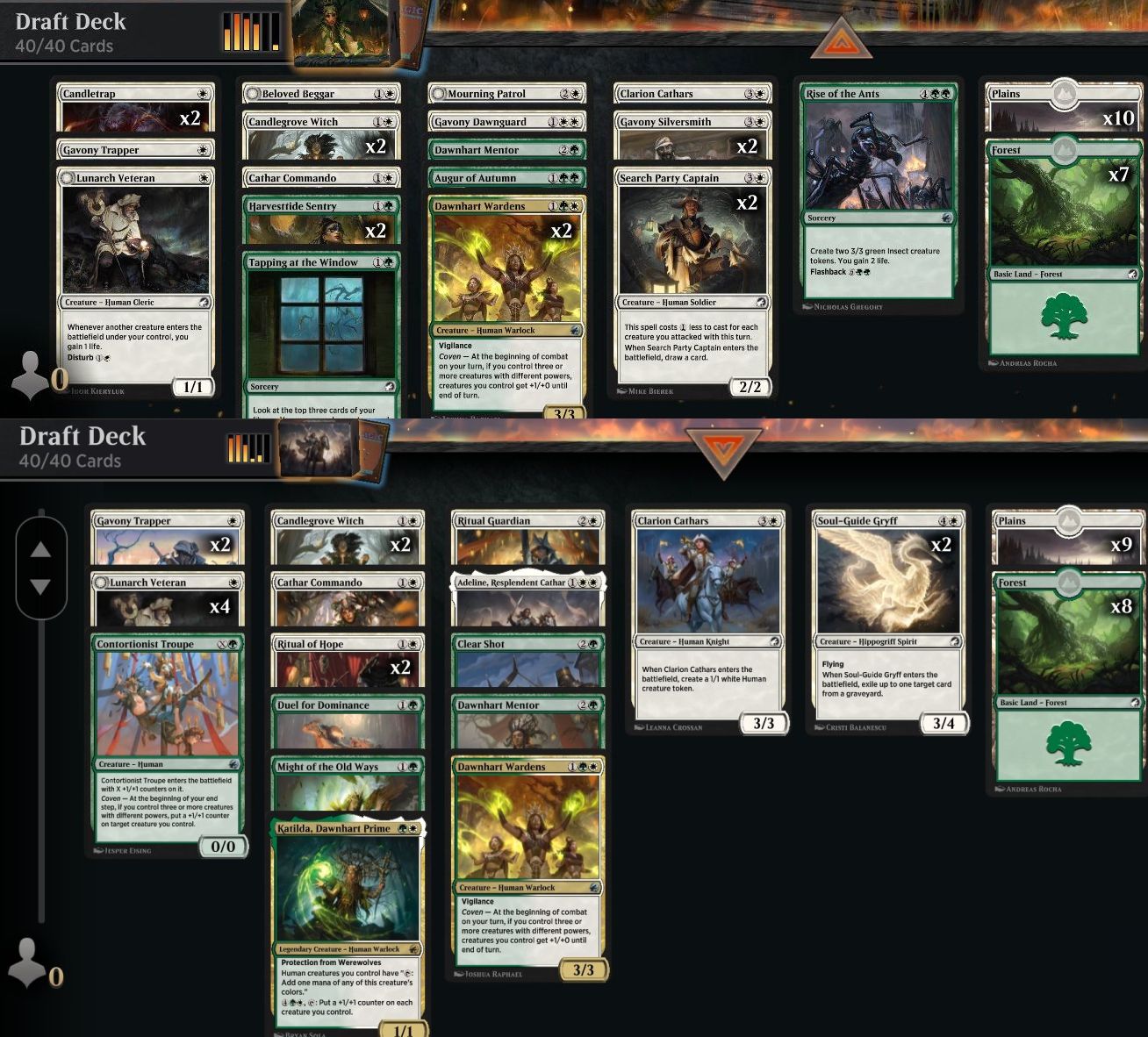
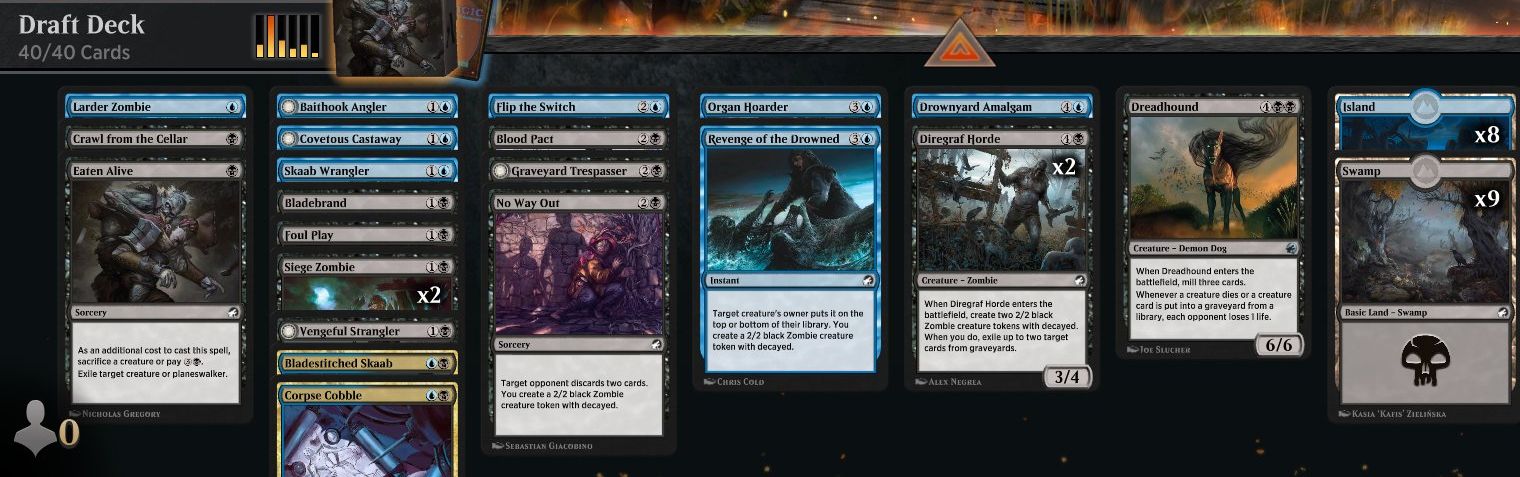
If you've paid attention to any content creators during the first week of the format, you will have heard of the power of Blue-Black Zombies. It is no surprise either. As previously mentioned, blue is the best color and
In these decks, you want to amass a ton of decayed tokens, and use them as synergy pieces for your other cards. You often get the tokens for "free," tacked onto cards that in most formats would be considered quite bad, such as
Key Commons:
Key Uncommons:
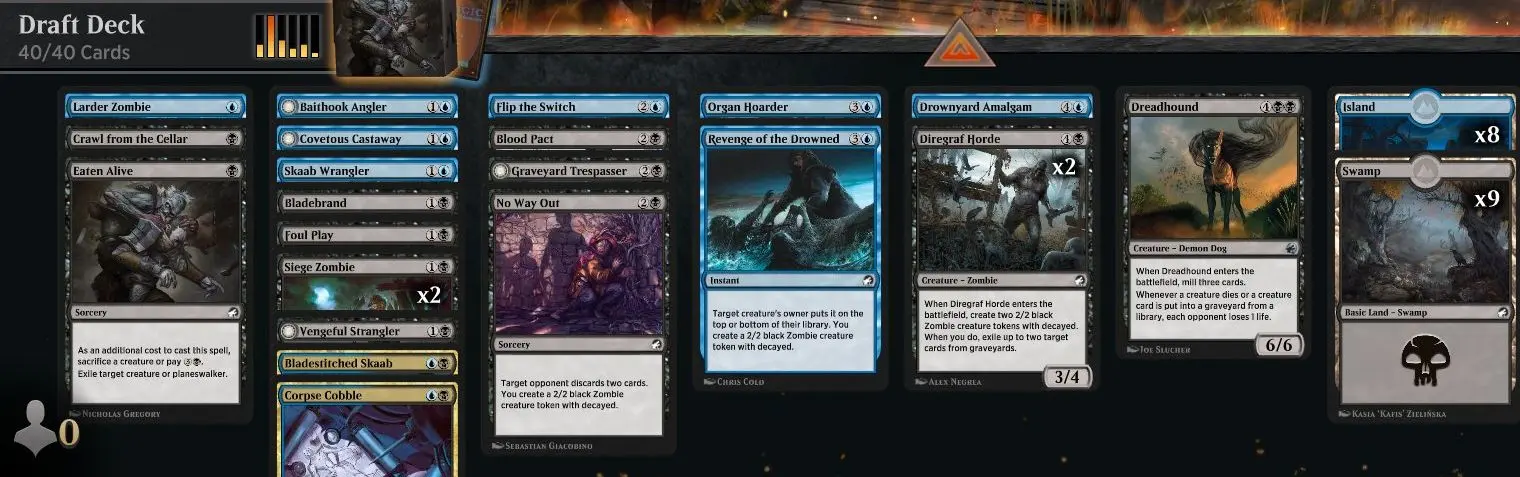
Green-White Coven
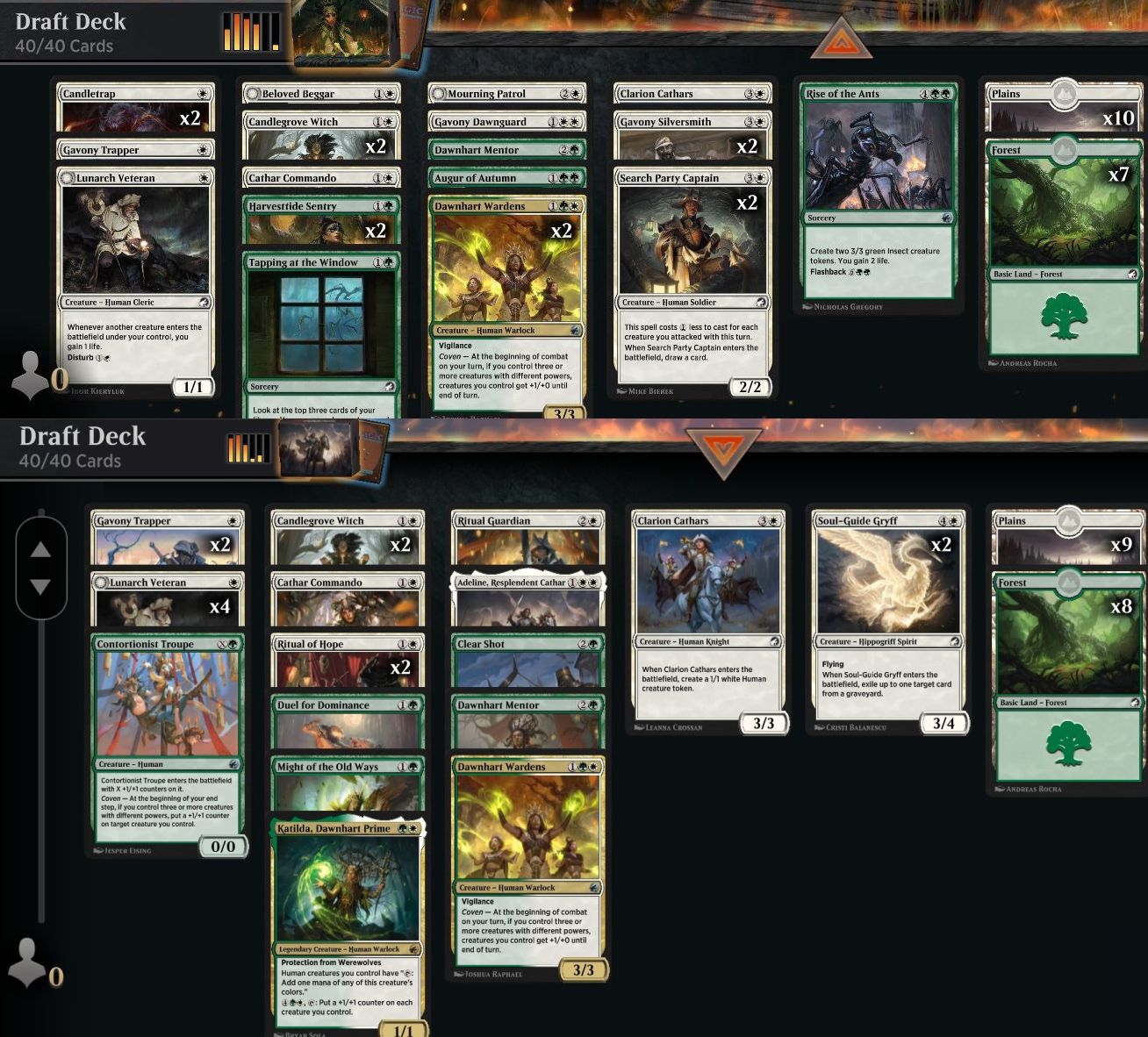
While blue-black is more of a grindy, value-oriented deck, green-white sits on the other side of the spectrum. It's aggressive and assertive, and looks to end the game quickly.
However, it's not just mindless beatdown that is on the menu here. Coven adds an interesting mini-game to battle and a deck-building challenge for you to solve. You need to make sure you get a good mix of powers in your deck, as well as keeping your creatures around on the battlefield. You want to pay special attention to creatures with power 0 and power 4+. 1, 2, and 3 are the most common powers you will see and thus will be the most likely duplicates. The rarer powers will be far more essential for your coven to be online. Cards such as
Green-white also has access to some of the best cards to combat other aggro decks and the inevitability of the Zombie decks.
Key Commons:
Key Uncommons:
The Big Picture
All in all, even with the downfall of red, this set is a ton of fun! I'm also sure that the drafts will self-correct, as people start to shy away from red while blue and black become more contested. Once that happens, I'm certain that the red archetypes will enjoy a resurgence. Until then, however, I would try to get into anything nonred, ideally blue-black or green-white.
I don't doubt there will be more to explore as the format evolves. There is a ton of trinkety stuff to do in all the archetypes, and I don't think the multicolor good stuff archetypes have been thoroughly explored just yet. Will you be the first to solve that puzzle? I know I will try my best. Happy drafting!
Opinions expressed in this article are those of the author and not necessarily Cardmarket.