
Safety First; Unsleeved, Sleeved, Double-Sleeved
Times have changed. Ancient myths tell us about dark and gloomy times (the early nineties) when naked Magic cards howled in pain as they got rocked on dirty school tables. In the next evolutionary step of playing Magic, kids started to throw their cards into standard sleeves. There still was room for the dirt to reach the card. Searching for maximum protection for the more and more expensive cards, they started to put them into a second, tighter sleeve. To this day, this is the best and most secure way to actually play and protect a Magic card.
But it went further. Even further than simple storage in a toploader.
What Is Grading?
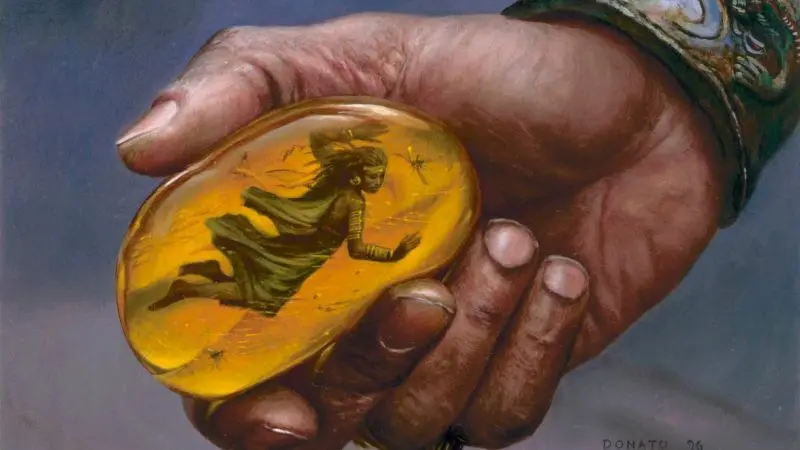
Not every card is meant to be played anymore. Some are destined to live a life in a hard plastic case with an inner sleeve and a numerical grade. Their owners send them in to a trusted company and pay a fee. In return, each card gets authenticated and registered, encapsulated in a tamper-evident, sonically sealed case, and returned to its owner.
How Did It Start?
Card grading started before Magic: The Gathering conquered the world. Before Magic, the trading card market was mostly about sports cards. As the value of these cards exploded in the eighties, finance people entered the market. Altering the conditions of cards, for example by trimming ugly edges, in order to raise their value caused major problems. In response, the first impartial third-party grading company was founded in 1984. The mission was to return integrity and honesty to the hobby market. Other companies providing the same service followed throughout the nineties.
.@hunterpence shows off his uh.... "bling"? pic.twitter.com/CYFnEFnWTI
— Cut4 (@Cut4) July 11, 2021
Reasons to Grade
Protection: Encapsulating a card is not only a perfect way to protect your card from water, humidity, or other outside influences. It's also a nice way to make it an even more desirable collectible—at least to a growing group of people.
Accolade: Protection is not the only reason to grade a card. Let's pretend you own a very special, sought-after card like a mint Alpha
Trust and confidence: In another scenario you might want to sell this crown jewel of your collection. Let's say it was graded a 10. Now every potential buyer can be sure that the card is genuine, flawless, and not just photographed in advantageous light and angles. I tried to show this method in the two pictures below. A graded card gives the buyer confidence in a purchase they intend to put a lot of money in. Without a grade, problems arise when definitions of, for example, "mint" differ. (I assume every Cardmarket user here has some kind of experience with this topic.) Even though a grading company can, on rare occasions, get things wrong, buying graded normally is a safe bet.
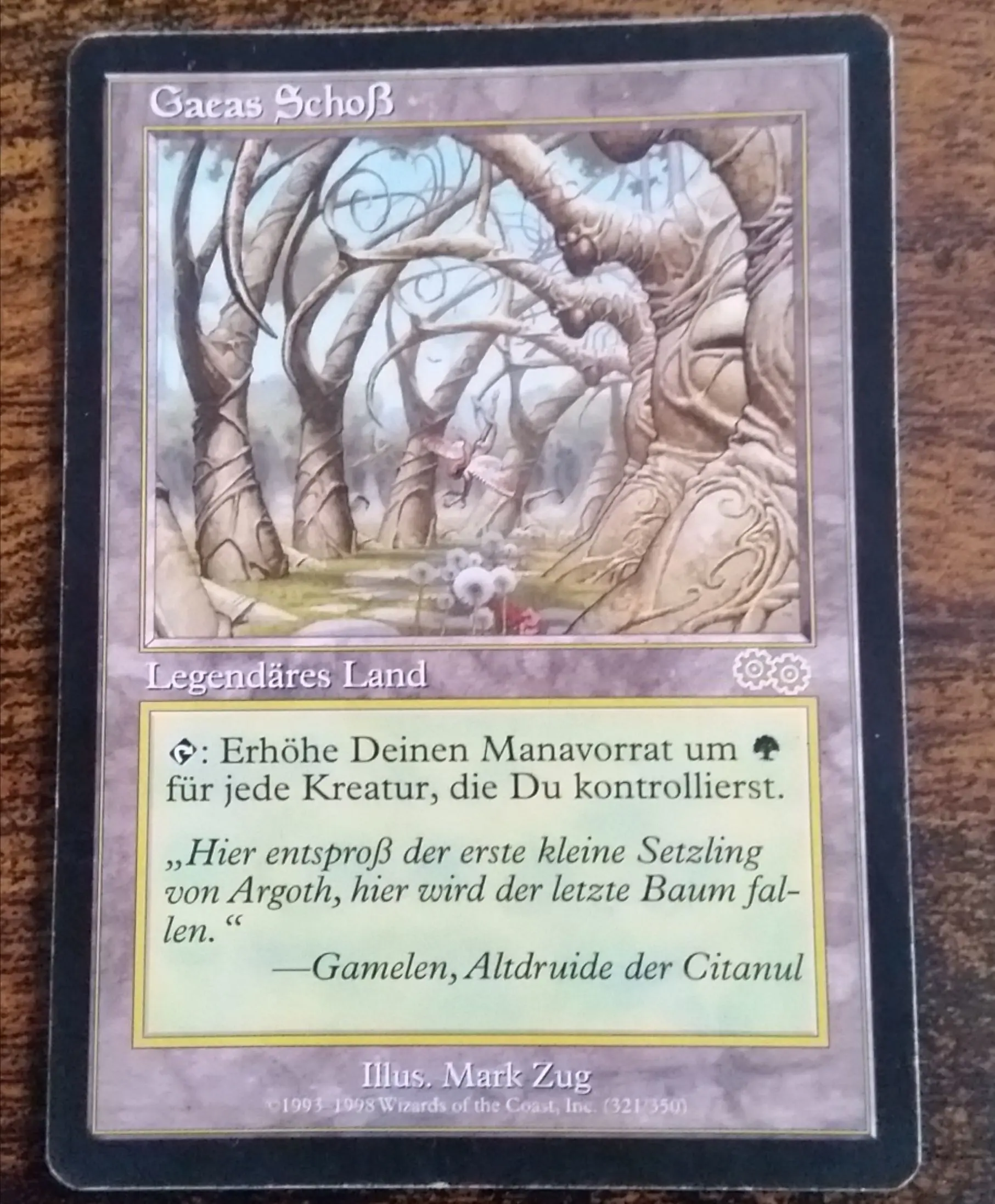
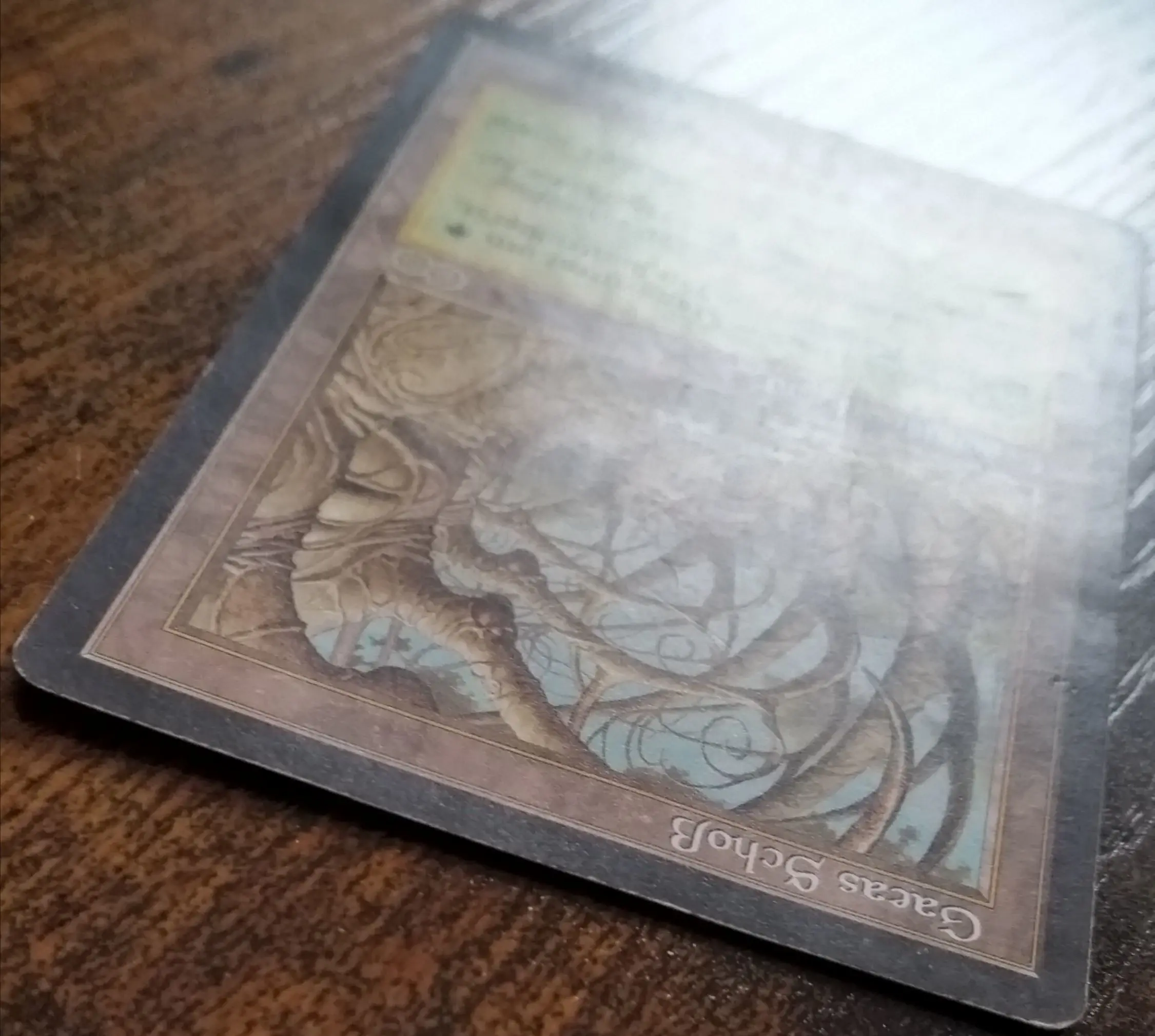
Value: A grade of 9.5 or 10 also adds a big premium onto the price tag. The multiplicator can be up to five, in some cases even higher. Note that even pack-fresh cards are not guaranteed to get a 9.5 or 10. That's how strict the grading is. One of the major grading companies considers a 7 near mint.
Angles of Quality
According to the best-known grading service, the four most important measurements in grading, the subgrades, are the surface, the corners, the edges, and the centering. At this company, the highest total grade you can get is only one above the lowest of these subgrades. Elsewhere, you may only get a total grade for your card.
Surface: This is one of the most often overlooked subgrades when you buy from people who haven't dealt with a lot of cards. You can look at your card from directly above and it will look like a mint card. "This is a 9, at least," one might think. But when you hold it in the right angle against the light, the surface will offer a whole new dimension of details. These can be tiny scratches, stains, or even slight waves as seen in the pictures of the Cradle above.
Centering: Judges the centering of the frame within the the black (or white) frame. If I were to grade cards, I would not let the centering influence the total grade, but that's just my two cents.
Corners: Describes the quality of the corners.
Edges: Describes the quality of the edges. This is probably the most important and commonly used category when it comes to judging cards. Most players tend to look for the nasty white spots on what should be black.
Authentic Altered
If you are a young Timmy like a friend of mine and send in an inked, trimmed, or rebuild card to one of the major grading companies, they normally will catch it and it won't get the desired numerical grade. Instead it will get a label that reads, "Authentic altered." This means the card is genuine but modified. Well, at least you get the evidence that you are dealing with an authentic card.
Conclusion
Graded cards return confidence and credibility to a market that can be shady from time to time. If you think about grading cards, though, remember that it is not cheap and it takes a lot of time until you get your cards back—especially if you use one of the well-known US-based services. Cardmarket isn't going to tell you where to look exactly, but you can find a grader if you want your card graded.
Are you interested in grading yourself? Let us know!
Opinions expressed in this article are those of the author and not necessarily Cardmarket.