
In a Zendikar Rising Draft, or in any Draft environment for that matter, you always need to toe the line between drafting power and drafting synergy. The tribal color pairs (white-black, blue-black, blue-red, and red-white) thrive on synergy, party is a main mechanic, and kicker features strong synergies too. With all of these options, it will often be difficult to figure out whether you should pick the more powerful but less synergistic card (such as
Let's start by ranking cards based on a generic or "vacuum" power level. The modal double-faced cards of Zendikar Rising are perhaps the most complicated cards to evaluate we have ever had in a Limited format. While I think we can all agree that they are very, very strong, how strong are they exactly?
I will probably sound like a broken record, but it is worth reiterating: MDFCs are almost always the most powerful cards in any given booster past pack one, pick one. Enjoying the consistency of playing something in the order of nineteen lands and 28 spells in your 40-card deck is something we have never been able to do before, and your deck will be considerably stronger for every on-color (and sometimes even off-color) MDFC you put into it.
So it makes sense to use some quick MDFC power rankings as a baseline of strength. I want to preface these rankings by stating that I don't consider the rare dual lands in these lists. For Draft purposes, I value
Cards better than any MDFC:
As you can see, the list consists mostly of monocolored cards or those in green, which lends itself very well to splashing. These cards single-handedly win games, slot into any deck in their color(s), and are in my mind the set's strongest cards, even above the mythic rare MDFCs. You will likely never have to make the choice between one of these cards and a mythic MDFC, but I think the comparison gives a good idea of how powerful they are.
The above are also cards that check most, if not all, boxes on the quadrant theory axes …
Quadrant Theory
Quadrant theory, popularized by former Limited Resources co-host Brian Wong, is a way to evaluate cards by way of their impact and efficacy in different stages of the game. It's an excellent approach to evaluate cards in a vacuum. The eponymous quadrants are as follows:
- Developing: How good is the card when developing your board or game plan early on?
- Parity: How good is the card when the game is stalled and neither player does much?
- Ahead: How good is the card when you are ahead in the game (winning position)?
- Behind: How good is the card when you are behind in the game (losing position)?
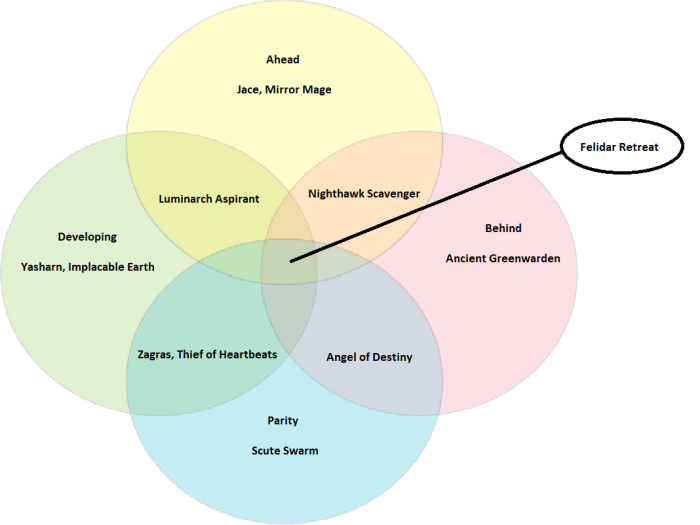
A Venn diagram is a helpful tool to place cards that overlap and fit into more than one category. Here is a rudimentary one for some Zendikar Rising cards.
Let's look closer at
-
Developing: With any kind of board, Felidar Retreat will either grow it taller or wider, whichever you might need. It is excellent to overpower your opponent's board.
-
Parity: See above, Felidar Retreat either lets you go taller or wider than your opponent, and through that, it will break the stall.
-
Ahead: Once again, see the above. Anyone who is even slightly behind will not be better off after you drop Retreat and a land to grow your team.
-
Behind: If you are behind, Felidar Retreat guarantees you that both lands and spells are decent draws, giving you at least a 2/2 that either chumps or trades to buy more time for you to get back to parity.
All in all, Felidar Retreat checks all the boxes as a generically strong card. It is good to unbeatable at all stages of the game.
Going a step further down in power rankings, I have a slightly longer list, where you can see the cards I would pick first at the start of a Draft over any of the uncommon MDFCs. The list is once again in no particular order.
Cards better than any uncommon MDFC:
Probably not a hugely surprising list, but I think a good pointer to what you should think of when deciding what to make of your first pick. These are mostly just very strong cards, and they slot into any deck containing their colors. For your first picks, power always wins out over synergy. Sure, that


You might have noticed that a single uncommon has snuck its way onto this list.
Synergy Theory
Ben Werne (also known as MisterMetronome) came up with what he called "synergy theory," which describes cards like Roost of Drakes very well. Synergy theory is, in contrast to quadrant theory, a way of evaluating cards in the context of a set. How well a certain card goes together with other cards in the same environment changes its "grade" or power level significantly in comparison with grading the same card in a vacuum. You evaluate synergy on four different axes.
- Mechanics: How does the card interact with the set's mechanics?
- On-Color Cards: How does the card interact with cards of the same color?
- Off-Color Cards: How does the card interact with cards of other colors?
- Strategy Compatibility: How does the card interact with archetypes and their game plan?
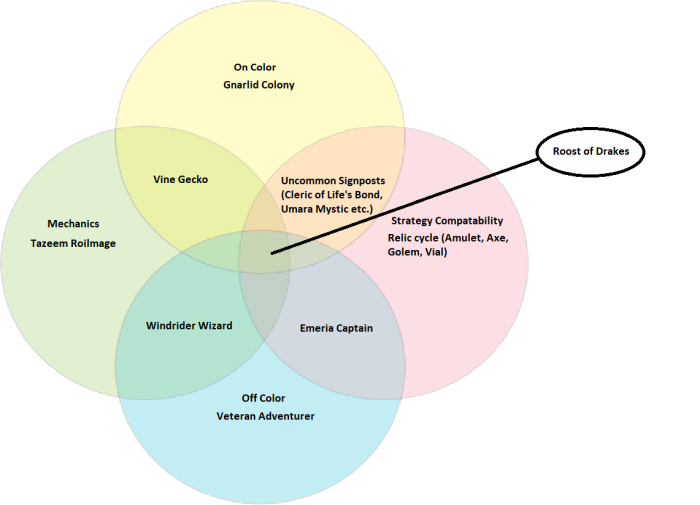
Once again, let's take a look at a Venn diagram for these categories …
… and let's figure out what aspects place
-
Mechanics: The card is the most premium payoff for kicker, but it doesn't interact with party, nor landfall. It is mechanically narrow, but kicker is the most common mechanic at common, with fifteen cards having kicker versus thirteen cards with party and only nine with landfall.
-
On-Color Cards: There are six blue commons with kicker, all of which are playable to premium cards in any blue deck. Slam dunk for blue.
-
Off-Color Cards: There are nine nonblue commons with kicker, three green, two black, two red, one white, and one colorless, making Roost of Drakes strong in any U/x color pair.
-
Strategy Compatibility: As mentioned above, any U/x deck will have access to a sizable amount of kicker cards. While green-blue will have the best access to the mechanic, any blue deck will strive to have at least six to ten kicker cards.
Cards that exhibit synergies across mechanics and/or colors are among the most premium cards in a Draft, being both flexible picks and strong engines to fuel your game plan. And this is exactly what Roost of Drakes is doing. It is synergistic with multiple colors in the set, as previously mentioned, and incidentally synergistic in some archetypes you might not immediately see it slotting into.
For example, it's incidentally synergistic in Blue-Red Wizards, where you already want cards like
Conversely, MDFCs are on the opposite side of the spectrum. None of them are inherently synergistic apart from the creatures having the relevant types, but all of them offer immense power and consistency to your deck. The question remains: where is the cut-off between picking powerful cards and synergistic cards? The answer is contextual and not always clear-cut, but I will try to give an example from a Draft I did recently.
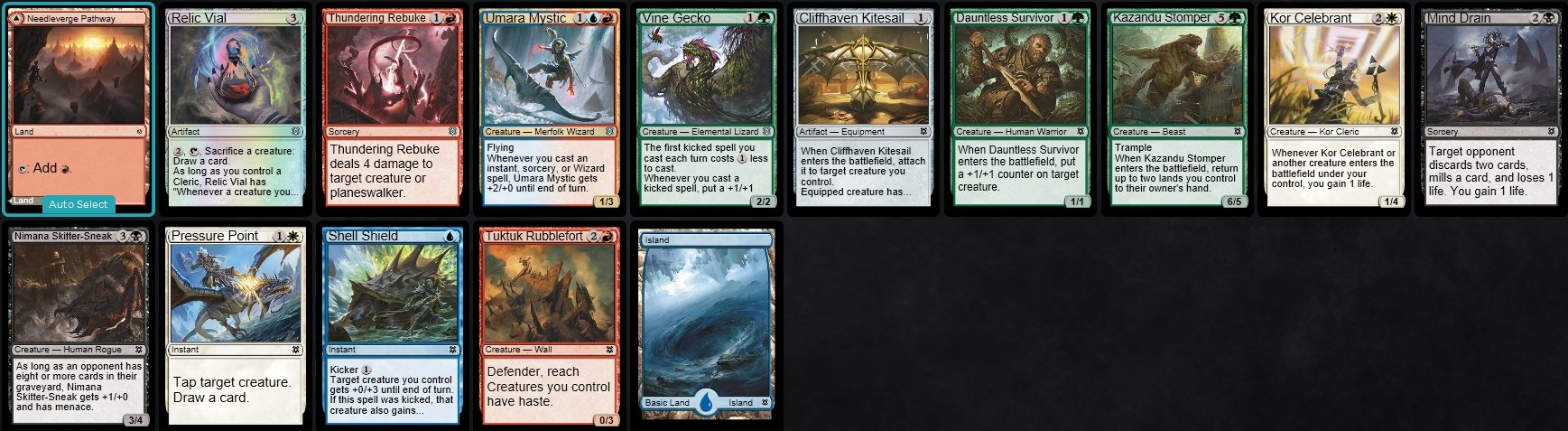
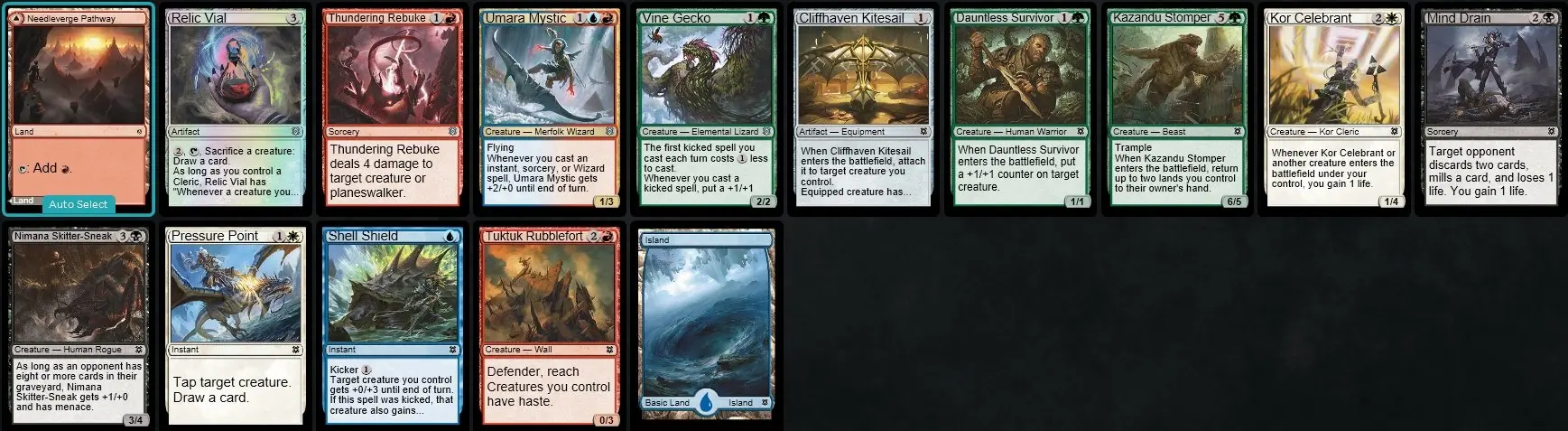
This is pack one, pick one, and we have a couple of interesting options. There are four cards in consideration for me, and it's the four uncommons. Using quadrant theory,
Last but not least we have
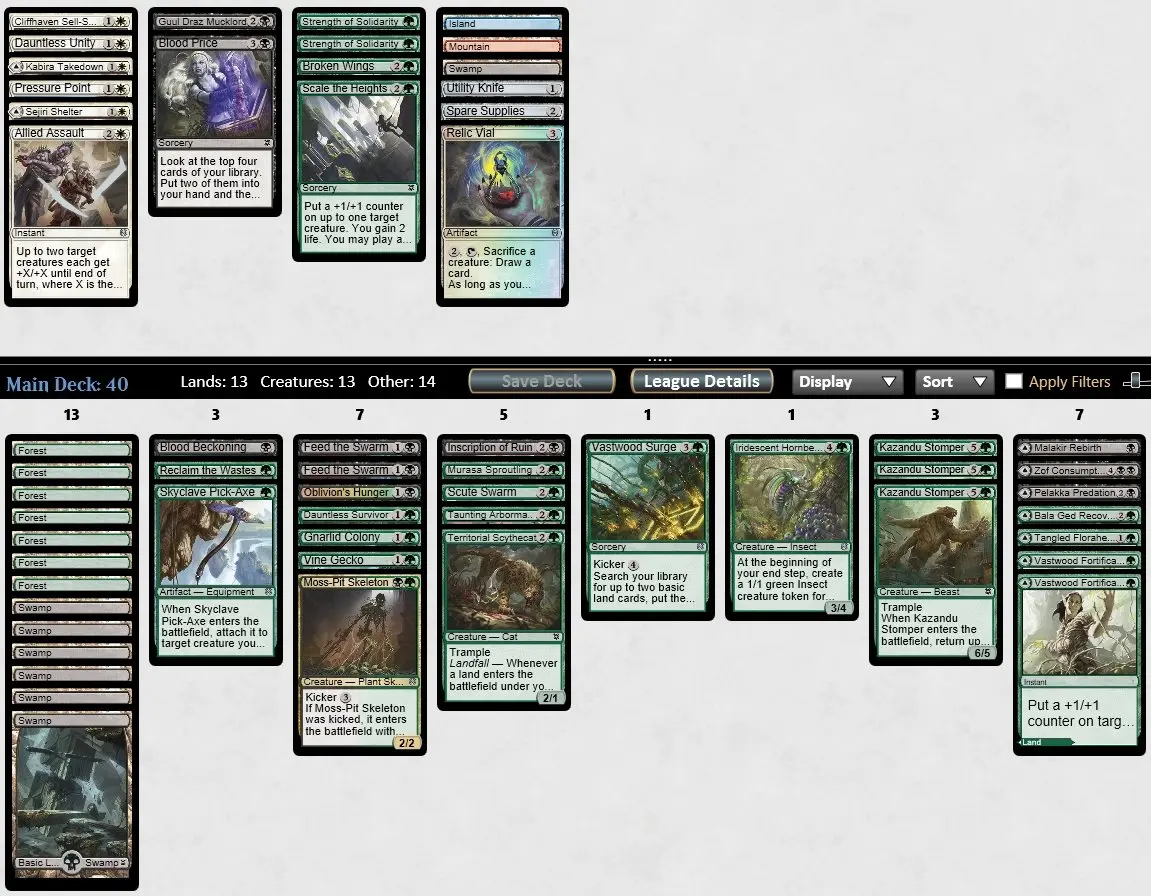
As you might have guessed, I landed on Vine Gecko for this pick, specifically for the strong cross-mechanic synergies. It also leaves me open to, but not locked into, drafting what I believe is the strongest archetype in Green-Blue Kicker. Green ended up being open in the Draft, I got hooked up with some good on-color MDFCs in pack three, and the final deck looked like this:
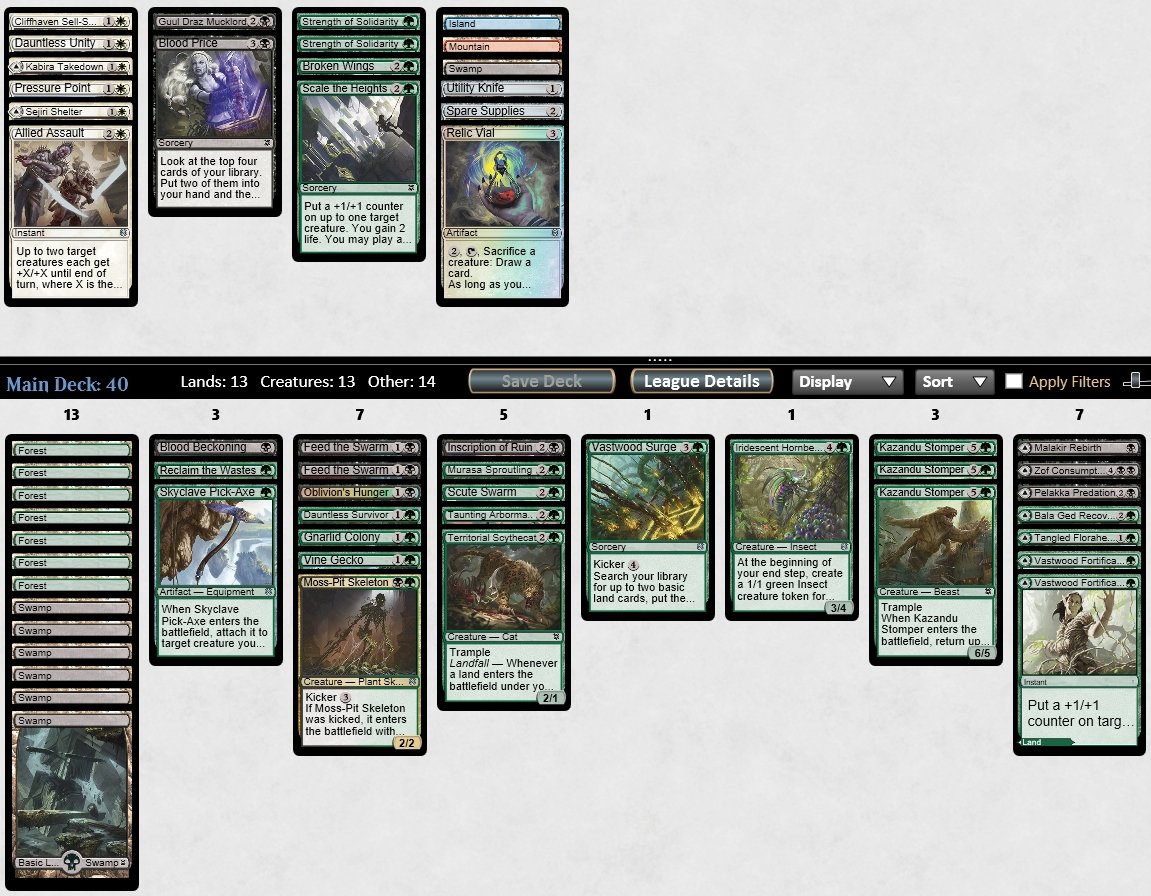
As you can see, even if this deck is not focused on kicker, nor on +1/+1 counters, there are pockets of synergy sprinkled around. Vine Gecko happens to slot into both of the mechanics this deck is taking advantage of. Though, for this deck specifically, the three
In conclusion, synergy theory is something that is important to consider when evaluating cards in modern Magic sets. There has been more and more focus on synergy over raw power lately and on decks being more than the sum of their parts — for example with cycling in Ikoria. It also is an important factor to consider during your Drafts whenever you're choosing between a synergy piece and a more "powerful" card. Strength is relative, and in Draft you constantly need to re-evaluate your deck and your picks as you go. Figuring out where that line is drawn is tough, but hopefully this way of thinking can help you as much as it has helped me in navigating this synergy-packed format.
Happy drafting!
Opinions expressed in this article are those of the author and not necessarily Cardmarket.