
Take Care of Yourself

I am aware that this has probably been said a thousand times already, but I really can't stress this enough. One of, if not the most important, factor to performing well in Magic tournaments is your mental state. Take care of yourself, hydrate, go for a walk in between rounds, you know the drill.
But also—play the game in a way that makes you happy to engage with it. For most of you Magic isn't your livelihood, and even if it is: if you aren't happy, just stop playing. Setting yourself goals like reaching Top 1,200 Mythic sets you up for failure and burnout. Obviously it's fine to try to reach your goals, but don't make it a necessity. I think this applies not only to Magic but to life in general: be a bit more stoic. We can't escape negative emotions, but we can somewhat control either what they result in or what leads to them in the first place. I'm no psychologist, this is just something that helped me cope both with losses and losing streaks in Magic but also with life as it is. Maybe it can help you as well.
An anecdote: I once played an MMO called "Neverwinter." I usually logged on in the morning, did a bunch of daily quests, weekly quests, and so on, a couple hours on most days. At some point I asked myself, am I actually enjoying this? The answer was no. I then uninstalled the game and have been happier ever since. This doesn't mean you have to stop playing, but maybe re-evaluate what you actually enjoy and try to set up your engagement with the game in a way that lines up with that.
Take Ladder Experience with a Grain of Salt
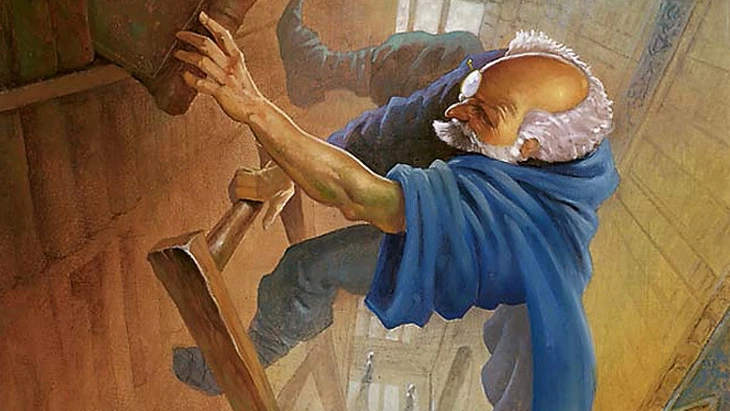
MTG Arena's ladder is an excellent way to get in a lot of repititions. It's also an okay testing ground, but neither will your matchups be representative for the tournament that is coming, nor will your average opponent play on the same level as anyone that is 100% focused on their match.
In fact, even if the metagame on the ladder and in tournaments were the same, you wouldn't perceive it as the same, because faster strategies get in more games and rejoin the queue more frequently. In addition people like to play newer strategies. At the very least they'll probably not play Jund Sacrifice for all eternity in Historic, leading to that archetype, as an example, being quite underrepresented. This doesn't matter as much, as you will never get to a sufficient sample size on the ladder anyway.
While people play on the ladder, at least a decent percentage of the time they'll do other things simultaneously. Whether they're streaming and interacting with chat, watching a series or a stream on their second screen, or anything in that vein—the game likely won't have your opponent's full attention. On average they'll play worse than your tournament opponents, probably even if they're the same people, because tournaments come with real stakes.
But as mentioned, ladder is still useful. Besides qualifying for the Qualifiers you get to get a feeling for a deck. Is it strong, is it weak, do you run into solvable or unsolvable problems? You can find answers to these questions on the ladder. I cannot stress this enough though: ladder isn't indicative of your true win percentage; especially if you're a good player, your win percentage will be heavily inflated most of the time. Too often have I seen Rivals members just pick the deck they won a ton with on the ladder for the League weekend and then do mediocre there.
We're All Just Playing with Cards

Everyone plays with the same cards. People obviously are different in how skilled they are at playing Magic, but I often see people overestimating strong players in my opinion. This mostly results in people netdecking blindly way too often. If you copy a deck and play with it a bit, don't be afraid to make changes to it. If you don't try, you won't improve. This goes the other way too. Just because you're good, doesn't mean you just get to dismiss information produced by people you deem worse. You can learn something from everyone, at the very least from their mistakes.
Learn from your Mistakes

This one might be a bit obvious, but I'll say it anyway: try to learn from your mistakes. The thing that helps the most if you really want to improve is to rewatch your past games and to find flaws in your gameplay. This way you also avoid wrongly informing your future decisions. If for example you believe you made a mistake in the heat of the moment, but after analyzing the situation further you realize you took the correct line, if maybe for the wrong reason, that can help you improve so much. In contrast, if you just remain of the opinion that you made a mistake, it might actually harm your progress. Note that at the time you made your decision in the past you worked with limited information, and the same will be true for future matches.
Not sure if I need to specify this, but you cannot only learn from your own mistakes. You can also learn from mistakes your opponent or people whose content you watch/listen to/read make.
Gut Instinct Beats Small Sample Sizes

Samples sizes in Magic are usually quite small. Especially if you look into matchup matrices, the number of matches played between any two particular decks is pretty marginal. This means, if you yourself have played that matchup a couple times and think you have a feeling for who's favored, because of X or Y reason, there's a good chance your feeling comes from some truth. This does not mean to dismiss data at all but rather to look at it with a critical eye and to trust your gut instinct a bit more—regarding matchups, a deck's general strength, or even single card choices.
Lessons from the Kaldheim Championship
In addition to the more general topics discussed above, I have four concrete points that became very apparent to me at the weekend of the Kaldheim Championship.
Sleep
If you play a tournament equivalent to a Pro Tour and have the resources to do so, you should go out of your way to adjust your sleep schedule. These tournaments are super tough regardless, and if sleep deprivation adds to that, that doesn't bode well for your chances. I was already tired at 10 p.m. my time on both days and still had three or four rounds ahead of me at that point. If you can, avoid doing that.
Metagames Shift Fast
While I still think Jund was the "best deck" in Historic on level one, the best matchup I faced all weekend was a mirror. Usually less prestigious events see less such innovation, but it's still important to be aware how people may respond.
Play More Slowly
This point does not apply to everyone, but I realized that I play a lot more on intuition than I used to when I was newer to Magic. While that usually doesn't hurt me a ton, if you need every edge you can get and want to give your very best, you should be avoiding that. I'm not saying you need to use every second available to you, quite the opposite, but in a lot of spots thinking through the implications of a play just a tiny bit more than surface level can make a great deal of difference.
When in Doubt, Use Your Mana
This might sound obvious, but when I co-streamed the Top 8 together with Matt Nass we saw players opt into not using all their mana to play around cards a bit too often. Especially when players faced Standard Rogues, they often decided to pass their turn in spots where Matt and I believe they had to jam.
Conclusion
Overall most of this article just boils down to me telling you that you should apply your faculties of critical thinking more often and to more things. Don't put blind faith into results or data or authorities—or into yourself when it comes to established patterns of habit. Don't disregard input because the idea comes from none of the aforementioned sources either. I hope these points help you improve in the long run.
Until next time,
Kristof
Opinions expressed in this article are those of the author and not necessarily Cardmarket.