
Day 1 Metagame
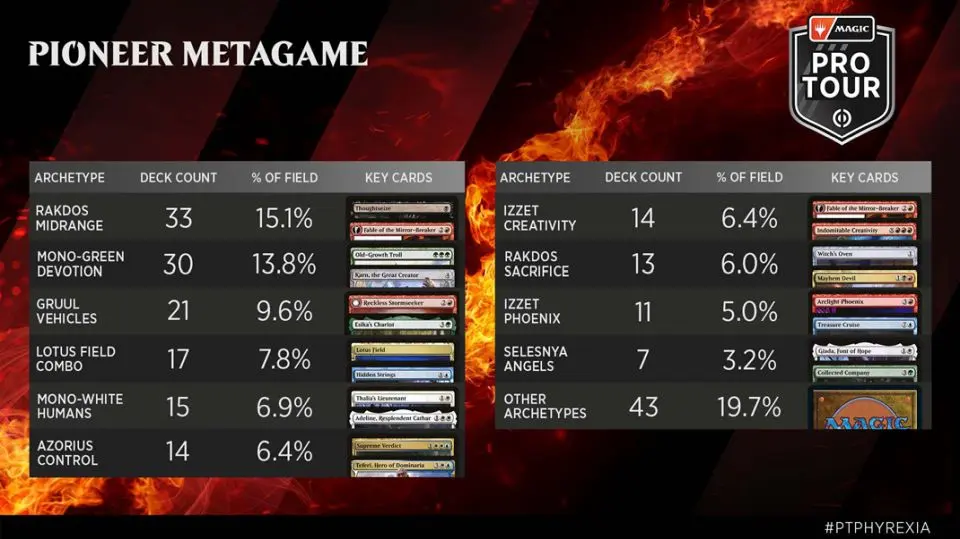
Wizards posted the whole metagame on the event coverage page, where you can also find all the archetypes in the "other" category. I think the top two decks were very predictable coming in. Typically, at this level pro players choose strategies that provide them with the most agency so that their Magic-skill superiority can shine through. Rakdos Midrange is a deck full of decisions and interaction, hence had been chosen the most.
Most surprisingly, the third most popular deck was Gruul Vehicles. This aggressive midrange archetype is a great way to go toe to toe with Rakdos while being able to put real pressure on more goldfishy decks. The rest of the top field was comprised of Lotus, Humans, Azorius Control. All in all, the percentage of stock decks chosen was high.
What certainly caught many people by surprise was that Izzet Creativity's presence in the field ended up comparable to that of Azorius Control, Humans, or Lotus. It was played by arguably the best pro team of all time. We saw players of the highest caliber in LSV, Gabriel Nassif, and Reid Duke wield this deck successfully.
The other category made up a fifth of the field. I would say this is a sweet spot when it comes to rogue strategies' representation, especially at that level. Let's look at the spiciest of them all next.
Spicy Lists
| Izzet Mindsplice by Chris Botelho | ||
|---|---|---|
| Main Deck | Sideboard | |
|
|
|
I am beyond excited to see
Two copies of
| Azorius Powestone by Jeff Lin | ||
|---|---|---|
| Main Deck | Sideboard | |
|
|
|
When it was posted that there was an Azorius Powerstone list, everybody yearned to get their hands on it. It is essentially a control deck with a heavy artifact subtheme. It runs the usual interaction suspects such as
The star of the show and its main win condition is
| Grinning Ignus Combo by Dimitar Erinin | ||
|---|---|---|
| Main Deck | Sideboard | |
|
|
|
The basic premise is that we keep recasting Ignus with the help of
There were of course more interesting decks than the ones featured here. The event included Abzan Auras, Mardu Sacrifice,
Best Performing Pioneer Decks
Thanks to none other than Frank Karsten, we get to look at nonmirror win rates of all the decks registered at the Pro Tour. It is worth noting that not all the decks collected a sample sizeably enough to draw any conclusions. That is why I need to draw an arbitrary line in the sand and I do so at the match size of 40. With that out of the way, let us discuss the best decks.
I ran the numbers! Here are the Pioneer match win rates from Pro Tour Phyrexia. #PTPhyrexia pic.twitter.com/G27cCehwKa
— Frank Karsten (@karsten_frank) February 19, 2023
One match shy of the desired sample size, Greasefang still is a popular enough deck in the metagame overall that I feel it should be mentioned. It sported a 67% win rate, which is shockingly high for the strategy. It's known for its glass-cannon nature with the possibility to play fair-ish games. At the same time, I've heard the sentiment numerous times that while the fair plan exists, it's rarely enough to actually get games across the finish line. The deck's biggest problems include graveyard hate and efficient point removal like
Not least, one group of pro players brought a version updated with a slice of delirium. Despite
| Abzan Greasefang by Eli Loveman | ||
|---|---|---|
| Main Deck | Sideboard | |
|
|
|
From among the three most played decks, each supplied a win rate below 50%. This is where the results are particularly reliable as sample sizes exceed 150 matches and even reach 220 when it comes to Rakdos. There are a few things that possibly happened here. The overrepresentation may indicate that a lot of players, including those less experienced, brought the deck, dragging the win rate down a bit. On top of that, those decks are a known quantity so the very best opponents knew exactly how to play against them and had a plan.
From the decks with 100+ matches, we saw positive win rates in Sacrifice,
All in all, it's always fascinating to look at exact numbers and try to mathematically figure out what you should play at your next RCQ. But between the sample sizes, pro teams, and overall specific field, they may be less reliable than we'd like.
Best Performing Pioneer Players
| Player | Record | Match Win % |
|---|---|---|
| MORIYAMA, MASAHIDE | 9-1 | 90.0% |
| Madsen, Benton | 8-1 | 88.9% |
| Yasooka, Shota | 6-1 | 85.7% |
| KONDO, SHOGO | 8-2 | 80.0% |
| Lossett, Joe | 8-2 | 80.0% |
| Nassif, Gabriel | 8-2 | 80.0% |
| Sweetnam, Cameron | 8-2 | 80.0% |
| Duke, Reid | 7-2 | 77.8% |
| Matsuura, Takumi | 7-2 | 77.8% |
| Steuer, Nathan | 7-2-1 |
These are the players who went 70% or better in actual Pioneer Swiss rounds, excluding draft and awarded byes entirely. I am sure that no one is even remotely surprised to see names like Steuer, Duke, Nassif, or Yasooka among them. Let's take a look at the decks that they played.
These ten registered eight unique decks: Angels, Auras, Rakdos, Creativity, Lotus, Humans, Greasefang, and Green Devotion. The two decks that were played by two each were Creativity and Lotus. It seems evident that this micro-meta is very diverse and that there is a plethora of decks that one can play in Pioneer to come out on top. I reckon it's one of the features of nonrotating formats that players value the most. They want diversity in decks played, but, even more so, they need to know there is diversity in decks succeeding.
The most interesting of those mentioned here is the Angels list, which ran six mana Elves, a clean split between
| Selesnya Angels by Masahide Moriyama | ||
|---|---|---|
| Main Deck | Sideboard | |
|
|
|
The Top 8
The Day 1 and Day 2 struggles rewarded eight fortunate players with a chance to battle on the third day of competition. You can learn more about them and find their decklists here.
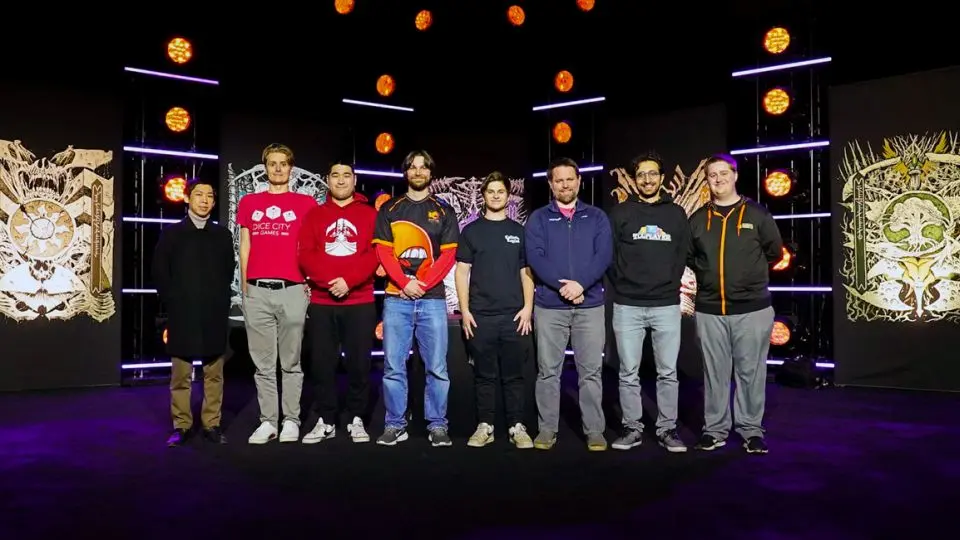
While influenced by the draft results, it is notable that none of the Top 8 players went worse than 7-3 in the Pioneer portion of the Swiss. From the initial 218 players, the following strategies rose to the very top: Enigmatic Fires, two copies of Creativity, two copies of Lotus Field, Selesnya Auras, Humans, and Rakdos Midrange.
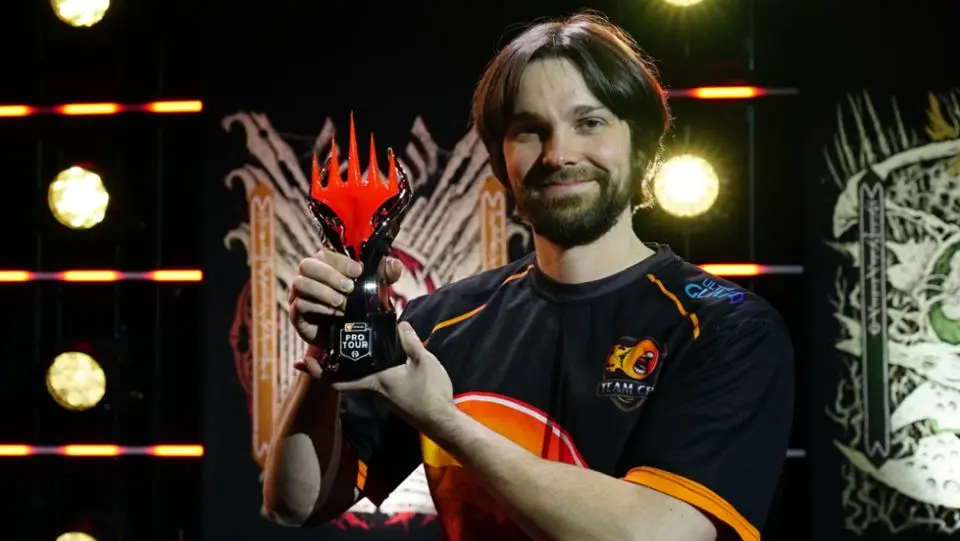
They battled in a best-of-five format to determine the eventual winner. In a truly poetic fashion, the first post-hiatus paper Pro Tour was won by the nicest guy and arguably most respected player in the community, Reid Duke. Despite a multitude of achievements in this game, it was Reid's first actual Pro Tour win. To make it even more epic, Reid won the finals in the cleanest sweep imaginable, going 3-0 over the opponent.
Opinions expressed in this article are those of the author, not of Cardmarket.