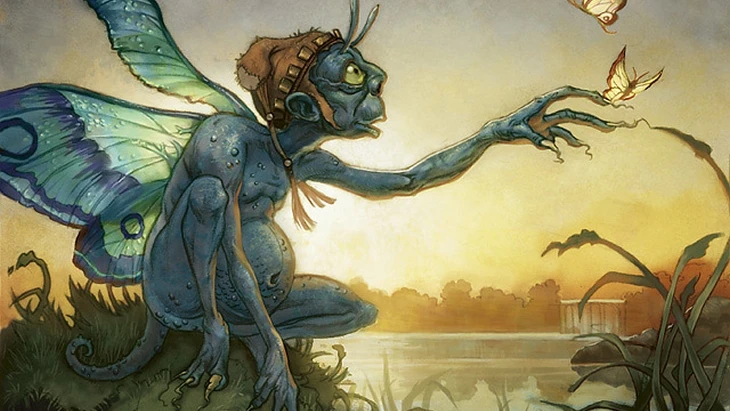
To talk about the changeling mechanic implies talking about creature types. As of Kaldheim, there are 252 subtypes that appear on the type line of creatures, of which 228 are printed on actual creature cards. (The rest of them only show up on tokens or are applied as modifiers to existing permanents; this was the case for Coward before the printing of
Lorwyn is also the set that introduced an ability, changeling, which seemingly made creature types meaningless, as cards with that keyword don't just have one or two subtypes—they have all of them. Before being keyworded, the concept had already been used on one card,

Legions was a very peculiar all-creature set, the second in a block, Onslaught that would go on record as the very first to explore the tribal theme in a systematic manner. The design of Mistform Ultimus was trying to play into those dynamics by adding a "wildcard" creature belonging to each and every tribe, so that any of them could employ its services. This idea was conceptually sound, but the execution proved far from ideal, since a vanilla four-drop 3/3 doesn't suit a tribal curve that has other options at that spot, and in general doesn't help a tribe perform optimally. The problem was compounded by the fact that it was a rare, reducing even its Limited applications. This dissonance between intent and implementation grandfathered by Mistform Ultimus would later plague most of the first batch of its direct descendants.
The Season of Changeling
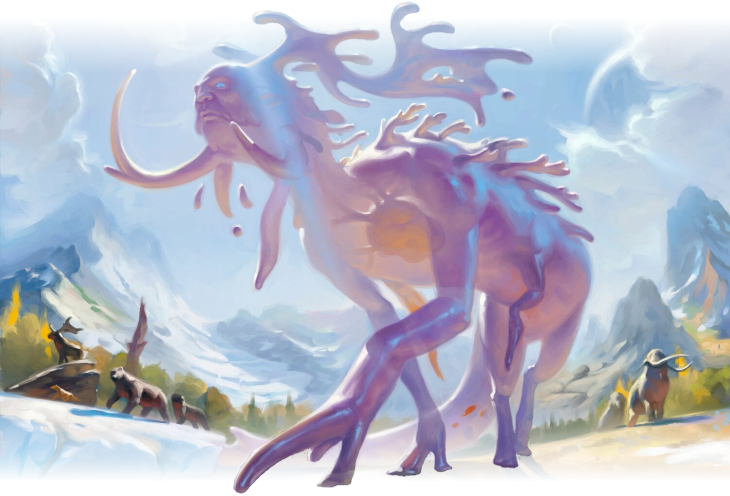
Lorwyn block introduced twenty creatures with the changeling mechanic, thirteen in Lorwyn proper and an extra seven in the small follow-up expansion Morningtide. The former set also featured six noncreature changeling cards that made use of the then new (and now obsolete) tribal card type, allowing them to have creature types even while not being creatures. Additionally,


Like


These first changelings were equally present in all five colors, each of which received two commons, one uncommon, and one rare. Once again, the problem was that these cards squarely fell in one of two typologies: either they are pure Limited fodder (after all, the mechanic's raison d'être was that the tribal theme needed some "glue" in Limited) or they are individually powerful cards that don't particularly care to be placed within a tribal shell.
The latter is the case for three of the rares, which would go on to become the only changeling cards from the block ever to enjoy a significant amount of Constructed play—with the partial exception of spot removal


For the longest time, the original twenty changelings were the only help available for Tribal Wars builds featuring tribes that had no other way to reach the required twenty creatures. But the unbalance between colors was a concern. Aside from the three mentioned rares, the most playable changelings were mediocre (French) vanilla creatures such as
A Changeling of Pace
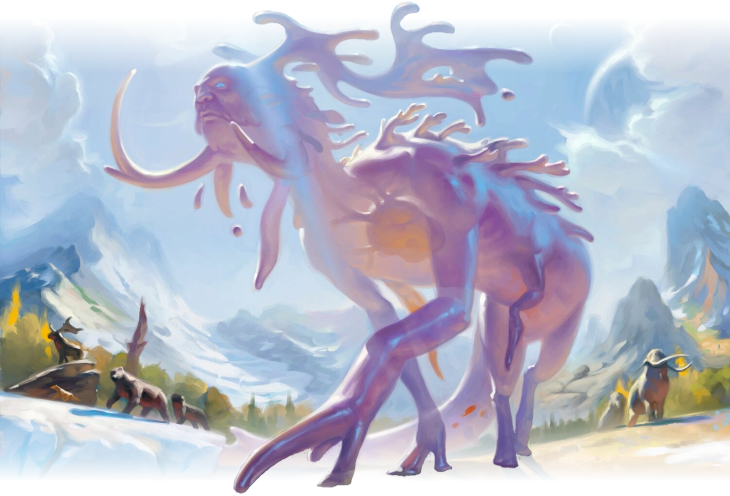
Twelve years had to pass, but in the end Modern Horizons revitalized the changeling mechanic. It was a welcome return, but the experimental set's new approach to changelings still had its flaws. For one thing, it mostly focuses on white and black. Red is entirely excluded, while green has arguably the worst card of the group in the overcosted


But what the Modern Horizons designers successfully recognized is that, in order to appropriately complement a tribal curve, the changelings must lower their cost. You want to drop early creatures that might not look like much but are made better by the linear synergies that come afterward, not vice versa.


White claims the lion's share of these ten new changelings.
However, the most distinctive member of this second wave of changelings is definitely
Changeling the World
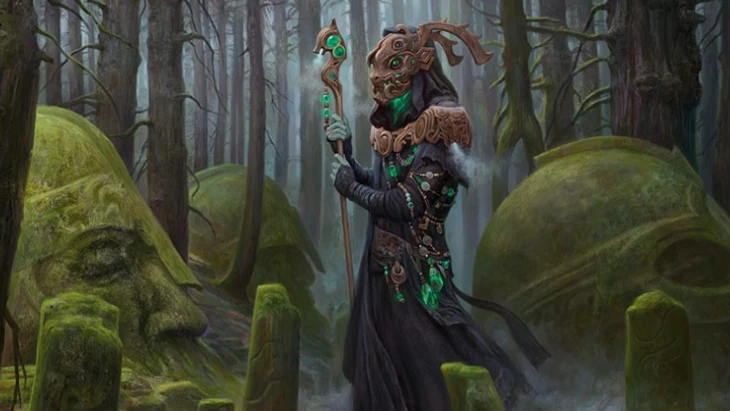
Luckily, we didn't have to wait another decade to get new changelings. Kaldheim revisited the concept for a third time, and with more purpose than ever. Now the changelings have a precise in-universe identity as the masked dwellers of the mysterious, ever-changing Littjara realm. (Not sure why beings that can literally change their faces should bother to wear masks, but the aesthetic is striking.)


They also exist strictly in blue and green, two colors Modern Horizons had neglected and that, when placed together, give birth to proteiform entities like the Simic Combine, so the flavor seems accurate. Green now has value-based two-drops like


Blue owns the minority of the new cards, but the first mythic in
All colors get access to a new colorless changeling, the three-drop


On top of that, Kaldheim contributes to make the changelings feel like their own tribe (the Shapeshifter tribe, that is) and not just supplements for other tribes.
What makes running an all-changeling list intriguing is the opportunity it provides to enable any number of tribe-specific cards, from all the lords and cost reducers to spells that require specific creature types to function, think
Opinions expressed in this article are those of the author and not necessarily Cardmarket.