
Magic: The Gathering has undergone immense changes since its humble beginnings in 1993. Throughout its now almost 30 years of history, the game has restyled itself in more ways than one and has been confronted with numerous challenges. When facing larger (or even not-so-large) instances of innovation or both real and perceived issues, an angry form of panic has always been the widespread knee-jerk response from the community of players. These fears are typically irrational and exaggerated. In pretty much every case, they end up being the source of well-deserved ridicule and self-parody.
Yet, one might find it hard to treat the sudden appearance of open-ended card design the same way we should treat the printing of
On the surface, it doesn't seem to be. It's just a new format only playable on Arena. This is nothing out of the ordinary, since the platform already has Historic (and its "Commander lite" version, Historic Brawl), which collects all the available cards in the system. As of the release of Jumpstart: Historic Horizons, some of these cards don't have a paper counterpart, as they were specifically designed for the digital environment. They often incorporate forms of randomization that would be impractical to replicate in a tabletop setting.
It's not even a new concept for Magic. In fact, it's extremely old, dating back to the twelve Astral cards created in 1997 for the Magic: The Gathering video game published by MicroProse. The experiment was repeated in 2001 with ten exclusive cards that appeared in the Magic: The Gathering game for Sega Dreamcast. While none of these early digital products had the impact that Arena has today (the latter was even only released in Japan), the idea of exploiting the computerized nature of those platforms to design "impossible" cards was already there. Though it remained dormant for twenty years, as neither Magic Online nor any edition of Duels of the Planeswalkers ever returned to that well.

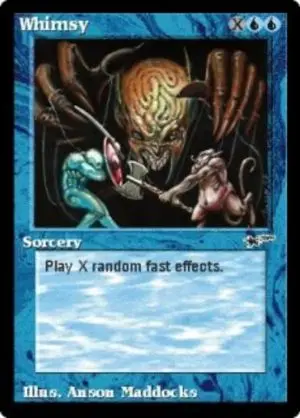
This is where we should make an important distinction, which will come to affect all points we're about to make about this whole affair. The original "designed for digital" cards weren't part of a platform that aimed to recreate Magic: The Gathering in a digital space. They were part of straight-up video games inspired by Magic and borrowing its game system. That's what Arena also inherently is; it just hides it better. By the very nature of Richard Garfield's invention, Magic is a trading card game—or a collectible card game, if you prefer. Whichever expression we want to adopt, one of the basic tenets of the genre is that its components, the cards, can be collected. And that's not accomplished by waiting for the game itself to reward you for playing; it implies a form of transaction that lets you acquire the cards by either trading them with other collectors or buying them from sellers.
Neither of these actions is feasible on Arena, which doesn't translate the full Magic experience, merely its gameplay. Magic's true digital counterpart remains Magic Online where you can trade, buy, and sell cards. Even Arena's economy is that of a video game, preventing you from interacting financially with any party but the system itself. The only way to engage with other humans on Arena is to play against them.
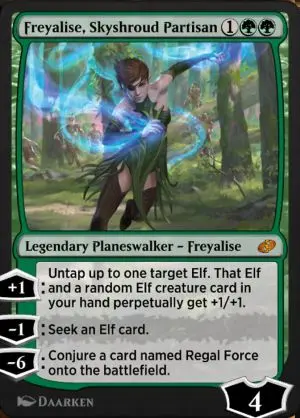
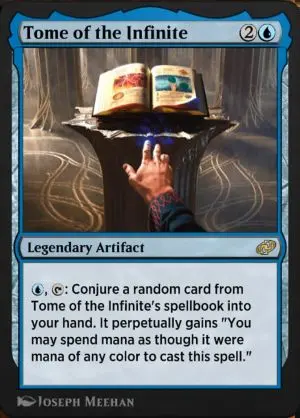
The reason this is crucial is that it speaks of a strong separation between digital play on one side and paper plus MTGO play on the other. Before Arena added digital-only cards, the overlap between the two modes was still conceivable. For instance, a player could assemble their complete Historic deck using paper cards and then play against someone who never downloaded anything. The 31 digital-only cards from Jumpstart: Historic Horizons, all of which are infinitely more playable than those from those old video games, first endangered this overlap.
Now Alchemy makes it a mission statement to create a digital format that cannot co-exist in the same space as the paper-based formats—which ironically includes anything played on Magic Online. If these don't already look like some clumsily drawn battle lines, wait to hear the next part.
Magic Redux
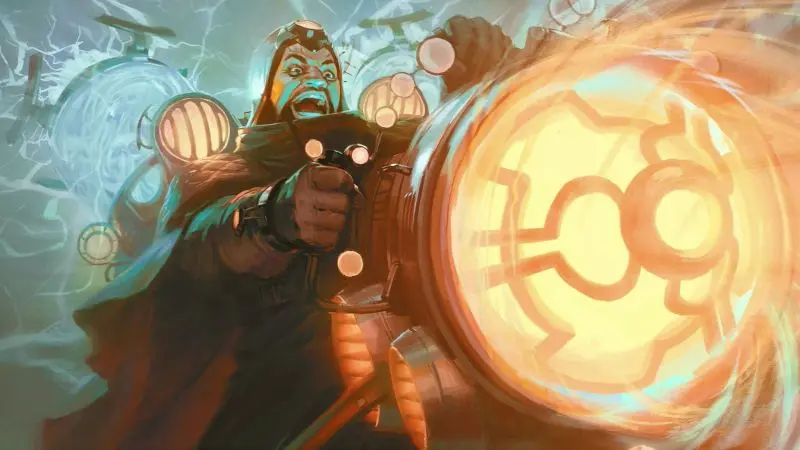
To recap, Alchemy is the new Arena-only rotating format that is based on Standard but incorporates 63 extra cards (with more to come) designed to take advantage of its digital nature. There's nothing especially alarming about that. Though it does emphasize the fact that Arena is its own separate thing—ultimately that it's a video game, not a true porting of Magic: The Gathering. Even the official announcement stresses the idea that there are "digital-first Magic players" and "tabletop players," each with different goals and wants. (Apparently, Magic Online players belong to the second category somehow.)
One might expect they would try to merge these two distinct groups as much as possible, instead of bringing them further apart. But Wizards of the Coast's market research evidently suggests otherwise. No big deal, one will just have to go into Arena with open eyes, knowing what it is and what it isn't and how the elements that distinguish it from the rest of the Magic world will be increasingly accentuated going forward.
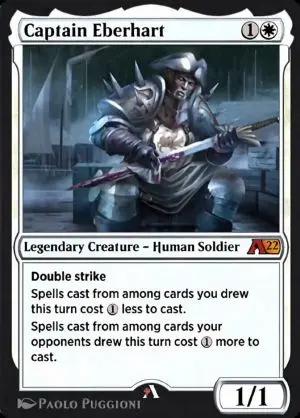
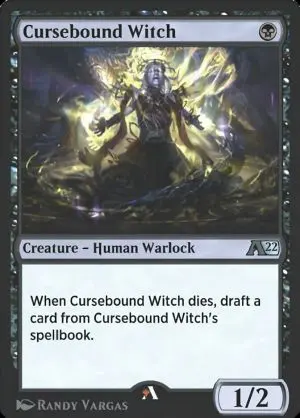
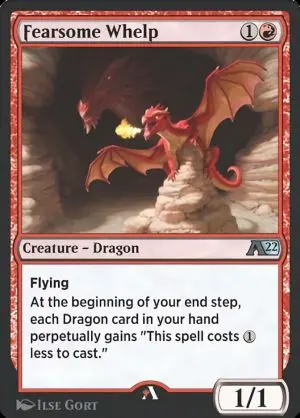
Also, to be fair, Alchemy looks like a fun format. A team led by Hall of Famer David Humpherys designed the new cards, and they make full use of the possibilities the platform grants them. They perhaps tend to feature unnecessary complexity and rely too much on external "spellbooks" (lists of outside-the-game cards they can uniquely access), which makes assessing them at first glance quite awkward. Plus, they're mostly rares and mythics, and the Alchemy boosters can't be drafted, so acquiring them proves expensive. But the prospect of a high long-term cost is just par for the course with Arena, something the "digital-first" players should have already made peace with.
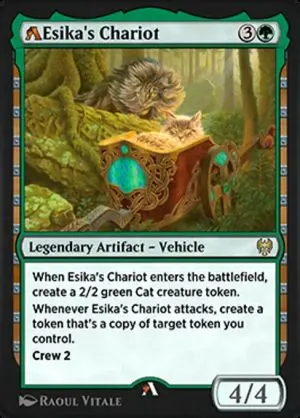
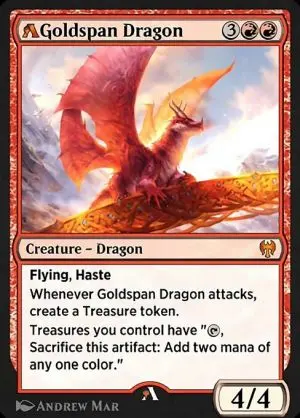
But we're burying the lede here. The major issue that Alchemy poses is that alongside Standard cards and exclusive digital-only cards, the format also introduces "rebalanced cards." These are cards that have been essentially re-designed, sometimes in small ways, in order to improve their playability or reduce the problems they cause in the metagame. This concept previously received a test run in a couple of Arena special events. Now it officially translates into a first batch of eleven cards that got the "rebalanced" treatment.

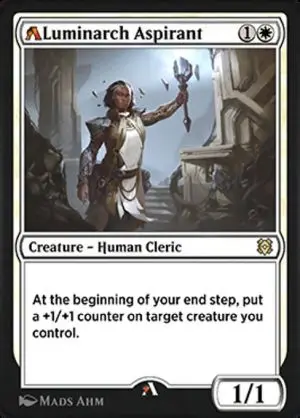
Six are demoted via a "nerf" (including
Most of the nerfs have a definite impact. They've made

But it's the rebalancing act in itself that's problematic, especially since they've announced they're going to repeat it quite often, to keep Alchemy fresh and dynamic. In fact, every premier set will now be accompanied by an Alchemy release. (The current one is styled as Alchemy: Innistrad and contains cards from Crimson Vow, although it rebalances cards from Zendikar Rising onward.) It will go live about one month after the associated set and will debut the rebalanced versions of the cards deemed in need of it. This way, Alchemy opens the floodgates to rebalancing becoming commonplace on Arena.
First of all, this feels disrespectful to the designers of the original cards. Designing a premier set is a process that involves a team working for nearly two years. Sure, mistakes happen, but they're rarely absolutes. At any rate, they're never something that requires fixing. Who are the "fixers" anyway? One month later, another group of designers comes in, looks at the latest set's cards, and decides what could have been done better? Doesn't this feel all kinds of wrong? Looking at this first group of rebalanced cards, we see that some have been changed in meaningless ways, while others have been downgraded, just for doing their job of being good cards in Standard. Since when is Standard a good meter to judge the success of a card's design, or even its power level?

This brings us to the oddest and most concerning aspect of all of it. See, the rebalanced cards don't only affect Alchemy. If they did, it would just amount to another quirk of an eccentric new format. Instead, every format on Arena is forced to use the changed stats and rules texts, except for Standard and Brawl. This means Historic, Historic Brawl, Singleton, what-have-you, they all have to agree with changes that were made with Alchemy in mind. If this sounds annoying, and conceptually misguided (imagine Legacy changing a card based on how it fits the Standard meta), it's also a huge problem from a transactional point of view.
They're now giving themselves the power to change the texts of cards for arbitrary reasons, not as part of errata. We've been told we should expect this to happen regularly. Therefore, someone could invest Arena currency (meaning wildcards acquired through gems, which are in turn acquired through actual money) into a playset of a card that today has value, then see that very card nerfed into irrelevance tomorrow. During the presentation stream on Twitch, Wizards of the Coast representatives explicitly stated that a case like the one described above won't result in a refund of the wildcards.
Now, loss of value has always been part of the deal with Magic cards. They could get banned overnight in the format where they were hot or reprinted when they were in short supply. But the rebalancing takes it to a whole other level, one that's impossible to mitigate. Suddenly, your digital card doesn't work the same way it did when you first acquired it. Its name is the same, but its text has been changed. And there's nothing you can do about it, no way to get rid of it, even for cheap, and no format you can repurpose the card in, since Standard is going to rotate at some point and Historic will follow suit with the rebalancing. Your property has been devalued off of your hands. Welcome to the digital world!
In conclusion, while Alchemy in itself is mostly harmless, its birth is about to set Magic on a bumpy course. A continuous source of digital-only cards will widen the gap between Arena play and paper/MTGO play, turning the former more and more into a video game experience. And the rebalancing of cards is both philosophically questionable and economically impactful for Arena players.
Will it kill Magic? No more than the Reserved List, the Combo Winter, the Sixth Edition rules overhaul, the modern card frame, the New World Order, and the introduction of planeswalker cards and double-faced cards—just to name a few major "crises." But it sure earned itself a place on this list, which is an accomplishment of dubious worth.
Opinions expressed in this article are those of the author and not necessarily Cardmarket.