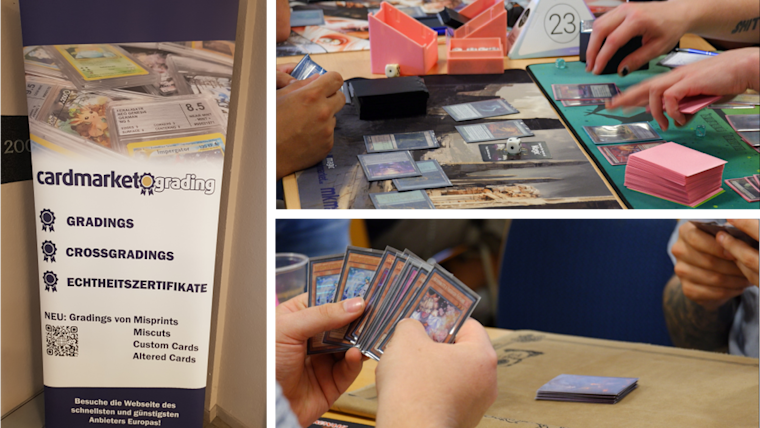
September 16 was a wonderful day in the lovely, tranquil town of Lage, North Rhine-Westfalia. A group of TCG aficionados gathered to play, buy, and trade their favorite cards—whether Magic: The Gathering, Pokémon, or Yu-Gi-Oh!—and even got some cards graded. The opportunity to experience the meticulous work on site was absolutely delightful.
Interview with a Professional Grader
I was able to interview Laura, a Cardmarket Grading expert who provided insightful information on the process.
Christian: Laura, can you please describe the process you go through when you start to grade a collectible card?
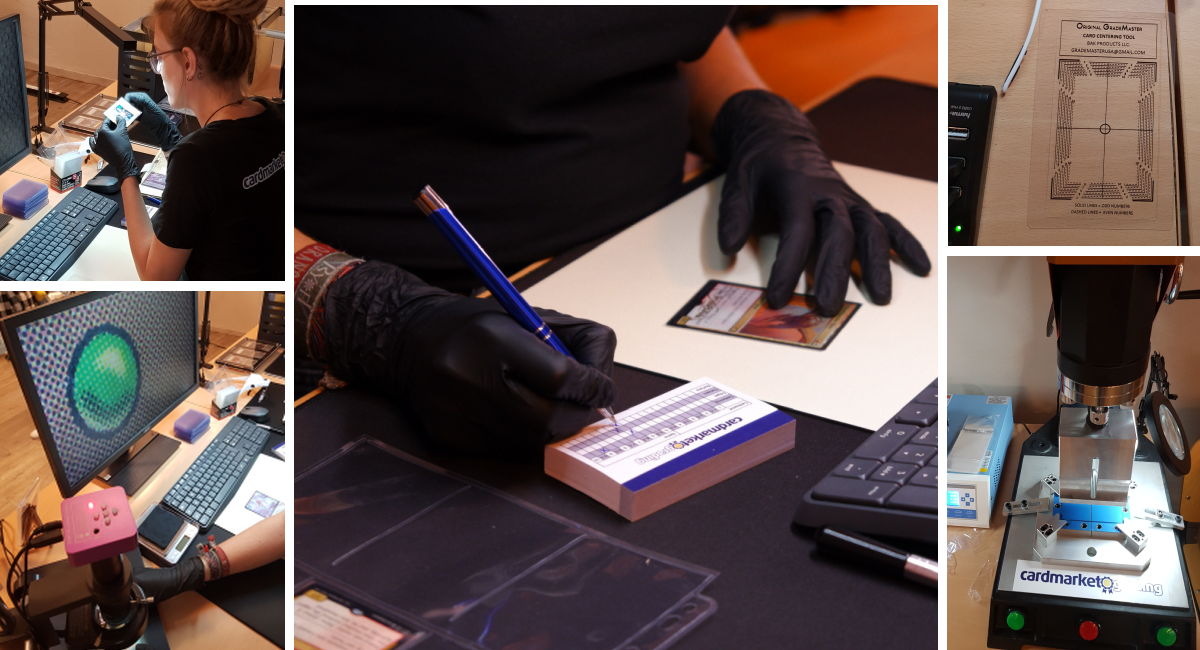
Laura: The very first step would be an authentication. There are a series of tests. For example, for Magic cards I do the green dot test. A good scale is useful too. A Magic card has a different weight than a Yu-Gi-Oh! card, but they both have specific ranges or norms of weight, which can indicate if a card is authentic or not. When grading the card itself, I personally start with the centering, which is one of four subgrades. The centering is a grade that judges the positioning of the art and text box. Over time I got my eye trained pretty well, but we also use a template. Having done that, I move on to the edges and corners. First I take a general look at them, and then I also use a microscope and/or a loupe to find whitening or other smaller faults. The last thing I inspect is the surface. Here I use a microscope as well.
Christian: Can you name any differences between grading, let's say, Magic and Yu-Gi-Oh! cards? Things that are typical?
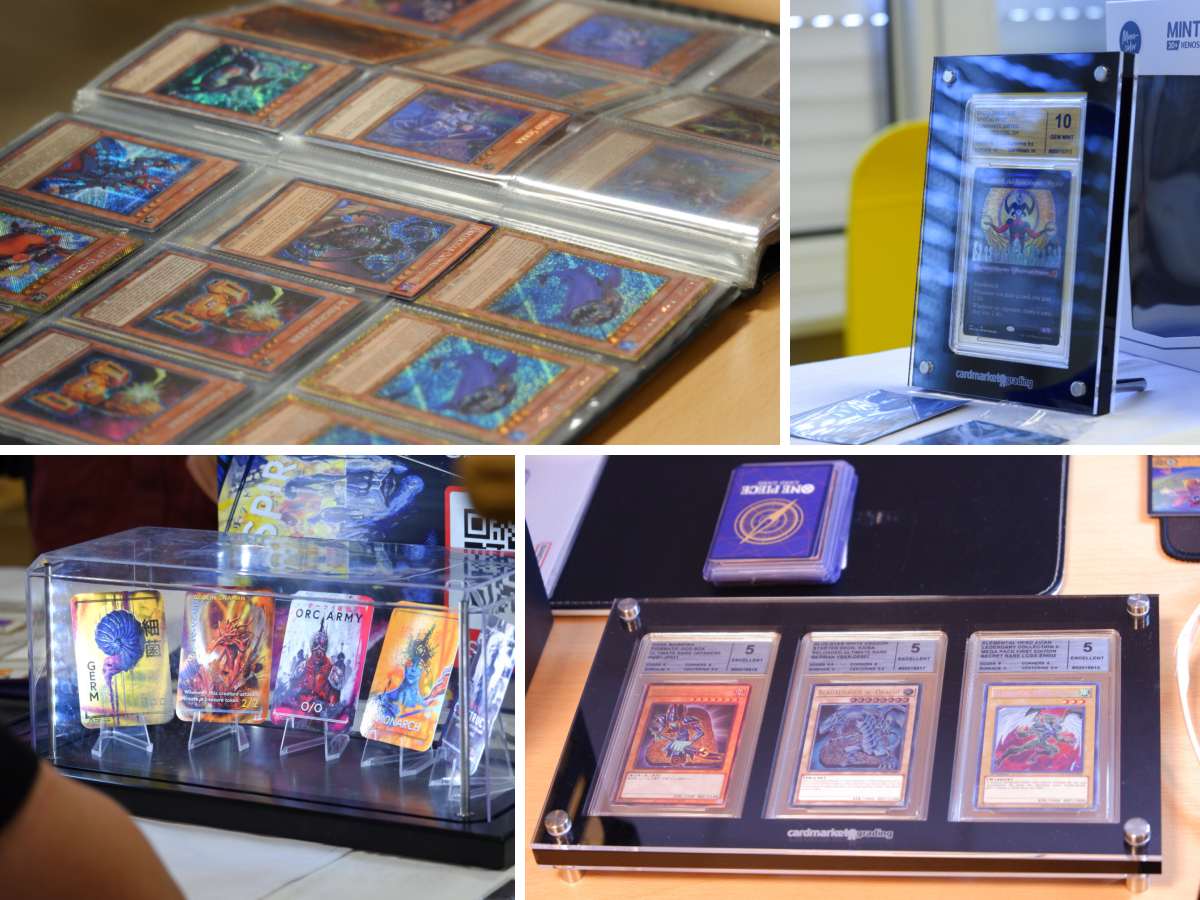
Laura: An issue for Yu-Gi-Oh! is very often the surface as well as the edges and corners of the backs. I have no clue why. The material seems to be very sensitive, I guess. They got better with the slightly thicker material on newer Yu-Gi-Oh! cards, though.
Christian: Are there any types of card that are more difficult to grade than others?
Laura: Probably white-bordered Magic cards. While you can see dirt easily on the white border, it is difficult to see scratches on the surface for example. Then there is a thing with borderless cards, which you get in most trading card games these days. It can be difficult to grade the centering on such cards.
Christian: Which games do you get most frequently?
Laura: Always the big three, Magic, Yu-Gi-Oh!, and Pokémon. Maybe Magic and Pokémon even more than Yu-Gi-Oh!, but these three are still the most popular. Of course we get more and more Lorcana and One Piece at the moment since they are relatively new to the market. That's a thing also. A new TCG enters the market and people start getting their cards graded.
Laura also gave me insight about the calculations going on at Cardmarket Grading. For example, they prioritize the front of the card by some percent on the one hand. This percentage may shift on the other hand if a card's back is completely wrecked. Furthermore it is important to note that a card's overall grade can't exceed its lowest subgrade by more than one. In other words: If your beloved card has pristine corners (10), edges (10), and surface (10) but a horrible centering (1), you will get destroyed on the overall grade.
Grading and Passion
Grading is often associated with cold business terms like finance and investment. But summing up the impression I got from various people I talked to in Lage, it seems that love and appreciation for the cards are the driving forces to get them graded.
For instance, I enjoyed a nice chat with Lukas, who had pulled a copy of
Christian: What's your motivation to get your cards graded today, Peer?
Peer: For me personally there's no ambition to increase the value of my cards in order to sell them. It's basically about my passion for collecting. Getting them graded here I'm also able to get around shipping costs. Another reason is that I like the cases of Cardmarket Grading better than those of the American competition.
Christian: Will you be mad if you don't get a 10 grade?
Peer: Not at all, since I have no intention of selling the cards. Getting them graded is just a matter of passion for me.
Christian: What cards did you submit today?
Peer: A few different trading cards from Pokémon, Weiss Schwarz, and One Piece, within price ranges of €20 to €80.
Conclusion
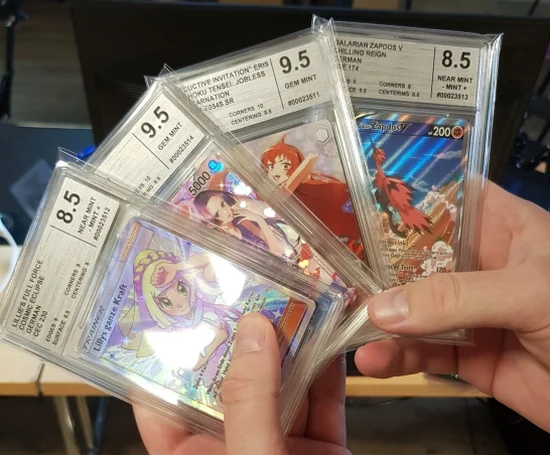
Having been convinced by the high-quality handiwork I witnessed on site, I decided to get a card graded for myself. Since I really dig the Chris Rahn artwork on
Thanks again to Georg from Cardmarket Grading for the invitation, Laura for all the insight, and every other person I met for a good time!
Opinions expressed in this article are those of the author, not of Cardmarket.