Humans are instinctive and impulsive creatures. We react to potential situations before they've even happened as if they already had. Upon the Covid outbreak, people stockpiled everyday-use products in case there wouldn't be enough to go around for everybody, actually causing product shortages in the first place, largely unnecessarily. In this installment of Basics of Finance, I want to talk about behavioral economics in Magic: The Gathering. Let's look at a few examples, at what it means for the prices of cards, and how my Covid example applies to Magic.
Behavioral Economics
Compared to customers of products such as showering gel, headphones, or crisps, Magic players are more emotionally invested, as they expect to have a say in what's going to happen. Additionally, they interact with each other and can be happy or complain together about the situation of the game. Sometimes this creates opinion echo chambers where, naturally, everybody agrees with each other, which further escalates their position on a given topic. One controversial and emotional topic discussed within the community that also touches the theme of this article would be any card that is necessary for a competitive player to own but is prohibitively expensive. I like to present one example from the not too distant past.
The year is 2021. A new card sees play in Modern, and everyone tries to squeeze it into any shell they brew due to its power. I am of course talking about
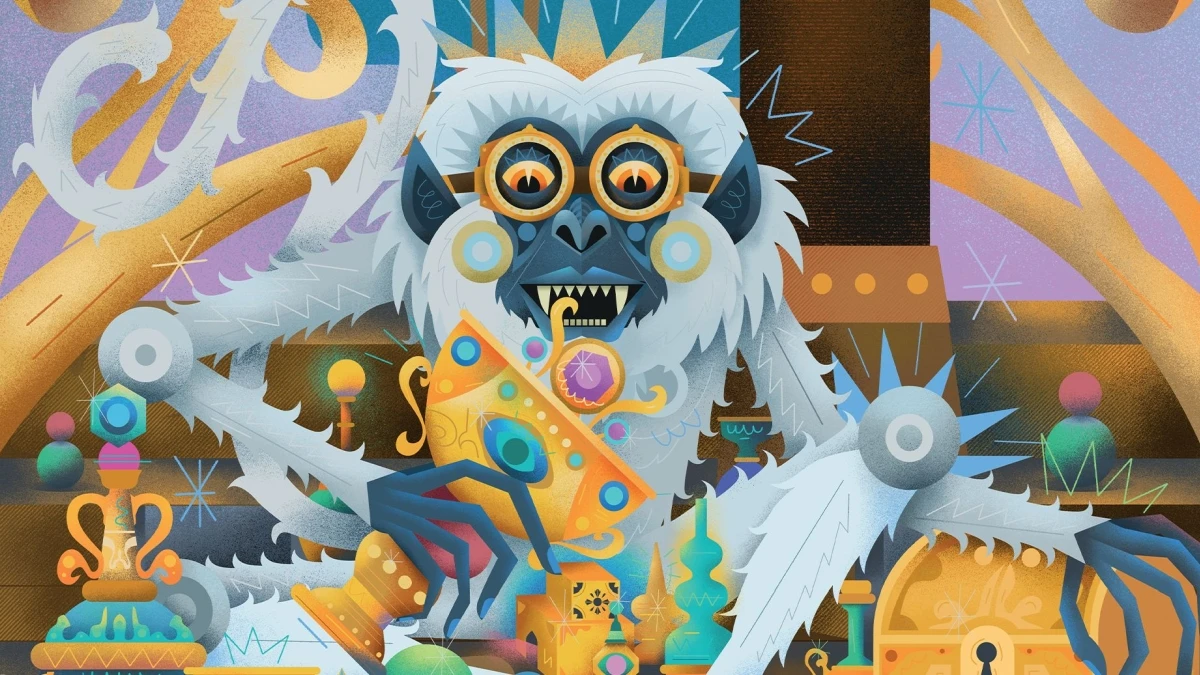
Sometimes such negativity of the player base turns into stigmatization of those who support the status quo. In extreme cases, a communal unwritten rule emerges that states it's better not to play with the card if you want to foster a mutually positive experience. When someone does not follow this intangible and artificially imposed rule, they get frowned upon. Unwritten rules do impact players, as social animals care about how they are perceived among their peers, and the card may actually see less play as a result. You don't want to be that person who plays Ragavan or maybe
On the flip side, if a famous content creator convinces the public that a given card is good, regardless of whether that's true or not, players will jump on the train, buy in, buy out foil copies, all resulting in spiking the price. It may not have been the creator's intention to begin with, but this is the effect. If that card is truly good, the price will stay at the higher price point.
Card Bans
Wizards can declare that a card is no longer legal, and that's enough for the card to become potentially worthless. If a card is banned in all the formats, it cannot be played and so the demand among players drops significantly and so does the price. If a card was banned in one format, then the demand for this card in this format would drop to zero, but players playing other formats may still want it and play with it. However, the price would still drop as all the players who previously owned the card and now can't use it may want to get rid of it, increasing supply on the market.
While the value for players would drop significantly, there are other groups for whom a ban does not changes as much. For collectors, the card still holds sentimental value, and for speculators, it's still an opportunity to wait and see what happens and potentially sell it when the price changes. The actual interesting point here is whether or not people expect the card to be banned.
Players Expect a Ban
It happens all the time, as Magic players very often end up in opinion echo chambers and feel as if everybody agreed with them that a given card should be illegal. If a card becomes illegal, the tournament player demand will drop to zero and the card's value will be greatly diminished. Regardless of whether the card actually gets banned or not, players become more unwilling to invest in the card, even before the announcement. Risk-averse people will get scared away from purchasing the card. The sheer power of spreading the opinion that a card could get banned, regardless of the evidence or soundness of the arguments, will make people shy away from buying. Consequently, the price will drop.
Players Expect No Ban
If the player base strongly believes a card to be safe even though there's an upcoming ban announcement, everybody will feel less stressed, more relaxed, and more willing to buy into the card. The reverse of the above will occur. Players buy the card more willingly, maybe even generate more demand compared to cards perceived to be in danger of a ban, same supply, the price goes up.
Regardless of what players expected, later everybody finds out what the actual decision was. As a consequence, the price will drop if it gets banned and likely increase if it doesn't.
Card Unbans
The flip side is an unban. There is an official list of all the cards currently banned in all formats. Every time the aforementioned Wizards announcement is due, players speculate on whether or not a card might get unbanned.
Players Expect No Unban
Most likely nothing will happen to the price. The card is not playable and will not be playable.
Players Expect an Unban
People buy up copies of the card in advance because they know, when it becomes legal, the demand will skyrocket and hence increase the price. They want to obtain it at a relatively low price now to be able to play with it or trade it away at a profit once the price has risen.
There is a famous example of a card that everybody thought should be legal in the Modern format, and for every announcement, players hyped it up and bought their own copies. After each of many announcements, the price dropped, and before each subsequent one it increased. Finally, after years of speculation, the card got unbanned, and the price rose drastically. Take a look at the
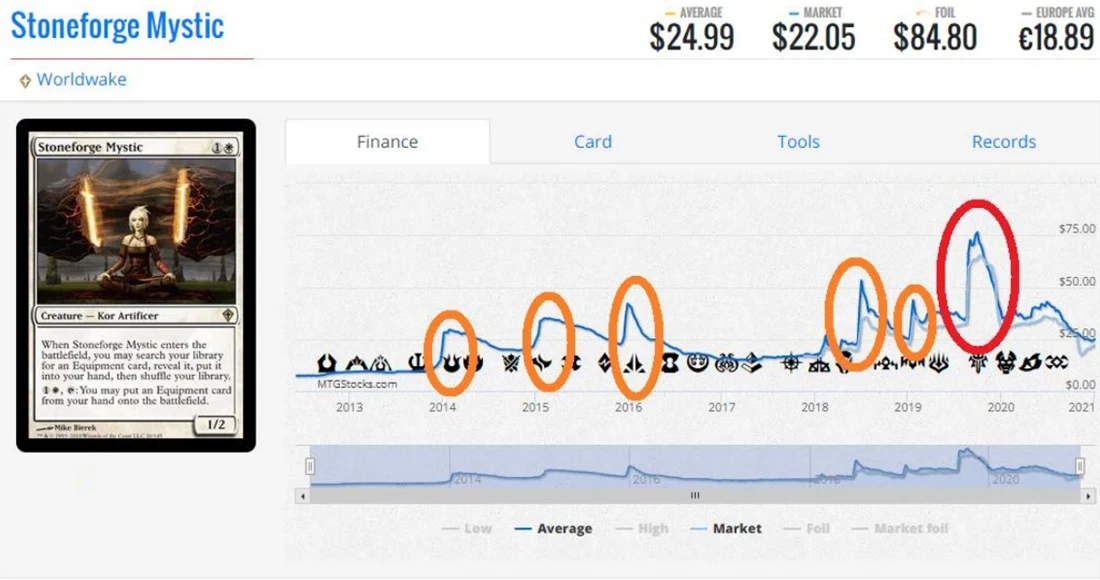
As we can see, our collective opinions and behaviors will not only affect our decisions but can actually affect whole markets. In practice, there is really nothing we can do about it as we can't change our nature. It is indeed the nature of the game. Play it at your own risk. And as always—remember to hold my hand, and let's pass the turn together. Cheers!
Opinions expressed in this article are those of the author, not of Cardmarket.