
The Mirage block represents a special moment in Magic history. Not only did it deliver the first real engine combo deck—
Tropical Setting
Mirage was the first set since Arabian Nights that led the player through a nonstereotypical but African-style setting. Paintings like
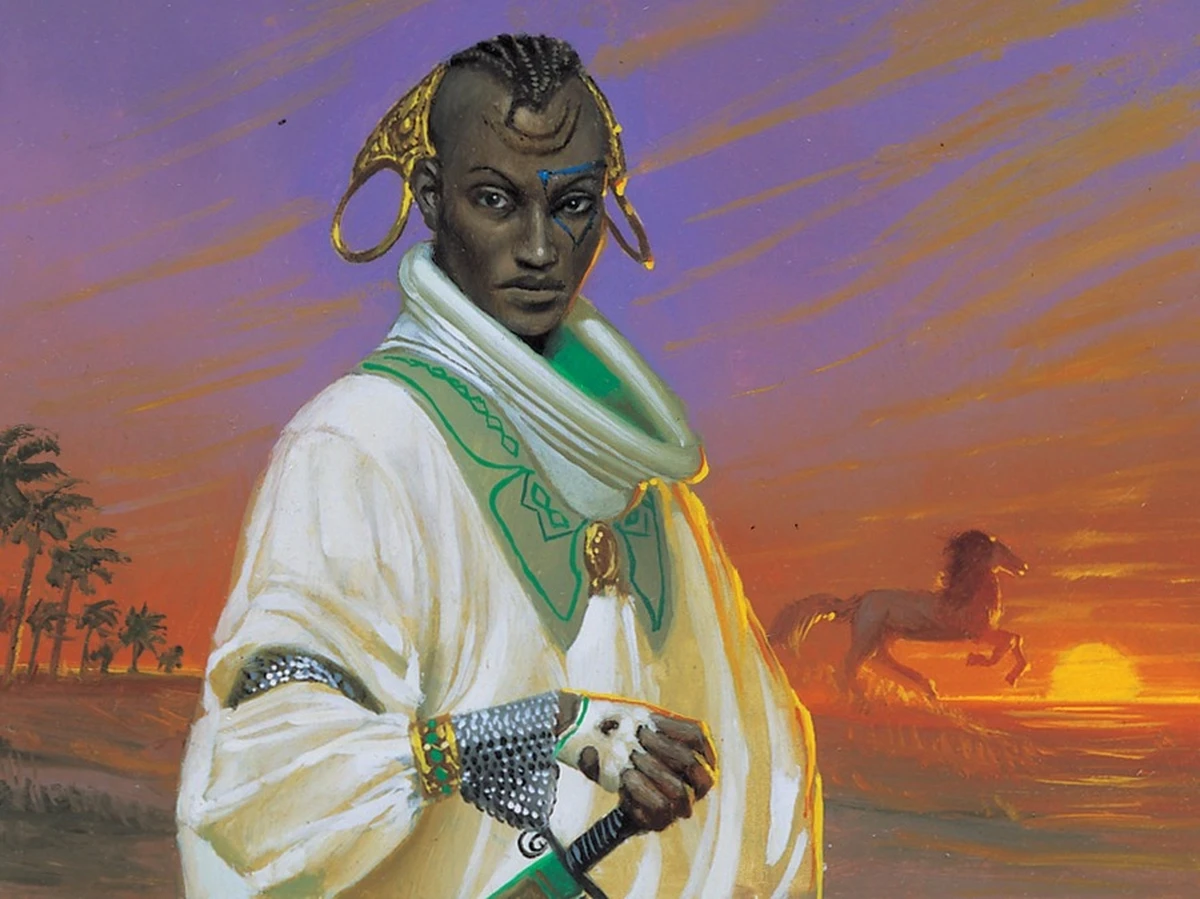
Unlike the following other innovations of Mirage, we must credit the unique setting to Pete Venters and not to Sue Ann Harkey. Venters was involved in the worldbuilding process during that time. He described the emergence of this idea as follows:
"Two images spurred the idea of a tropical setting. The first was a painting of a Nubian guard in an Arabian palace. Here was a black man from somewhere in the medieval era covered in wonderful ornate armor, and I found myself thinking, 'Why do we not see more of this?' The second was a mental image of a painting featuring elephants and dragons. I'd never seen any such painting, which surprised me because an elephant is a great way of showing how large a dragon is. I later used this idea in my painting of

Who're Dom! and JOCK? New Artists for Mirage
But Harkey, along with Maria Cabardo, recruited a lot of new, highly talented artists. Some of Magic's most prominent artists were brought into the game by Harkey. John Avon, Donato Giancola, Rebecca Guay, D. Alexander Gregory, Chippy, Scott M. Fischer, and Kev Walker—at that time still Kevin Walker—are some of the biggest names related to Magic paintings.
She also recruited experienced artists from the comic and sci-fi industry like Ian Miller, Geoff Darrow, and Mike Dringenberg. Ian Miller turned out being great at drawing Dragons and Serpents, so he got all of those. Just take a look at


Harkey tried to assign the right briefs to the appropriate artists:
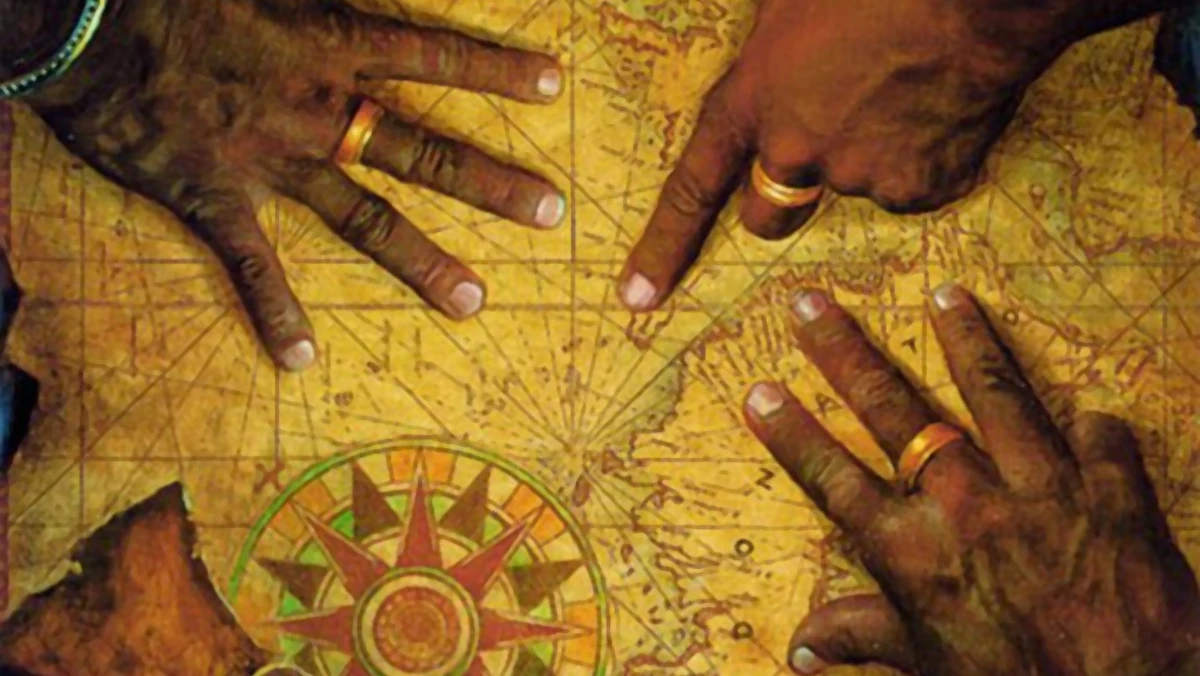
"I read all the briefs. As I was reading them, I could visualize certain artists for certain pieces. Oh, some hands—give them to [Donato] Giancola! Dragons? Ian Miller! And stuff like that. […] Terese Nielsen and [D. Alexander Gregory] got all the babes."
Many more of my favorite artists like Jeff Miracola, Roger Raupp, and Robert Bliss, whose


Triangle of War Booster Boxes
Another standout of the block, in the most literal sense, was the outstanding booster box design. Harkey, who came from the (pop-up book) design industry, also created the unique, huge display for Visions using the
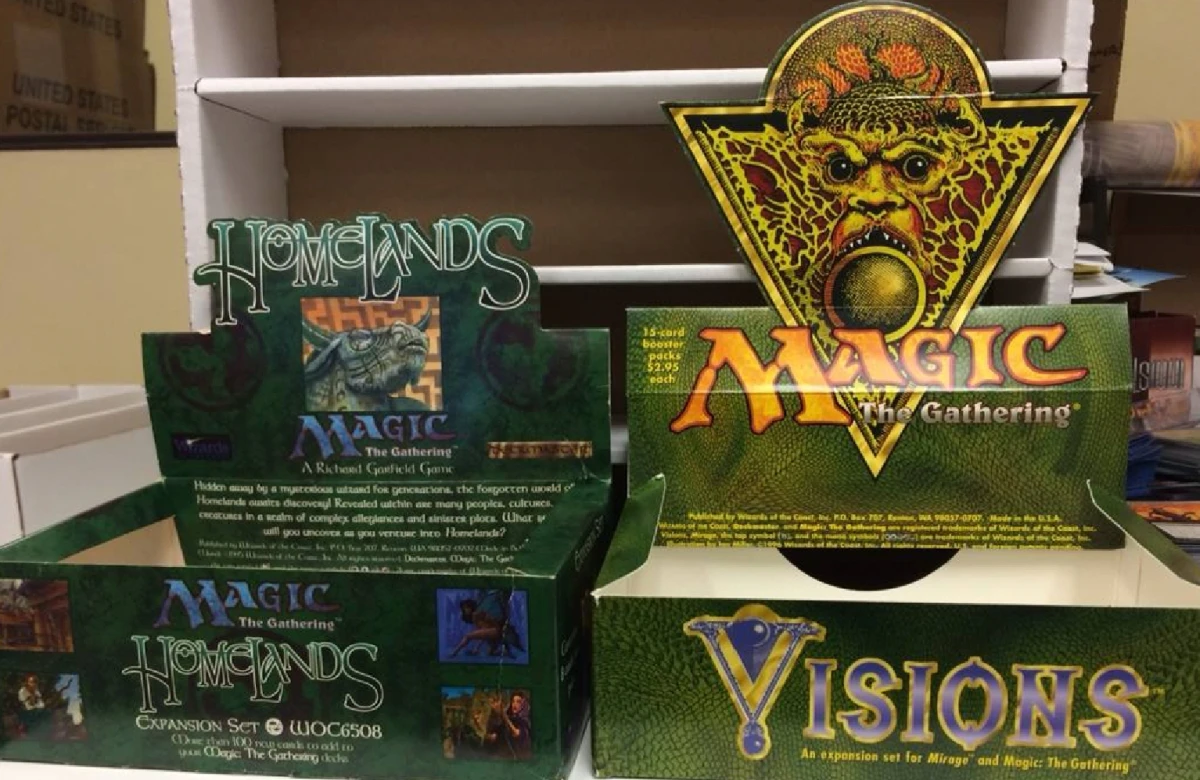
Visions booster box: 1
Breaking with Royalties
When Harkey started art directing the illustrations became copyright owned by Wizards of the Coast. Before the change in payment, artists were getting royalties, which turned quite substantial when Magic was booming. Wizards moved from a royalty system to flat rates. Considering the massive print runs of sets like Ice Age/Fourth Edition and the fact that the game really took the world by storm at the time, it didn't seem sustainable to pay ongoing royalties. The original pool of artists wasn't too happy about the change, but the change left more money for new recruits.
Conclusion


Mirage marked a new benchmark for art in Magic. In a way it was the first high-tech block in Magic. The three sets look simply breathtaking in my opinion. Sharp details as in
The African-inspired, beautiful setting and the new artists make Mirage a very early peak in Magic evolution. Thank you for reading!
Opinions expressed in this article are those of the author, not of Cardmarket.