What Is the OCG?
The first set of Yu-Gi-Oh! cards ever created was called Volume 1. Released in Japan in Februrary 1999, it started the worldwide phenomenon we all enjoy. With time, the game was exported outside of the land of the rising sun. In December 2002, Legend of Blue Eyes White Dragon was released in the west. From the start, the game was very different from the Japanese version.
Delays in Card Releases
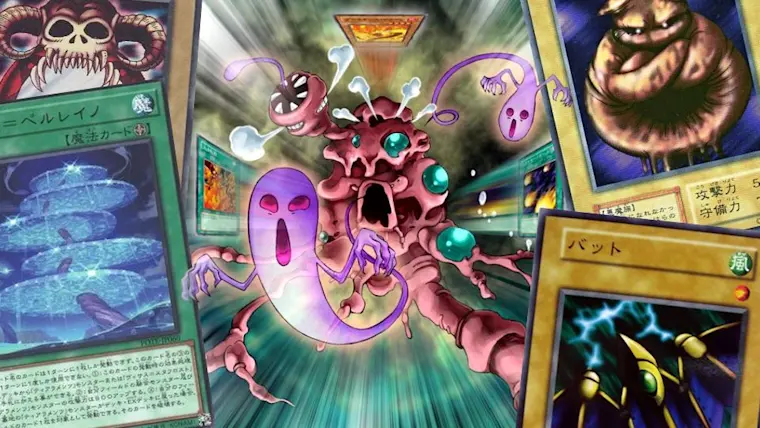
Yu-Gi-Oh! in the west had about three years of cards to catch up to, so our sets were combinations of those already released in the OCG. Our LOB was a mix of the Japanese set Legend of Blue Eyes White Dragon and, uh, "Phantom God"? Who named these? Anyway, basically every Duel Monsters-era booster pack was a mixture of several of the OCG's, in order to catch up with them. Still, in the TCG, we are missing 154 random normal monsters from this era. It's a real tragedy to think that we can't build decks using "Embryonic Beast", "Job-Change Mirror", or "Bat." So yeah, there's a difference in card legality between the OCG and TCG.


The differences are not that many but inevitable, as cards come out in the OCG some three to six months before we get them imported. Nonetheless, sometimes we have to wait for a long, long time to receive very impactful cards. For example,
This delay in receiving cards we already know are coming creates an extremely weird situation exclusive to this game. Whereas Magic or Pokémon reveal cards not long before they release, we know which cards we're getting almost half a year in advance. This creates a rather odd deck-building situation where we have a lot of time to theorize and a whole other format to draw conclusions from.
Card Prices
One of the biggest differences people know and talk about in the OCG is card prices. This is because of a system I wish the Konami TCG would import for our products. Like in many other TCGs, OCG cards have a base rarity, which is lower than the one we get here, alongside a couple of other foilings of that same card. So you can pull a €3 super rare


But not all that glitters is gold. One extremely big advantage the west has over the Japanese is that we get reprints a lot more often. This, coupled with the fact we don't lock crucial cards behind really hard-to-get promotional products, makes it so the OCG gets the short end of the stick for cards we can have for cheap. Cards like
Ban List
Last but not least, the OCG has a separate ban list from us. Theirs is weird, to say the least. Until 2013, there was one universal ban list. However, with an ever-bigger card pool discrepancy, a separate one had to be created for the TCG. With time, these ban lists have become more and more different, and will likely never merge back. You might have some issues with the TCG ban list, we all do, but the OCG one features dubious hits en masse.


It's a reality that the OCG is much more heavy-handed with the ban list than the TCG. For example, Adventurer, Despia, and Swordsoul came and went in the TCG with no direct hits, but were all severely crippled in the OCG. Not only that, they also take their sweet time when it comes to bringing back cards. Did you know
Overall, people seemingly love to talk about how much better the OCG is. But is it really? Card prices are not that different, and their format is honestly terrible. They've been locked in a tier zero format since the release of Power of the Elements. They have to play with a lot of limited engine cards, making decks more inconsistent and frustrating. Most importantly, they have to deal with
Opinions expressed in this article are those of the author, not of Cardmarket.