
Disclaimer and General Project Info
You can find clarifications on the naming of archetypes in Appendix 1: Deck Dictionary at the end of the article. There I list the cards normally seen in each deck and discuss some of the naming conventions, things like why Boros instead of R/W.
This data set was crowdsourced via players in the Pauper Leagues of Magic Online from September 1 to September 31, similar to the famous Challenge Projects of Vintage, Legacy, and Pauper. I received everyone's data and was tasked with the merging, organization, and treatment of it. This means removing duplicate entries when both players send their results, dealing with naming conventions, et cetera. After everything was done, we had 1,912 matches to analyze, including win/loss results.
This neither comes from nor has any affiliation with Wizards of the Coast, and it does not offer a full picture of the metagame. Pauper Leagues range from 650 to 720+ players. Despite our sample size, averaging almost 64 matches a day, it is still only part of what happened on Magic Online during this time. Nonetheless, we believe the data may help highlight overall trends in the world of Pauper.
When a deck has little metagame share, we often get comparatively more of its matchup information. If a player runs a league with a less popular deck, we likely have win/loss information on five of its matches, but it constitutes only one entry when it comes to the meta share. As an example: A player runs a white-blue deck and faces a monowhite, monoblue, monoblack, Monored, and monogreen deck. We have one matchup for each of the monocolored decks facing the white-blue deck, so five data points, and we have six data points for meta share analysis. Thus we tend to have more decks than matchups, and less popular decks may generate a relatively high amount of win/loss information because the players using these decks are reporting more data.
There can be duplicate data points of a deck being piloted by the same player in the same League, which shouldn't be treated as if it were two entries of the deck in two different Leagues. The player could have played only one League, thus five matches, on the same day or split them across several days. If said player matched with more than one of the folks tracking their data, we would have at least two data entries instead of one. However, the player may have instead played two Leagues (ten matches) with the same deck in a row, and in this case it makes sense to have multiple data points. I couldn't find a good way to differentiate between these scenarios. Therefore all entries are treated the same, meaning that a deck can unfortunately have extra entries. As we track more matches, it is reasonable to assume the sheer volume deem these situations negligible. As far as the win/loss results, I made sure to remove all the duplicates when they happened: If player A faced player B and both send me their data with that match, I registered it only once.
| Metadata | ||
|---|---|---|
| Starting date: | 2022-09-01 | |
| Final date: | 2022-09-30 | |
| Number of days: | 30 | |
| Number of matches: | 1,912 | |
| Number of deck entries: | 2,269 | |
| Unique archetypes: | 75 + Rogue | |
| Entries Day 1 to Day 10: | 914 (40.3%) | |
| Entries Day 11 to Day 19: | 444 (19.6%) | |
| Bans effective: | 2022-09-19 | |
| Entries Day 20 to Day 30: | 911 (40.2%) | |
Introduction and Motivation
For a variety of reasons I decided to try to track the changes in the Pauper League metagame when Double Masters 2022 was released. As it was a successful endeavor, I decided to repeat it for September and will keep doing so until the amount of data sent my way is not enough to warrant an analysis. You can check all of the original motivations behind this project in the first article of this series.


Dominaria United released on Magic Online on September 1. It did not bring as many cards for the format as Double Masters 2022 had. However, the same date saw the release of a handful of cards from Commander Legends: Battle for Baldur's Gate that were not yet available on Magic Online but proved extremely impactful in the tabletop metagame. The most impactful were, without a doubt, some of the cards with the initiative mechanic:

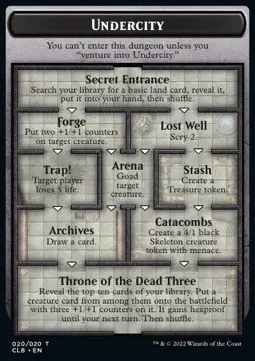
Those bans did not happen solely due to the mechanic, as it still exists in the format through cards such as
Other cards such as


The most impactful cards from Dominaria United so far have been
However, with the addition of Terror, the deck can now focus on the turbo approach and have the more control- or monarch-oriented plans as backup. Players now use


The
Other decks that were phased out in the past, such as Walls and Elves, received new cards in
Overall the impact of the set was pretty high considering it basically just made blue-black more powerful. However, this in turn means all decks have to respect cards like
I'm immensely thankful to everyone who helped, to those that stuck with the project and are still sending their data and to all the new players that joined us! We had an incredible 914 entries for the first ten days of September thanks to the new help. As initiative wreaked havoc in the meta, the following ten days saw a smaller number of entries, 444, but after the bans we kept the pace and went back to registering 911.
Metagame Breakdown for September 2022
I identified 75 unique decks for September. A few of the decks submitted, nine in total, were too hard to classify or looked too experimental and thus received the "Rogue" label. To justify the classification, these included, for example, a five-color pile with
To track the changes over time, I normally split the data into three periods of ten days each. However, as bans happened on the 19th, I decided to make the second period shorter, thus the division is Days 1 to 10, Days 11 to 19, and Days 20 to 30. I grouped the Top 32 archetypes for September by the aforementioned periods and show them here:
I created all charts in this article with Flourish Studio. This includes the following, which shows metagame trends. It starts with the twelve biggest archetypes, but you can select whichever decks interest you the most from the drop-down menu:
You can find the full table with all the decks as well as their meta share for each period at the end of this section. However, to make the analysis easier to follow, I want to highlight the Top 8 of the most played decks in each split of roughly ten days.
| Top 8 Most Registered Decks | ||||
|---|---|---|---|---|
| August | September | |||
| Rank | Days 21 to 30 | Days 1 to 10 | Days 11 to 19 | Days 20 to 30 |
| 1 | Grixis Affinity (14.6%) | U/B Initiative (9.1%) | Kuldotha Burn (11.5%) | U/B Angler-Terror (9.9%) |
| 2 | Monored Blitz (9.9%) | Grixis Affinity (7.8%) | U/B Initiative (11.5%) | Kuldotha Burn (9.6%) |
| 3 | Ponza (7.0%) | Monored Blitz (7.2%) | Caw Gates (5.9%) | Grixis Affinity (7.8%) |
| 4 | Rakdos Burn (7.0%) | Monored Burn (5.5%) | Monored Burn (5.9%) | Caw Gates (7.0%) |
| 5 | W/U Familiars (5.5%) | Monoblack Land Destruction (4.6%) | Rakdos Burn (5.2%) | Ponza (5.5%) |
| 6 | Caw Gates (4.7%) | Caw Gates (4.4%) | Grixis Affinity (5.0%) | Monored Blitz (4.8%) |
| 7 | Boros Synthesizer (4.3%) | Ponza (4.2%) | U/B Angler-Terror (5.0%) | Monoblue Faeries (4.0%) |
| 8 | Monoblue Faeries (4.3%) | Rakdos Burn (4.1%) | Monored Blitz (4.3%) | Monored Burn (3.8%) |
In comparison to last month, we see the usual suspects, Grixis Affinity, Monored Blitz, Rakdos Burn, Caw Gates, and Ponza. But we also see the addition of U/B Initiative and Monoblack Land Destruction, both using initiative cards. Then there's the resurfacing of Monored Burn, which was outclassed previously despite having started as a hugely popular deck in the first week of July, after Double Masters 2022 and its
This sort of behavior makes some sense as the meta doesn't immediately adapt, and the majority of players stick to past deck choices. Something similar happened with Rakdos Burn in the beginning of July, which I explored in last month's article. Not only that, for a long time it was hard to have access to those cards as they were only available in Treasure Chests.
Despite all of these shortcomings, we see something interesting in September as the initiative decks just took a huge piece of the meta share from the get-go and U/B Initiative became the most popular deck during the first ten days! This was in part due to initiative being already used in Paper for a couple months. The Japanese community in particular had shared their developments and decklists with the mechanic and demonstrated how cards like
If one pays close attention to the beginning of the month, one can see an overabundance of linear and "straight to the point" decks! With the exception of Caw Gates and Grixis Affinity, everyone else just wanted to race or deny the opponent of playing the game (Ponza and Monoblack Land Destruction). Players did not believe in interaction as a good strategy and decided to focus instead on a race. I further explored this period in a Twitter thread where I discussed the deck developments as I was seeing them in Leagues and through lists being shared by the top players both on Twitter and Discord. I also explain there why Monoblack Land Destruction became so popular.


However, by Days 11 to 19 (before the bans) we witnessed an interesting adaptation. U/B Initiative gained more meta share, but a new deck had surfaced too! It was the Kuldotha Burn deck that used
In last month's article I point out how from Day 1 to Day 20 of July Monored Burn went from most to least popular Swiftspear deck while Monored Blitz moved from least to most popular. But there wasn't any mention of a Swiftspear deck using Kuldotha Rebirth, even though all the cards were already available. Is this a sign that the community as a whole should be more willing to explore in terms of deck building? Or did the past meta not give enough room to such a strategy? See the trends of Swiftspear decks from July to September here:
I think most of the reason why Monored Blitz lost in popularity was that
But some uncertainty remains. Maybe it was a matter of the meta aligning so players were forced into go-wide strategies, or maybe Monored Blitz being so good in the past meant it eclipsed every other red deck, or maybe the Kuldotha deck should've been present since July. The player Lujo86 gave an interesting take that I believe provides a better explanation as to what happened during a Discord discussion. I quote it here verbatim from that group chat:
"I think it took some time to figure out that Kuldotha Burn is a possible competitive thing because it wasn't immediately clear how little support enabling metalcraft (and Kuldotha Rebirth) takes, and, also, how light and low curve you can actually go.
[…] The concept just looks too janky and too 'I can't believe this is actually all it takes' to inspire enough confidence until someone sticks with it and it starts raking in results. It's quite an unintuitive, nebulous deck. Madly powerful, but you need to ask yourself some questions and then go test them, and if the answers are 'no'—and they certainly look like they'll be 'no'—you'll end up losing a lot and probably thinking 'what was I thinking?' and going back to one of the proven variants that make more sense."
In the period from Day 11 to Day 19, it is also interesting to note that U/B Angler-Terror started to creep into the format. It's yet another deck that ran
Another interesting development concerns Caw Gates. I noted last month that it was becoming more relevant, and likely was underplayed, and it started to grow in popularity then. First it proved to have a decent go-wide plan, and it could even run
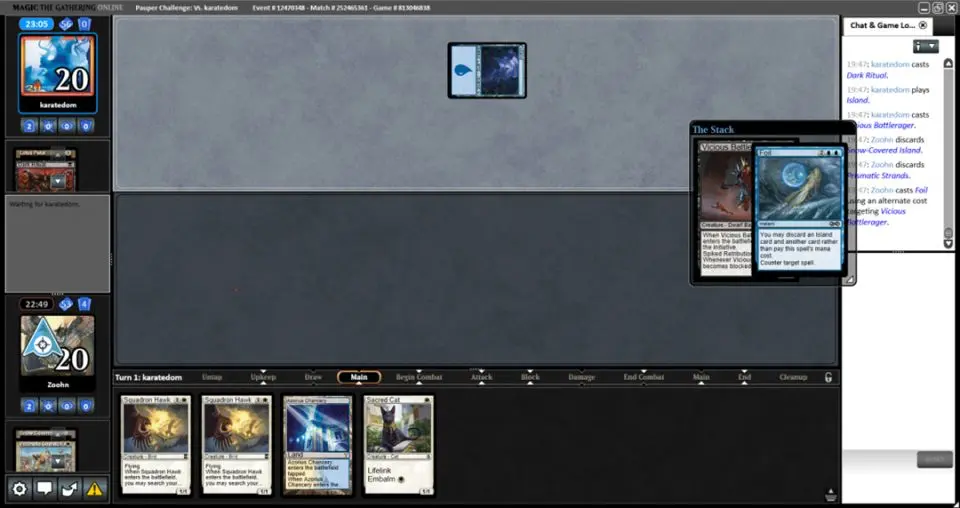
On the 19th bans happened, targeting initiative cards and only leaving
I want to show how the most popular decks from Day 20 to Day 30 of September climbed and fell in popularity since the beginning of our data tracking. Again, you can select any of the available decks to explore further trends yourself:
-
With the addition of
U/B Angler became U/B Angler-Terror and is currently the most popular deck per our crowdsourced data. It has some copies of main to answer the variations of burn decks alongside powerful threats with built-in protection that can consolidate games. -
Kuldotha Burn came out of nowhere, took control of the meta for a while, and made everyone rethink their builds. Now it lost some meta share but still fights for the spot of most popular deck.
-
Caw Gates was a complete underdog but now stands as one of the best decks of the format. It even outclassed W/U Familiars and is now the most popular white-blue deck.
-
Monored Blitz was an absolutely powerhouse during July. It kept shedding meta share, even though it was still the most popular red deck in August, fighting with Grixis Affinity for the overall top position. But now it sits in sixth position according to our crowdsourced data.
-
Ponza exhibits volatile behavior but seems to be gaining in popularity again as Kuldotha Burn becomes less popular.
-
Grixis Affinity shows one of the most interesting behaviors. First the deck tends to get amazing results in the big events, frequently having a nonmirror win rate upward of 55%, but it has a cyclical presence in Leagues, with sudden bursts of popularity then quickly losing meta share only to repeat that process again. What appears to happen is that as it becomes popular, everyone warps their decks even more against it and chases the deck away until it adapts and comes back in a slightly different configuration. Notice how Kuldotha Burn and Monored Blitz were the most popular when Grixis Affinity was at its local lows. Walker735, who has been having amazing results with all sorts of variations of Affinity, frequently placing in the Top 8 of big events, including the last Super Qualifier on October 1 and August's Showcase Qualifier with an Affinity variant running Faeries, shared his development process during the Swiftspear frenzy. He noted that he started to lose a lot until he rethought the deck and how to behave in a match. So it seems that although Affinity is an absolute powerhouse, often the most popular and most successful in major tournaments, it requires a good level of knowledge of the format and of the deck to adapt to the necessities of the meta, which means it is prone to this cyclical behavior.
| Gathered Meta for September 2022 | |||||
|---|---|---|---|---|---|
| # | Deck | Days 1 to 10 | Days 11 to 19 | Days 20 to 30 | Total |
| 1 | Grixis Affinity | 71 (7.77%) | 22 (4.95%) | 71 (7.79%) | 164 (7.23%) |
| 2 | Kuldotha Burn | 19 (2.08%) | 51 (11.49%) | 87 (9.55%) | 157 (6.92%) |
| 3 | U/B Angler-Terror | 30 (3.28%) | 22 (4.95%) | 90 (9.88%) | 142 (6.26%) |
| 4 | U/B Initiative | 83 (9.08%) | 51 (11.49%) | 0 (0%) | 134 (5.91%) |
| 5 | Caw Gates | 40 (4.38%) | 26 (5.86%) | 64 (7.03%) | 130 (5.73%) |
| 6 | Monored Blitz | 66 (7.22%) | 19 (4.28%) | 44 (4.83%) | 129 (5.69%) |
| 7 | Monored Burn | 50 (5.47%) | 26 (5.86%) | 35 (3.84%) | 111 (4.89%) |
| 8 | Ponza | 38 (4.16%) | 6 (1.35%) | 50 (5.49%) | 94 (4.14%) |
| 9 | Monoblue Faeries | 36 (3.94%) | 17 (3.83%) | 36 (3.95%) | 89 (3.92%) |
| 10 | Rakdos Burn | 37 (4.05%) | 23 (5.18%) | 26 (2.85%) | 86 (3.79%) |
| 11 | Auras | 21 (2.3%) | 16 (3.6%) | 33 (3.62%) | 70 (3.09%) |
| 12 | Boros Synthesizer | 23 (2.52%) | 9 (2.03%) | 24 (2.63%) | 56 (2.47%) |
| 13 | Boros Bully | 22 (2.41%) | 12 (2.7%) | 19 (2.09%) | 53 (2.34%) |
| 14 | Monoblack Control | 30 (3.28%) | 10 (2.25%) | 7 (0.77%) | 47 (2.07%) |
| 15 | W/U Familiars | 13 (1.42%) | 11 (2.48%) | 23 (2.52%) | 47 (2.07%) |
| 16 | U/R Faeries | 20 (2.19%) | 7 (1.58%) | 18 (1.98%) | 45 (1.98%) |
| 17 | Monoblack Land Destruction | 42 (4.6%) | 1 (0.23%) | 1 (0.11%) | 44 (1.94%) |
| 18 | U/R Control | 24 (2.63%) | 4 (0.9%) | 15 (1.65%) | 43 (1.9%) |
| 19 | U/B Faeries | 25 (2.74%) | 6 (1.35%) | 10 (1.1%) | 41 (1.81%) |
| 20 | Elves | 19 (2.08%) | 6 (1.35%) | 14 (1.54%) | 39 (1.72%) |
| 21 | Jeskai Wildfire | 26 (2.84%) | 2 (0.45%) | 11 (1.21%) | 39 (1.72%) |
| 22 | Monowhite Aggro | 9 (0.98%) | 12 (2.7%) | 16 (1.76%) | 37 (1.63%) |
| 23 | Monoblack Burn | 6 (0.66%) | 9 (2.03%) | 20 (2.2%) | 35 (1.54%) |
| 24 | Monogreen Stompy | 18 (1.97%) | 5 (1.13%) | 11 (1.21%) | 34 (1.5%) |
| 25 | W/B Pestilence | 9 (0.98%) | 3 (0.68%) | 19 (2.09%) | 31 (1.37%) |
| 26 | Cycle Storm | 9 (0.98%) | 7 (1.58%) | 8 (0.88%) | 24 (1.06%) |
| 27 | Monoblue Control (Terror) | 1 (0.11%) | 4 (0.9%) | 19 (2.09%) | 24 (1.06%) |
| 28 | Walls | 11 (1.2%) | 6 (1.35%) | 6 (0.66%) | 23 (1.01%) |
| 29 | G/U Turbo Fog | 5 (0.55%) | 2 (0.45%) | 15 (1.65%) | 22 (0.97%) |
| 30 | Monowhite Heroic | 9 (0.98%) | 4 (0.9%) | 8 (0.88%) | 21 (0.93%) |
| 31 | Monored Deck Wins | 10 (1.09%) | 5 (1.13%) | 2 (0.22%) | 17 (0.75%) |
| 32 | Food Gates | 0 (0%) | 0 (0%) | 16 (1.76%) | 16 (0.71%) |
| 33 | Pre-Ban Initiative Pile (2 Colors) | 8 (0.88%) | 5 (1.13%) | 3 (0.33%) | 16 (0.71%) |
| 34 | Tron (Monsters) | 3 (0.33%) | 0 (0%) | 9 (0.99%) | 12 (0.53%) |
| 35 | Monoblack Khalni Dispute | 6 (0.66%) | 0 (0%) | 4 (0.44%) | 10 (0.44%) |
| 36 | Gates Soup | 2 (0.22%) | 6 (1.35%) | 1 (0.11%) | 9 (0.4%) |
| 37 | Rogue Decks | 3 (0.33%) | 1 (0.23%) | 5 (0.55%) | 9 (0.4%) |
| 38 | Tron (Eggs) | 1 (0.11%) | 3 (0.68%) | 5 (0.55%) | 9 (0.4%) |
| 39 | Tron (Flicker) | 2 (0.22%) | 0 (0%) | 7 (0.77%) | 9 (0.4%) |
| 40 | U/B Control | 6 (0.66%) | 0 (0%) | 3 (0.33%) | 9 (0.4%) |
| 41 | W/B Ephemerate | 4 (0.44%) | 0 (0%) | 4 (0.44%) | 8 (0.35%) |
| 42 | Mardu Synthesizer | 3 (0.33%) | 0 (0%) | 5 (0.55%) | 8 (0.35%) |
| 43 | Pre-Ban Jund Extra Turbo Initiative | 1 (0.11%) | 7 (1.58%) | 0 (0%) | 8 (0.35%) |
| 44 | Zoo Beatdown | 2 (0.22%) | 5 (1.13%) | 0 (0%) | 7 (0.31%) |
| 45 | Aristocrats | 3 (0.33%) | 1 (0.23%) | 2 (0.22%) | 6 (0.26%) |
| 46 | Pre-Ban Initiative Pile (3 Colors) | 5 (0.55%) | 1 (0.23%) | 0 (0%) | 6 (0.26%) |
| 47 | Slivers | 2 (0.22%) | 0 (0%) | 4 (0.44%) | 6 (0.26%) |
| 48 | W/U Tribe | 4 (0.44%) | 0 (0%) | 2 (0.22%) | 6 (0.26%) |
| 49 | B/G Rock | 1 (0.11%) | 2 (0.45%) | 2 (0.22%) | 5 (0.22%) |
| 50 | Infect | 2 (0.22%) | 0 (0%) | 3 (0.33%) | 5 (0.22%) |
| 51 | Mardu Pile | 3 (0.33%) | 0 (0%) | 2 (0.22%) | 5 (0.22%) |
| 52 | Moggwarts | 2 (0.22%) | 2 (0.45%) | 1 (0.11%) | 5 (0.22%) |
| 53 | Monoblack Aggro | 3 (0.33%) | 1 (0.23%) | 1 (0.11%) | 5 (0.22%) |
| 54 | Rakdos Pile | 0 (0%) | 0 (0%) | 5 (0.55%) | 5 (0.22%) |
| 55 | Tron (Initiative) | 5 (0.55%) | 0 (0%) | 0 (0%) | 5 (0.22%) |
| 56 | U/R Thermo-Delver | 1 (0.11%) | 2 (0.45%) | 2 (0.22%) | 5 (0.22%) |
| 57 | Affinity (Initiative) | 4 (0.44%) | 0 (0%) | 0 (0%) | 4 (0.18%) |
| 58 | Boros Heroic | 1 (0.11%) | 0 (0%) | 3 (0.33%) | 4 (0.18%) |
| 59 | Grixis Control | 4 (0.44%) | 0 (0%) | 0 (0%) | 4 (0.18%) |
| 60 | Jund Pile | 1 (0.11%) | 0 (0%) | 3 (0.33%) | 4 (0.18%) |
| 61 | Post-Ban Turbo Initiative | 0 (0%) | 0 (0%) | 4 (0.44%) | 4 (0.18%) |
| 62 | Gx Ramp Pile | 0 (0%) | 0 (0%) | 3 (0.33%) | 3 (0.13%) |
| 63 | Temur Pile | 0 (0%) | 0 (0%) | 3 (0.33%) | 3 (0.13%) |
| 64 | Tortured Existence | 0 (0%) | 1 (0.23%) | 2 (0.22%) | 3 (0.13%) |
| 65 | U/R Blitz | 1 (0.11%) | 0 (0%) | 2 (0.22%) | 3 (0.13%) |
| 66 | U/R Delver | 3 (0.33%) | 0 (0%) | 0 (0%) | 3 (0.13%) |
| 67 | Monoblack Zombies | 0 (0%) | 1 (0.23%) | 1 (0.11%) | 2 (0.09%) |
| 68 | W/U Evoke | 1 (0.11%) | 1 (0.23%) | 0 (0%) | 2 (0.09%) |
| 69 | Jeskai Affinity | 1 (0.11%) | 0 (0%) | 0 (0%) | 1 (0.04%) |
| 70 | Mardu Affinity | 0 (0%) | 0 (0%) | 1 (0.11%) | 1 (0.04%) |
| 71 | Rakdos Affinity | 1 (0.11%) | 0 (0%) | 0 (0%) | 1 (0.04%) |
| 72 | Brute Squad | 0 (0%) | 1 (0.23%) | 0 (0%) | 1 (0.04%) |
| 73 | Esper Pile | 1 (0.11%) | 0 (0%) | 0 (0%) | 1 (0.04%) |
| 74 | U/B Reanimator | 0 (0%) | 0 (0%) | 1 (0.11%) | 1 (0.04%) |
| 75 | W/U Acid Trip | 1 (0.11%) | 0 (0%) | 0 (0%) | 1 (0.04%) |
| 76 | W/U Metalcraft | 1 (0.11%) | 0 (0%) | 0 (0%) | 1 (0.04%) |
Final Considerations
Initiative took control of the format for a while and restricted deck choices as it made the whole game be about who had the initiative. It also was interesting to see the amount of data contributed to this project from Day 11 to Day 19: It was half of what I got in the other periods! This shows a great dislike, at least among the players contributing to this project, for the state of Pauper with initiative. The quick bannings seems to have opened up the format and allowed new decks to shine, such as U/B Angler-Terror. Not only that, but other new deck popped up with some popularity after the bans, for example the Food Gates deck, which runs
The Mardu Synthesizer deck is slowly gaining in relevance as well. It is an evolution of the slower versions of Boros Synthesizer, from the time the deck was called Boros Monarch before
The elephant in the room still is Grixis Affinity. It remains a heavily criticized deck. I already discussed its overall performance and showed the meta share chart. I think the deck behaves a lot like Tron (Flicker) did during its heyday by dominating big events while not being as present in Leagues, although Affinity appears there more often than Tron ever did. However, I'm not sure it should suffer the same fate as Tron and have some bans. Arguably


Personally I dislike both the play patterns of the bridges from Modern Horizons 2 as well as the


Who could have guessed that
I see a lot of Twitter and Discord discussion about the health of the format and nostalgia for other eras. However, things are getting better overall more due to new releases rather than bans—with the exception of the initiative cards. Maybe it is time we all just accept that Pauper is forever changed and this is the new normal and Affinity, and the artifacts lands, will remain the better and more resilient engine.
If you wish to help in any way with this project, feel free to message me, on Magic Online, Twitter, or Cardmarket, I'm PyotrPavel everywhere, or just email me. (My address at Google Mail is pyotrpavelmtg.) You can also find me using the same nickname on the majority of Pauper Discords.
Appendix 1: Deck Dictionary
The whole naming convention tries to follow what the Pauper community uses as a standard. For everything else I tried to make the classifications as broad as possible to avoid pulverizing the data of lesser played decks too much. Three-color combinations are named after the Shards of Alara or Khans of Tarkir, a custom the whole Magic community tends to follow.
The color pairs are named according to what has been used the most by the Pauper community over the years. This means we will always use the guild name for Boros decks instead of R/W. But we get things like U/B Faeries instead of Dimir Faeries, as there isn't an established preference for the other color pairs, and the tendency is to avoid the guild name for them. Some of this may look confusing to newcomers, but I judged it would be better to follow what people have been doing for years. It also makes my life easier when I sift the data, as the names submitted typically match these patterns. The bottom line is: Naming archetypes, and agreeing on those names, is complicated.
| Deck | Definition |
|---|---|
| Grixis Affinity | Artifact lands, |
| Affinity (Initiative) | Typical affinity package with initiative creatures, generally the black ones, and |
| Jeskai Affinity | Artifact lands, |
| Mardu Affinity | Artifact lands, |
| Rakdos Affinity | Artifact lands, |
| Aristocrats | Sacrifice matters strategies, main color black, but can have splashes: |
| Auras | Hexproof creatures and Auras: |
| B/G Rock | Usual The Rock cards, quite similar to Monoblack Khalni Dispute, except for |
| Boros Bully | |
| Boros Heroic | |
| Boros Synthesizer | |
| Brute Squad | Metalcraft creatures like |
| W/B Ephemerate | |
| W/B Pestilence | |
| Caw Gates | White-blue: |
| Cycle Storm | |
| Elves | Elf tribal, mostly with blue splash: |
| Esper Pile | Countermagic, removal in white-blue-black |
| Food Gates | |
| Gates Soup | Any experimental brew with Gates whose payoff is |
| Grixis Control | Countermagic, removal in blue-black-red |
| Gx Ramp Pile | Any green ramp not focused on land destruction, generally with |
| Infect | Strictly Infect, No Gates! |
| Jeskai Wildfire | Jeskai Control with |
| Jund Pile | Any pile of cards in black-red-green |
| Mardu Pile | Any pile of cards in red-white-black |
| Mardu Synthesizer | Similar to Boros Synthesizer but splashing black for |
| Moggwarts | |
| Monoblack Aggro | Fast aggro, mix of Black Burn, Aristocrats, and MBC |
| Monoblack Burn | |
| Monoblack Control | Black removal, |
| Monoblack Land Destruction | |
| Monoblack Khalni Dispute | |
| Monoblack Zombies | Zombie tribal, graveyard shenanigans, removal: |
| Monoblue Control (Terror) | |
| Monoblue Faeries | Faerie tribal/tempo deck: |
| Monogreen Stompy | |
| Monored Blitz | |
| Monored Burn | |
| Monored Deck Wins | Goblins or straight monored beatdown |
| Kuldotha Burn | |
| Monowhite Aggro | Traditional White Weenie, sometimes splashing for |
| Monowhite Heroic | Heroic mechanic and Auras: |
| Ponza | Any green-based land destruction strategy, splashing red or black or blue: |
| Post-Ban Turbo Initiative | Depletion lands like |
| Pre-Ban Initiative Pile (2 Colors) | Nonturbo, more midrange pile with initiative as endgame, any color pair |
| Pre-Ban Initiative Pile (3 Colors) | Nonturbo, more midrange pile with initiative as endgame, any three colors, though generally either Grixis, Jund, or Temur |
| Pre-Ban Jund Extra Turbo Initiative | |
| Rakdos Burn | |
| Rakdos Pile | Any pile of Rakdos cards, usually with |
| Rogue Deck | Experimental/kitchen-table brews |
| Slivers | Sliver tribal, typically Naya |
| Temur Pile | Pile of Temur cards that's neither Ponza nor Affinity |
| Tortured Existence | |
| Tron (Eggs) | Tron lands, eggs, |
| Tron (Flicker) | Tron lands with a control plan using |
| Tron (Initiative) | Tron lands and |
| Tron (Monsters) | Tron lands and big creatures like |
| U/B Angler-Terror | |
| U/B Control | |
| U/B Faeries | |
| U/B Initiative | Cantrips, |
| U/B Reanimator | |
| G/U Turbo Fog | |
| U/R Blitz | Blue cantrips, |
| U/R Control | Either |
| U/R Delver | |
| U/R Faeries | |
| U/R Thermo-Delver | |
| W/U Acid Trip | |
| W/U Evoke | |
| W/U Familiars | |
| W/U Metalcraft | Metalcraft creatures such as |
| W/U Tribe | |
| Walls | Defender tribal with |
| Zoo Beatdown | Any green-based aggro deck with splashes |
Opinions expressed in this article are those of the author, not of Cardmarket.